
Theme
The Global Steampunk Age
The corset and the cog have travelled a long way from London. Steampunk now spans Mars, frozen tundra and floating American cities, and is better for the journey.
Leaving London
Take the Victorian empire to Mars by ether flyer and you get Space: 1889, which quietly built the genre an entire solar system. Seal a gas-poisoned Seattle behind a wall and you get Boneshaker. The further steampunk travels from its cradle, the more interesting it tends to become.
Japan has arguably loved the airship longest of all, from Castle in the Sky to Last Exile, building whole skies of beautifully engineered craft.
The corset and the cog have travelled a long way from London. They have crossed oceans, climbed airship ladders, rattled through frozen cities, wandered into Cairo with djinn, marched into alternate Congo with anti-colonial steam power, landed in Tokyo with theatre-troupe mecha and drifted into floating American nightmares where patriotic bunting has become a warning sign.
Good. The genre needed the exercise.
For too long, steampunk’s default address was Victorian London: fog, gaslight, hansom cabs, sinister gentlemen, unfortunate servants and a sewer system doing heroic narrative labour. London remains useful. It is one of the great fictional engines of the genre, full of class, empire, industry, crime and plumbing that deserves more applause. But if steampunk never leaves London, it becomes a decorative cul-de-sac with brass railings. The world was never merely a foggy alley off the Strand. The nineteenth century was global, violent, inventive, entangled and full of people who were not waiting politely for a British adventurer to explain machinery.
The Global Steampunk Age begins when the genre notices that.
This does not mean throwing away the old machinery. Airships, automata, steam computers, railways, clockwork devices, corsets, goggles and questionable inventions may still report for duty. But the meaning changes when the machine moves. A steam engine in London might suggest industry, class and empire. A steam engine in the Congo might suggest resistance, extraction, survival and stolen futures. An airship over Cairo is not the same symbol as an airship over Westminster. A brass robot tending flowers on a floating island in a Japanese film does different emotional work from a metal servant in a Mayfair parlour. Context is the boiler. Without it, all you have is decoration.
One of the clearest landmarks is Nisi Shawl’s Everfair. Its premise is bold enough to arrive wearing boots: what if steam technology and political intervention had changed the history of the Belgian Congo? This is not steampunk as charming salvage-yard fashion. It is steampunk pointed straight at colonial horror. The machinery is not only there to gleam. It is there to ask who gets technology, who is denied it, who profits from delay, and what happens when the colonised acquire tools before the empire has finished writing the rules.
That matters because empire has always haunted steampunk. Earlier versions of the genre often used colonial imagery as adventure fuel: lost cities, distant expeditions, strange maps, pith helmets, ancient artefacts, noble explorers and a suspicious number of locals employed as scenery. Modern global steampunk has no obligation to keep that arrangement. It can turn the telescope round. It can make the expedition look like trespass. It can make the museum look like a warehouse of theft. It can place the inventor, soldier, rebel, priest, spy, engineer or airship captain somewhere other than London and ask whose future was postponed.
P. Djèli Clark’s alternate Cairo stories are a splendid example of the genre finding a new capital. In A Master of Djinn and the wider Dead Djinn universe, Cairo is not a decorative exotic stop on some European itinerary. It is a centre of modernity, magic, politics and institutional absurdity. Djinn, tramcars, ministries, airships, alchemy and investigation all coexist in a version of 1912 where history has been nudged gloriously off its assigned track. The result feels fresh because it does not treat Cairo as backdrop. Cairo is the engine.
That is the key. Global steampunk works best when places are not merely borrowed for flavour, but allowed to generate the story’s rules. Climate, religion, labour, clothing, language, colonial pressure, local myth, technology, trade and politics should all change the machinery. A Cairo steampunk story should not be London with sand. Southeast Asian steampunk should not be London with orchids. Japanese steampunk should not be London with a paper fan glued to the boiler. The machine must be rebuilt for the place.
The Sea Is Ours: Tales of Steampunk Southeast Asia, edited by Jaymee Goh and Joyce Chng, makes that point through anthology form. Anthologies are useful here because they refuse the single approved version of the genre. They let multiple histories, geographies, spirits, technologies and resistances speak at once. Southeast Asia brings its own colonial histories, maritime networks, mythologies, climates and languages. Steam, in that context, does not arrive as a universal Victorian toy. It becomes local, disputed, haunted, repurposed and alive to very different pressures.
This is where global steampunk becomes more interesting than the old gear-and-goggles caricature. It is not just about moving costumes around the map. It is about moving power. Who has engines? Who has airships? Who has universities? Who has guns? Who has spirits? Who has archives? Who controls the ports? Who decides what counts as science and what gets dismissed as superstition until a machine explodes in the sceptic’s lap?
P. Djèli Clark’s The Black God’s Drums shifts the genre again, this time to an alternate New Orleans shaped by the American Civil War, airships, African diasporic religion and the Caribbean. It reminds us that American steampunk need not mean only brass cowboys or Wild West gadgets. New Orleans brings river trade, occupation, resistance, language, music, religion, slavery’s legacy and the unsettled politics of a divided continent. Add airships and divine storm power, and the city does not become less itself. It becomes sharper.
Cherie Priest’s Boneshaker performs a different American relocation. Seattle, not London, becomes the steampunk pressure chamber: walled-off, blighted, gas-poisoned, full of industrial catastrophe, family danger and zombie trouble. This is the American Northwest remade as industrial Gothic. The goggles have a reason. The gas masks have a reason. The weird technology belongs to a Civil War alternate history that has stretched national trauma until the machinery starts to scream. That is much better than simply declaring “steampunk” and scattering rivets over the floor.
Then there is The Wild Wild West, the old television ancestor with spurs on its gadgets and a government train full of espionage toys. Its American frontier steampunk is not London’s cousin in a cowboy hat, at least not when it is working properly. It is about railroads, federal reach, post-Civil War nation-building, mad inventors in the desert and the suspicion that the American state has a special department for spring-loaded pistols. It proves that the genre’s prehistory was already mobile.
Japan, meanwhile, has given steampunk some of its most enduring skyward images. Castle in the Sky is not Victorian London, nor does it need to be. Its airships, flying machines, ancient robots and floating island create a retrofuturist fantasy where technology is wonder, inheritance, violence and ecological warning. Miyazaki’s machines have moral weather. They do not merely look charming. They ask whether human beings can be trusted with height, power and forgotten engines. The answer, as usual, is “not without supervision.”
Steamboy takes the machinery more directly into industrial spectacle, but Japanese steampunk and steampunk-adjacent anime often work through a different emotional register from British brass fiction. Nadia: The Secret of Blue Water channels Vernean adventure through anime’s global imagination. Last Exile creates a world of airships, vanships, class divisions and aerial warfare that feels both ornate and strangely weather-beaten. Sakura Wars gives us steampunk Tokyo with theatre-troupe pilots and steam-powered mecha, a sentence that would have confused Brunel but probably pleased him after the second cup of tea.
Kabaneri of the Iron Fortress pushes Japanese steampunk into zombie-train siege territory, which is the kind of thing that sounds absurd until one remembers that steampunk has always loved trains, armour, class compartments and things going wrong at speed. Its rail-fortress world understands an important truth: when civilisation is under threat, the train becomes not just transport but city, border, fortress and social order on wheels. If Victorian London gave us the underground and the railway terminus, Japanese steampunk can give us the armoured train as moving survival machine.
Games have widened the map in their own cheerful, dangerous way. BioShock Infinite gives us Columbia, a floating American city of religious nationalism, spectacle, race panic, militarised nostalgia and exceptionalist self-mythology. It is not genteel steampunk. It is patriotic bunting wrapped round a loaded gun, then suspended over the clouds. The city is beautiful at first glance, which is how it traps you. Then it starts speaking, and one wishes it would stop.
Frostpunk takes the genre almost as far from London fog as possible: a frozen end-of-the-world city where steam technology becomes survival infrastructure rather than fashion. Here, the boiler is not metaphorical. It is the heart of civilisation. The question is not which brass waistcoat goes best with a raygun. The question is who eats, who works, who freezes, who gets amputated, who obeys and what moral shape remains when the temperature drops. That is steampunk stripped of its parlour manners and sent outside without a coat.
Dishonored gives us Dunwall and Karnaca, fictional cities rather than real-world global locations, but still important to the Global Steampunk Age because they broaden the genre’s geography of power. Dunwall is whaling, plague, class and industrial rot. Karnaca adds heat, dust, colonial extraction, mining, wind, southern architecture and imperial imbalance. Together they show how invented worlds can escape the London template while keeping the grime, surveillance, aristocratic decay and machinery that make the genre hum.
Skies of Arcadia and other sky-pirate fantasies shift steampunk toward floating islands, aerial navies and exploratory joy. These works may be softer, brighter or more fantasy-adventure than strict steampunk, but they understand the global instinct: the sky as ocean, the map as invitation, the empire as danger, the crew as family and the airship as argument with gravity. Steampunk does not always need another fog bank. Sometimes it needs blue sky, unknown routes and a villain with a flagship far too large to be sensible.
Scott Westerfeld’s Leviathan trilogy turns the First World War into a globe-trotting clash of Clankers and Darwinists: machines, walkers, fabricated creatures and a living whale airship. Its world moves through Europe and beyond, using alternate technology to re-stage global conflict for younger readers without sanding away all the strangeness. It is not pure brass steampunk, since its biological inventions matter as much as mechanical ones, but that is the point. The Global Steampunk Age is messy. It crossbreeds. It bolts wings onto categories and lets them flap.
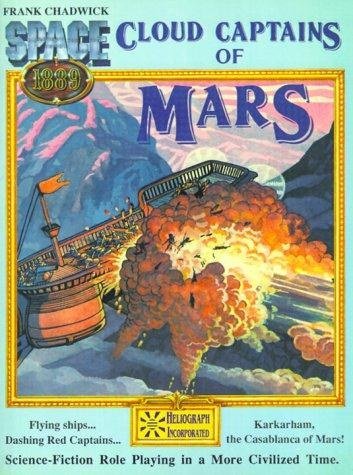
Space: 1889 was global and interplanetary before global steampunk had acquired the modern vocabulary to argue with itself. Its Victorian powers head to Mars and Venus with ether flyers, imperial attitudes and a startling confidence that the solar system requires European paperwork. It is both important and revealing. As a role-playing game, it helped make steampunk playable. As a concept, it shows the old imperial engine expanding into space. Modern readers and players can still enjoy the planetary romance, but the best modern handling notices the colonial absurdity and gives the Martians, Venusians and everyone else more agency than the original adventure assumptions always managed.
Comics and graphic novels have also been quietly prising the genre out of London’s grip. The Adventures of Adèle Blanc-Sec gives us a Parisian pulp lineage of weird science, monsters and mystery. The Obscure Cities turns European urban imagination into surreal architectural fantasy. Girl Genius builds a mad-science Europa where dynastic lunacy, clanks and sparks roam through a continent that has clearly mislaid all health-and-safety paperwork. Monstress, while not clean steampunk, brings Asian-inflected dark fantasy, war, art deco machinery and monstrous power into the broader conversation about industrial fantasy worlds that do not owe their existence to Victorian Britain.
Even when these works are adjacent rather than core, they matter. A field guide should not behave like a customs officer stamping passports at the edge of the genre. It should notice migration, influence, borderlands and hybrid forms. Steampunk did not remain pure because it was never pure. It was Vernean science romance, Gothic inheritance, cyberpunk prank, Victorian fantasy, alternate history, cosplay, maker culture, anime skies, tabletop adventure, weird fiction, industrial critique and an argument about empire wearing a brass helmet.
The Global Steampunk Age is better because it makes the argument harder. London steampunk can ask important questions about empire, class and machinery, but it can also keep the old imperial centre too comfortable. Global steampunk moves the centre. Sometimes there is no centre. Sometimes the centre is Cairo, New Orleans, Seattle, Tokyo, the Congo, Southeast Asia, a frozen city, a skyborne America, Mars, an invented industrial kingdom, or a moving city hunting other cities for parts. The map becomes less obedient, and the genre breathes.
This also changes who gets to be an inventor. In old adventure structures, the inventor was too often a European gentleman with a workshop, a moustache and the confidence of a man who has never had his funding application rejected. Global steampunk gives us other inventors: colonised engineers, women scientists, spiritual technologists, street mechanics, rebel machinists, airship crews, theatre pilots, clerks, artificers, priests, smugglers and children who have learned that the empire’s machines can be taken apart if you know where the screws are hidden.
That is not merely representation as garnish. It changes the plots. Different histories create different technologies. Different climates create different machines. Different oppressions create different rebellions. A steam-powered future in a monsoon region should not feel like one in Yorkshire. A brass computation system in Cairo should not carry the same assumptions as one in Whitehall. A frozen survival city has different ethics from an airborne leisure colony. A sky-pirate republic has different paperwork from an imperial air navy, though probably not less paperwork. Paperwork is the cockroach of civilisation.
The genre’s global spread also forces a healthier relationship with empire. Steampunk can no longer simply admire the gunboat, the expedition, the museum case and the map room. It has to ask who drew the map, who was removed from it, who is displayed in the museum, who is missing from the archive and who is fixing the engine while the admiral gives the speech. Once the genre asks those questions, it becomes sharper, funnier and more alive.
Of course, there are dangers. Global steampunk can become costume tourism if handled lazily. A few borrowed names, a temple silhouette, an exotic market and a brass elephant do not make a world. They make a souvenir stall. The cure is specificity, respect and consequence. Let places have history. Let people have politics. Let technology be shaped by local needs rather than imported wholesale from a London catalogue. Let the world push back when the genre arrives with a suitcase full of cogs.
The best global steampunk is not anti-London. It is anti-tunnel-vision. London can remain on the map. So can Paris, Manchester, Edinburgh and all those damp cobbled alleys where someone has definitely hidden a corpse under a lamppost. But they now sit among many other engines. The field has widened. The airships have longer routes. The brass has picked up different dents.
Stephen Hunt’s Jackelian books belong in this wider conversation because they show another way to escape the London trap: build a secondary world with its own nations, machines, institutions and absurdities. The Jackelian setting has airships, revolution, ancient powers, the Royal Aerostatical Navy, Mechancia’s steam-driven people and Transaction Engines processing the kingdom like a bureaucratic dragon with punch cards. It carries British steampunk DNA, certainly, but it does not have to keep returning to Baker Street to ask permission.
That is the larger lesson. Steampunk is strongest when it treats the past not as a costume trunk but as a pressure system. The nineteenth and early twentieth centuries were global machines: empires, railways, telegraphs, trade routes, plantations, factories, migrations, wars, ports, newspapers, revolutions, spiritual revivals and scientific dreams all grinding together. Move the viewpoint and the whole apparatus changes. The same cog looks different from the boiler room, the colony, the airship deck, the desert ministry, the theatre hangar, the frozen generator, the Martian canal or the floating city’s underclass.
The Global Steampunk Age is not a tidy period with a single manifesto. It is a widening of the map. It is the moment when the genre realises that its beloved machinery was always travelling, always being copied, stolen, resisted, adapted, worshipped, broken and improved. The corset and cog have crossed borders, yes, but so have engines, stories, gods, diseases, armies, labour movements, songs, ghosts and rebellion.
This is why the journey has improved the genre. Global steampunk gives us more skies, more cities, more arguments, more languages, more machines and more reasons to mistrust anyone who says progress while standing on someone else’s land. It turns the field guide into an atlas. It makes the airship routes longer. It lets Mars, Cairo, New Orleans, Seattle, Tokyo, Southeast Asia, frozen wastelands and floating American fever-dreams share the same impossible hangar.
London may still have the fog.
But the rest of the world has engines too, and some of them have just started turning.
The frozen frontier and the floating city
Modern games have pushed hardest of all. Frostpunk builds a steam-cored city in a frozen apocalypse and asks what you will trade to keep the boiler lit. BioShock Infinite floats an entire American city into the clouds and turns its exceptionalism into a fairground.
These are not Victorian London with a few extra propellers. They are whole new rooms built onto the genre’s house.
Why it matters
A genre that only ever looks at one empire eventually runs out of things to say. The global steampunk age keeps the conversation honest by letting other places, histories and futures into the engine room.
From the cabinet
Entries that show this theme at work
 Core early RPG
Space: 1889
Space: 1889 is an early steampunk tabletop RPG from Frank Chadwick and Game Designers' Workshop, built around ether flyers and Victorian Mars.
Core early RPG
Space: 1889
Space: 1889 is an early steampunk tabletop RPG from Frank Chadwick and Game Designers' Workshop, built around ether flyers and Victorian Mars.
 Core survival steampunk
Frostpunk
Frostpunk is 11 bit studios' survival steampunk city-builder of coal furnaces, frozen apocalypse, social ethics and desperate lawmaking.
Core survival steampunk
Frostpunk
Frostpunk is 11 bit studios' survival steampunk city-builder of coal furnaces, frozen apocalypse, social ethics and desperate lawmaking.
 Weird West Steampunk
Boneshaker
Cherie Priest's Boneshaker is Weird West steampunk, mixing Civil War-era machinery, toxic gas, zombies and alternate Seattle.
Weird West Steampunk
Boneshaker
Cherie Priest's Boneshaker is Weird West steampunk, mixing Civil War-era machinery, toxic gas, zombies and alternate Seattle.
 Core anime steampunk
Last Exile
Last Exile is core anime steampunk, built around airships, courier pilots, militarised skies and retro aviation spectacle.
Core anime steampunk
Last Exile
Last Exile is core anime steampunk, built around airships, courier pilots, militarised skies and retro aviation spectacle.