
Why it matters
It is one of the clearest feature-length anime statements of steampunk as machinery, industry, spectacle and moral argument.
Katsuhiro Otomo's Steamboy is not shy about its subject. It has steam, boys, machinery, Victorian London and the sort of pressure problem that makes engineers reach for both notebooks and prayers.
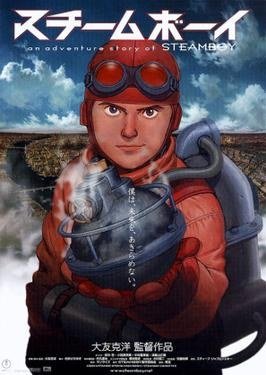
Directed by Katsuhiro Otomo, Steamboy follows Ray Steam, a young inventor caught between rival visions of technological progress in nineteenth-century Britain. At the centre is the steam ball, a device of tremendous stored power, and around it gather family conflict, industrial ambition, military interest and enough machinery to keep London on edge.
The fit is core steampunk. Unlike many adjacent works that borrow atmosphere or the odd gadget, Steamboy commits to steam as both engine and argument. Pressure, power, boilers, pipes, expositions, engines and vast machines are not decoration. They are the subject.
Otomo's interest in scale is crucial. The film loves massive mechanical structures, but it also understands their menace. The spectacle is thrilling because it is dangerous. A machine this large is never neutral. It has funders, operators, victims and consequences. That puts Steamboy close to the political heart of the genre.
Victorian Britain is not used merely as wallpaper. Industrial exhibition culture, imperial confidence, class difference and scientific ambition all crowd the frame. The film asks what progress means when every invention is immediately attractive to armies, industrialists and men with very polished speeches.
The Great Exhibition setting is especially apt. Steampunk loves the exhibition hall because it turns invention into theatre. Machines are presented as marvels, nations perform confidence, and the public is invited to applaud progress before anyone has fully checked what progress intends to do next. Steamboy understands the showmanship and the danger.
Ray works because he is not simply a boy genius in goggles. He is a child placed inside adult disputes about power. The film's moral question is blunt but necessary: should science serve spectacle, profit, war or human need? Steampunk often circles that question while admiring the brasswork. Steamboy puts it in the boiler room.
The family argument gives the industrial spectacle a human shape. Grandfather, father and son are not just characters with different haircuts. They embody competing claims about science, responsibility and ambition. The result is not subtle, but boilers are rarely famous for whispering.
The film belongs beside Castle in the Sky as one of anime's essential steampunk landmarks, but its tone is heavier and more industrial. Miyazaki often makes machines lyrical. Otomo makes them thunder. Both approaches matter.
Its animation is also a major part of the case. The film spends real effort on pistons, moving parts, collapsing structures and clouds of steam. That craft gives the machinery a physical credibility even when the scale becomes outrageous. The viewer believes in the pressure before worrying about the plot.
Some viewers may find the film more impressive than emotionally nimble. That is fair. Its machinery can overpower its characters. Yet as a visual and mechanical statement of steampunk, it is hard to ignore. It gives the genre the full pressure-gauge treatment.
Is it really steampunk?
Yes. Steamboy is core anime steampunk: Victorian setting, steam technology, industrial power, invention, spectacle, class backdrop and moral anxiety about machinery.
It is essential for anyone mapping the international canon. If a work called Steamboy with a steam ball in Victorian Britain does not count, the boiler inspector has become unreasonable.
Find it
If you would like to track down Steamboy, these search links may help. We have not specified an edition, so you can pick the format that suits you.
Affiliate links: as an Amazon Associate, Stephen Hunt’s SFcrowsnest earns from qualifying purchases. These may earn us a small commission at no extra cost to you.