Why it matters
It is a central Japanese steampunk franchise on television, combining stage performance, alternate-history Tokyo, steam mecha and supernatural combat.
Sakura Wars looks at Taisho-era theatre, steam-powered mecha and demonic invasion and decides, quite reasonably, that show business was not already stressful enough.
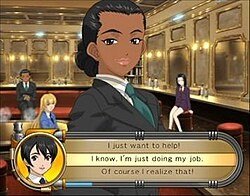
Adapted from the Sega game franchise created by Oji Hiroi, the 2000 television anime centres on the Imperial Combat Revue, a theatre troupe whose performers also pilot steam-powered armour against supernatural threats. That sentence carries a lot of luggage, most of it lacquered, theatrical and armed.
The setting is crucial. Rather than using British Victoriana, Sakura Wars draws on a romanticised Taisho-period Tokyo, blending early twentieth-century modernity with fantasy technology and theatrical glamour. This gives the series a distinct Japanese steampunk flavour: urban, performative, militarised, sentimental and deeply fond of the stage curtain.
Steam mecha are the obvious genre credential. They place the series squarely in anime steampunk's machine branch, where giant or semi-giant mechanical bodies meet retro technology and melodrama. These are not background contraptions. They are the heroes' working tools, military symbols and dramatic extensions of character.
The theatre element adds another layer. The Imperial Combat Revue performs for the public while secretly defending the city, turning spectacle into cover and identity into costume. Steampunk often loves double lives, uniforms and public masks. Sakura Wars makes those theatrical concerns literal, then adds demons because apparently matinee scheduling lacked jeopardy.
Its franchise nature also matters. Sakura Wars is not a one-off curiosity but a multimedia property spanning games, animation and other adaptations. That gives it a stronger claim to canon importance than many isolated titles. For international viewers, the anime helped make the franchise's Taisho-steam imagery visible beyond game players.
The tone is not the same as harder alternate-history steampunk. It mixes romance, military team drama, supernatural threat and idol-like performance energy. That mixture may feel extravagant, but it is part of the point. Japanese steampunk often works through hybrid spectacle: machines, uniforms, music, demons, city pride and emotionally charged teamwork sharing the same proscenium.
It also shows how the genre can move away from coal smoke and British empire without losing its engine. The steam technology is present, but the cultural frame is different: Tokyo, theatre, revue, mecha, spiritual threat and modernising Japan. That makes Sakura Wars essential to any international account of the field.
The performance angle gives the series a texture many machine fantasies lack. These characters are not only pilots or soldiers. They are public performers, which means the defence of the city is tied to morale, spectacle and civic imagination. That is a very steampunk kind of arrangement, even in a Japanese key: machinery does the fighting, but costume, reputation and public belief keep the whole enterprise glowing.
It is also a reminder that steampunk can be romantic without being soft. Sakura Wars likes flowers, uniforms, music and theatrical flourish, but it also knows that its city is under threat. The sweetness and the machinery are not enemies. They are part of the same elaborate production.
That balance is why the anime remains useful even for readers who know the games only by reputation. It demonstrates the franchise's core promise quickly: modernising Japan, steam combat and backstage emotion all pulling on the same rope.
Is it really steampunk?
Yes. Sakura Wars is core anime steampunk: alternate-historical setting, steam-powered mecha, theatrical double identity, supernatural conflict and a retro-modern Japanese city all working together.
It suits readers who want their steampunk international, melodramatic and prepared to break into performance before deploying heavy machinery. The boilers are lit, the costumes are ready, and the demons have very poor timing.
Find it
If you would like to track down Sakura Wars, these search links may help. We have not specified an edition, so you can pick the format that suits you.
Affiliate links: as an Amazon Associate, Stephen Hunt’s SFcrowsnest earns from qualifying purchases. These may earn us a small commission at no extra cost to you.