
Why it matters
It gives European comics one of the great pre-steampunk heroines: sharp, sardonic and surrounded by monsters, mysteries and Parisian trouble.
Jacques Tardi's Adele Blanc-Sec does not so much enter Belle Epoque weirdness as stride into it with the weary expression of someone who expected better paperwork from the occult.
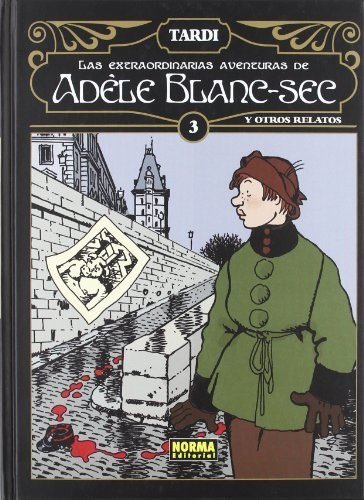
The Adventures of Adele Blanc-Sec began in the 1970s, before steampunk had settled into its later label and wardrobe. Tardi's series follows Adele, a novelist and investigator moving through early twentieth-century Paris, where crime, monsters, occult schemes and absurd dangers show a regrettable lack of civic restraint.
The period is important. Belle Epoque Paris gives the series a different flavour from Victorian London. It has boulevards, museums, police, newspapers, scientific oddities and a dry European comic sensibility. The result is gaslamp adventure with a French accent, less interested in brass heroics than in deadpan collision between modern city life and outrageous events.
Adele herself is the series' main asset. She is not a decorative heroine waiting for a gentleman inventor to explain the plot. She is sharp, impatient and difficult in the best sense. Steampunk and gaslamp fiction need protagonists who can look at a monster, a bureaucrat and a mysterious corpse with roughly equal annoyance. Adele has that gift.
The series' proto-steampunk value lies in its mixture of period setting, pulp threat and modern irony. It does not need to build a grand alternate technological system. It works through atmosphere, monsters, mysteries and the sense that the rational city has a very untidy basement. That places it near later works such as The League of Extraordinary Gentlemen, though Tardi's tone is its own splendidly dry creature.
The later film adaptation helped bring Adele to wider international attention, but the comics are the key object. They show how European bandes dessinees contributed to the wider retro-adventure field in ways that do not always fit Anglo-American categories. The map gets better once Paris is allowed to misbehave on its own terms.
Tardi's humour is another reason the series has lasted. The absurdity is not soft. It has bite, fatigue and an eye for institutions that cannot quite cope with the horrors they have accidentally filed under routine business. This gives Adele's adventures a tone that later gaslamp works often chase: funny, macabre, stylish and just cynical enough to keep the monsters honest.
The series also expands the role of the period heroine. Adele is not a sidekick with a notebook or a romantic reward for the man who solves the case. She is the point of entry, the source of impatience and frequently the only person in the room with enough sense to distrust the room. That makes her especially useful beside modern steampunk heroines who refuse to be ornamental.
She also gives the period setting a wonderfully practical irritability. Paris may be marvellous, but Adele treats marvels as things that still need explaining.
Is it really steampunk?
It is proto-steampunk and gaslamp adventure rather than core machine steampunk. The series has period weirdness, monsters, occult crime and pulp energy, but not the industrial alternate-history machinery of later steampunk.
Readers who enjoy Gotham by Gaslight, The League of Extraordinary Gentlemen or gaslamp mysteries should find Adele essential. She is one of the great reminders that period adventure can be clever, cranky, stylish and extremely unwilling to behave.
Find it
If you would like to track down The Adventures of Adele Blanc-Sec, these search links may help. We have not specified an edition, so you can pick the format that suits you.
Affiliate links: as an Amazon Associate, Stephen Hunt’s SFcrowsnest earns from qualifying purchases. These may earn us a small commission at no extra cost to you.