
Why it matters
It is a modern anime example of post-apocalyptic steampunk, using steam weapons, armoured trains, fortress stations and zombie siege to turn industrial survival into kinetic spectacle.
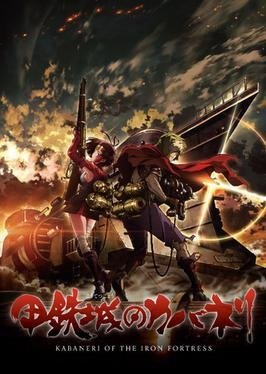
Kabaneri of the Iron Fortress puts survivors on armoured trains during a zombie apocalypse, which suggests that even the end of the world can still be improved by a timetable.
Directed by Tetsuro Araki and produced by Wit Studio, the series imagines a world overrun by Kabane, infected creatures that force human survivors into fortified stations connected by heavily armoured trains. The central train, the Kotetsujo, becomes refuge, weapon, route and pressure cooker.
The steampunk credentials are strong. Steam weapons, armoured rail travel, fortress stations, industrial survival and visible mechanical systems all sit at the heart of the premise. This is not a decorative brass border around a zombie story. The machines are how people live long enough to have problems.
Its comparison with Snowpiercer is useful. Both works turn the train into a social world under extreme pressure. Snowpiercer is colder, more allegorical and more class-focused; Kabaneri is more kinetic, monstrous and anime-operatic. In both cases, the train is not simply transport. It is civilisation reduced to motion.
The series also bears the marks of post-Attack on Titan action anime, especially in its siege dynamics and frantic bodily danger. Yet the steampunk flavour gives it a different texture. The weapons, stations and rail systems create a world of soot, metal and containment, where survival depends on engineering as much as courage.
Ikoma, the engineer-protagonist, gives the machinery a human route. He is not only fighting monsters. He is inventing, modifying and risking himself inside the technology that keeps the survivors alive. That matters because steampunk is often strongest when technical skill and bodily vulnerability meet in the same scene.
The show is loud, stylish and sometimes more interested in momentum than subtlety, but momentum is part of its argument. A stopped train is death. The genre pleasures are immediate: clanging doors, pressure weapons, desperate repairs, infected bodies and the grim knowledge that the next station may not be safer.
Mumei and Ikoma also give the series its altered-body tension. The Kabaneri are neither fully human nor fully Kabane, which makes survival a social problem as much as a biological one. That matters for steampunk-adjacent anime because machinery, infection and identity are constantly rubbing against each other. The weapon is not only in the hand. Sometimes the danger is inside the ribcage.
The series also gives modern steampunk one of its clearest action-anime shapes. It is less reflective than Snowpiercer, but more immediate in its use of rail as peril, refuge and spectacle. The result is a strong entry point for viewers who want steam, siege and speed rather than salon politics.
It also understands the train as community. The Kotetsujo is cramped, hierarchical, frightened and necessary. People argue, distrust each other and still depend on the same machine to stay alive. That social compression gives the action more bite than a simple monster chase.
The audience is clear: viewers who want industrial horror with speed, sparks and very little chance to sit down.
Is it really steampunk?
Yes. Kabaneri of the Iron Fortress is post-apocalyptic anime steampunk, with armoured trains, steam weapons, industrial fortresses, mechanical survival and a society organised around rail movement.
It suits viewers who want the field at high speed and high panic. There is little time for polite parlour discussion when the train is moving, the boiler is hot and the dead are trying to board.
Find it
If you would like to track down Kabaneri of the Iron Fortress, these search links may help. We have not specified an edition, so you can pick the format that suits you.
Affiliate links: as an Amazon Associate, Stephen Hunt’s SFcrowsnest earns from qualifying purchases. These may earn us a small commission at no extra cost to you.