
Why it matters
It gives the steampunk-adjacent map one of its most important city-dream traditions, built from impossible architecture, old futures and bureaucratic strangeness.
In The Obscure Cities, architecture does not sit politely in the background. It takes the lead, adjusts its cuffs, and makes the characters live inside someone else's magnificent obsession.
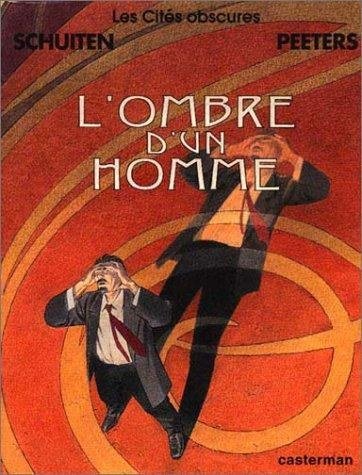
Les Cites obscures, usually known in English as The Obscure Cities, is the Belgian comics series by artist Francois Schuiten and writer Benoit Peeters. It began in the early 1980s and developed into a remarkable sequence of architectural fantasies, parallel-world cities, documents, fictions and visual experiments.
Its connection to steampunk is atmospheric and structural rather than boiler-driven. The series loves old futures, grand civic spaces, machinery, transport, archives, maps, monumental design and the dream logic of bureaucracy. It is not Victorian adventure. It is retrofuturism as urban hallucination, with drafting tools and a serious expression.
Schuiten's art is central. Buildings in these comics have authority. They do not merely house the story; they pressure it, distort it and sometimes seem to be the story's true inhabitants. This makes the series essential for understanding the architectural side of steampunk and its neighbours. Brass is optional. Stone, glass, iron and civic arrogance will do nicely.
The Art Nouveau and European design influences give the work a different flavour from Anglo-American steampunk. This is not London fog or American frontier grit. It is continental, formal, elegant and strange, with cities that behave like philosophical machines. Anyone interested in The City of Lost Children or Grandville can feel the family resemblance in the affection for built worlds that have gone beautifully wrong.
The series also stretches what a comics world can be. It spills into pseudo-documents, guides, exhibitions and invented histories, which makes it feel like an archive of places that almost exist. Steampunk often thrives on that kind of false material culture. A convincing imaginary world needs tickets, plans, maps, official seals and at least one institution with procedures nobody sane would design.
This documentary playfulness is not a gimmick. It changes how readers encounter the cities. The books often feel less like stories about a place than evidence recovered from that place. That makes the series unusually persuasive as retrofuturism. The city has already generated its own paperwork, and paperwork is one of civilisation's most reliable ways of pretending the impossible is normal.
The work also helps separate retrofuturism from nostalgia. These cities are not cosy old worlds waiting to be admired. They can be oppressive, absurd, gorgeous and alienating. Schuiten and Peeters know that beauty can be a system of control if enough marble is involved.
That makes the series a useful corrective to decorative steampunk. It loves design too much to pretend design is innocent.
It also speaks to readers who enjoy invented places as much as plots. The pleasure is not only what happens, but how completely the setting seems to have been thinking before we arrived.
Is it really steampunk?
Not exactly. The Obscure Cities is architectural retrofuturism and European speculative comics, adjacent to steampunk through its old-future design, urban systems, machinery, transport and invented civic histories.
Readers looking for adventure plots may need to adjust expectations. The attraction is the city as idea, spectacle and trap. For steampunk readers, it offers a powerful lesson: sometimes the most important machine is the building you are standing in.
Find it
If you would like to track down The Obscure Cities / Les Cites obscures, these search links may help. We have not specified an edition, so you can pick the format that suits you.
Affiliate links: as an Amazon Associate, Stephen Hunt’s SFcrowsnest earns from qualifying purchases. These may earn us a small commission at no extra cost to you.