
Why it matters
It brings Vernean and Wellsian planetary adventure into computer roleplaying, sending nineteenth-century historical figures to Mars through retro-scientific contrivance and canal-world mystery.
Martian Dreams is the computer RPG that looks at Victorian celebrity culture and decides the obvious destination is Mars, which is at least one way to improve a guest list.
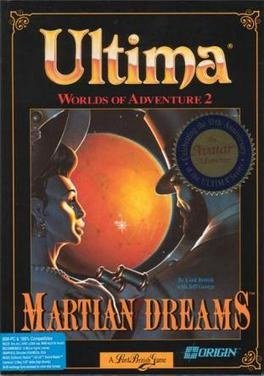
Published by Origin Systems in 1991, Ultima: Worlds of Adventure 2: Martian Dreams is one of the great eccentric side passages of the Ultima family. Rather than staying in conventional fantasy, it sends the Avatar and a collection of Victorian-era figures to Mars, where canals, machines, ancient civilisation and planetary mystery await. It is exactly the sort of premise that sounds absurd until one remembers that scientific romance got there first and with a straight face.
The setup draws directly from the older tradition of speculative voyages. Jules Verne, H. G. Wells, Percival Lowell's Mars mania and nineteenth-century scientific enthusiasm all hover around the game. The player is not simply visiting another planet. They are entering a retro-futurist idea of Mars: canals, hidden histories, strange devices and the notion that Victorian engineering might, if pointed vigorously enough, reach the red planet.
That makes Martian Dreams a natural companion to Space: 1889. Both works understand the pleasure of taking Victorian assumptions into space and letting adventure expose their limits. Space: 1889 gives the idea a tabletop campaign world. Martian Dreams does it as a computer RPG, with exploration, conversation, problem-solving and the particular strangeness of seeing historical celebrities become party-era science-fiction ingredients.
Its steampunk credentials are strong because it is not merely decorative. The whole premise depends on retro science and nineteenth-century imaginative machinery. It belongs to the Vernean branch of the field, where rockets, cannons, explorers, savants and improbable apparatus open routes to impossible geography. The machines may not be covered in later steampunk costume detail, but the conceptual engine is unmistakable.
The game also broadens what early steampunk-adjacent video games could do. The Eidolon gives us a mysterious contraption and an alien space. The Chaos Engine gives us industrial violence in a Victorian alternate history. Martian Dreams gives us the literary planetary romance route: history, science, exploration and an old-fashioned confidence that a sufficiently determined expedition can make even Mars answer awkward questions.
The historical cast is part of the charm. Placing famous nineteenth-century figures into speculative adventure can easily become parlour trivia, but here it supports the game's genre argument. Steampunk is often about history as raw material, not museum glass. Martian Dreams treats the past as something playable, peculiar and open to intervention. This is not sober biography. It is "what if" with a space cannon and a grin.
For modern readers, the game is valuable because it shows the computer RPG borrowing directly from scientific romance before steampunk became a dominant visual market. Its Mars is a literary inheritance turned into explorable software. That is a handsome little miracle, even if one suspects the travel insurance was inadequate.
Is it really steampunk?
Yes, especially in the Vernean and planetary-romance sense. Martian Dreams uses Victorian figures, retro science, Mars travel, canals and machinery as core material.
It suits players and readers who like their steampunk less urban and more interplanetary, with a healthy respect for old scientific mistakes.
Find it
If you would like to track down Ultima: Worlds of Adventure 2: Martian Dreams, these search links may help. We have not specified an edition, so you can pick the format that suits you.
Affiliate links: as an Amazon Associate, Stephen Hunt’s SFcrowsnest earns from qualifying purchases. These may earn us a small commission at no extra cost to you.