
Why it matters
It keeps Verne's cannon-launched space dream alive in screen form, linking gentleman science, lunar ambition and antique engineering fantasy.
Byron Haskin's From the Earth to the Moon returns to one of speculative fiction's great old ideas: if the Moon is inconveniently far away, perhaps a very large gun can solve the problem.
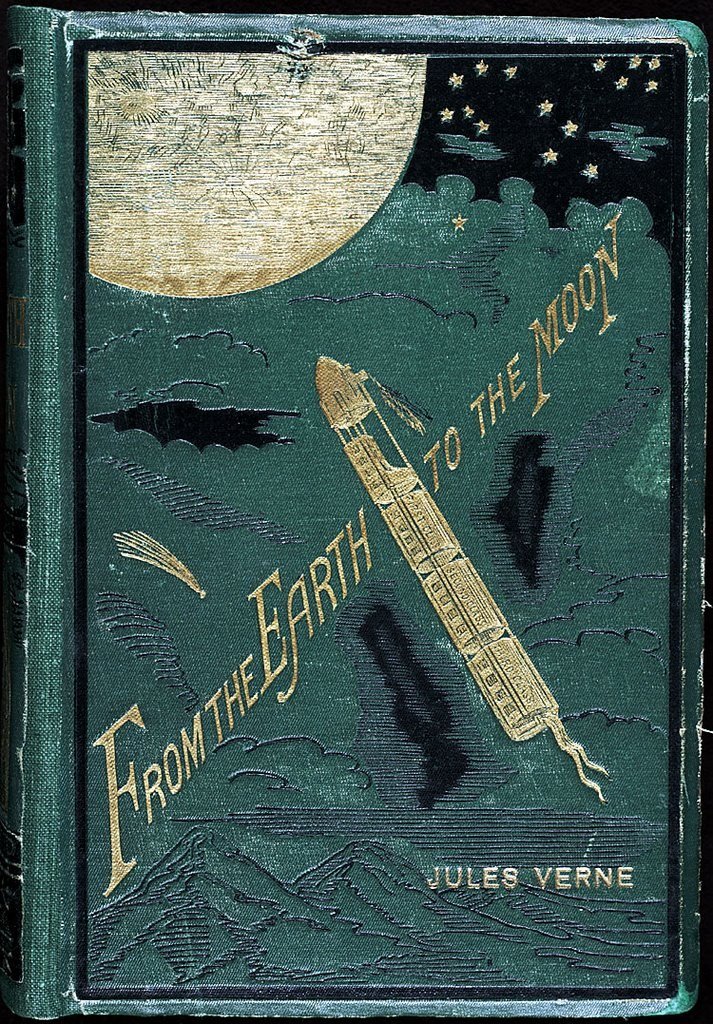
From the Earth to the Moon is a 1958 film adaptation drawing on Jules Verne's lunar fiction. Directed by Byron Haskin, it belongs to the mid-century screen afterlife of nineteenth-century scientific romance, when old space dreams were being revisited in the shadow of modern rocketry.
The premise is wonderfully antique. Verne's idea of launching a projectile to the Moon from a giant cannon belongs to a stage of scientific imagination before rockets had become the accepted route. For steampunk and proto-steampunk readers, that is exactly the charm. It is space travel imagined through artillery, metallurgy, calculation and gentlemen with dangerous confidence.
The film's importance is contextual rather than central. It is not as visually definitive as Disney's 20,000 Leagues Under the Sea, nor as artistically singular as Karel Zeman's Vernean work. But it occupies a useful place in the chain of adaptations that kept Verne's machinery visible to twentieth-century audiences.
It also sits near Melies' A Trip to the Moon, which transformed the cannon-shot lunar fantasy into early cinema magic. Haskin's film arrives much later, when space travel was no longer only fantasy. That timing changes the flavour. The old Vernean dream now stands beside the real space age, looking both quaint and stubbornly appealing.
The gentleman-science motif is important. Vernean stories often imagine bold projects organised through clubs, engineers, industrialists and national pride. Steampunk repeatedly returns to that social structure because it reveals how science, status, money and spectacle become tangled. Nobody builds a moon cannon quietly.
As a viewing experience, the film is best treated as context rather than a masterpiece of the field. Its value lies in its adaptation history and its preservation of a particular antique spaceflight imagination. The machinery may not persuade modern physics, but it speaks fluent retrofuturist ambition.
That antique ambition is precisely why it belongs here. Steampunk often gains energy from old futures that did not come true: Babbage computers, aether ships, lunar cannons, personal submarines. The pleasure lies in seeing a past age imagine tomorrow using the tools and assumptions it had to hand.
The film also helps connect Verne's lunar fiction to later aether and spacefaring steampunk. Once one accepts nineteenth-century space travel as a fantasy premise, works like Castle in the Stars and Space: 1889 become easier to place. The cannon may be scientifically dubious, but it opens the imaginative door.
Its gentleman-scientist culture is both charming and suspect. The same confidence that builds the machine also risks ignoring everything inconvenient about the machine. That tension is one of the recurring comic and dramatic engines of Vernean steampunk.
Is it really steampunk?
No, not modern steampunk. It is a proto-steampunk Verne adaptation, relevant because of its antique engineering dream, moon-shot premise and scientific-romance ancestry.
Readers tracing the Vernean line should include it as a supporting stop. It helps show how nineteenth-century space fantasies survived into film just as real spaceflight was preparing to make them look charmingly reckless.
Find it
If you would like to track down From the Earth to the Moon, these search links may help. We have not specified an edition, so you can pick the format that suits you.
Affiliate links: as an Amazon Associate, Stephen Hunt’s SFcrowsnest earns from qualifying purchases. These may earn us a small commission at no extra cost to you.