
Theme
Victorian London
Fog, gaslight, and a great deal of plumbing nobody mentions. The genre keeps coming home to London, for better and for worse.
The default capital
The popular image of steampunk often centres on Victorian London, which is understandable. The city was the engine room of an empire, the largest metropolis on earth, and a place where gaslight, fog and industry made the future feel like it was already happening on the next street.
Alan Moore and Kevin O’Neill’s The League of Extraordinary Gentlemen treats the city as a vast attic of Victorian fiction, where every monster and adventurer is just around the corner.
Steampunk has many possible homes. It can live in Martian canals, Japanese sky kingdoms, American frontier towns, moving cities, brass submarines, Alpine laboratories, haunted clock towers and airship dockyards with more rope than safety regulation. Yet sooner or later, the genre finds itself back in London, coughing politely into a handkerchief and pretending the smell is atmosphere.
Victorian London is the grand old overused engine room of steampunk. It has everything the genre desires: empire, class, science, crime, fog, money, poverty, theatres, gentlemen’s clubs, slums, railways, sewers, museums, ministries, newspapers, secret societies, gaslight, hansom cabs, strange doctors, policemen with whistles and a river capable of hiding almost any plot development. It is a city that appears to have been designed by Dickens, Babbage, Jack the Ripper, Brunel and a committee of damp ravens.
No wonder writers keep returning to it. London is not just a setting. It is a machine that eats stories and produces sequels.
The trouble is that Victorian London is also a trap. Use it lazily and the result is fog wallpaper: a lamp, a cobbled street, a top hat, a woman in a corset, an inventor called Professor Something, and perhaps a mechanical spider lowering itself from St Paul’s because subtlety was detained at customs. Use it well and the city becomes a living system: financial, imperial, criminal, bureaucratic, technological and social. The difference between those two Londons is the difference between a working steam engine and a painted kettle.
The genre keeps returning to London because the real nineteenth-century city already feels speculative. It was huge, filthy, rich, poor, modern, ancient, imperial and overcrowded. It contained palaces and rookeries, laboratories and workhouses, banks and gin shops, gentleman scientists and children selling matches in weather that had clearly lost interest in mercy. It was a world capital and a human drain. Steam trains arrived, telegraph wires spread, newspapers multiplied, sewers were rebuilt, goods flowed through the docks, and the empire deposited money, artefacts, rumours and guilt in every respectable drawing room.
That is potent stuff. Steampunk only needs to tilt it slightly. Add working Babbage engines, automata, airship moorings, occult machinery, vampires in Parliament or a ministry that regulates ghosts, and London barely blinks. It has seen worse in committee.
William Gibson and Bruce Sterling’s The Difference Engine gives us one of the defining mechanical Londons. Its alternate Britain has been transformed by Babbage-style computation, and London becomes an information city before its time. This is not cosy brass nostalgia. It is a place of politics, data, class, surveillance and technological disruption. The machine is not sitting in a gentleman’s study waiting to produce charming calculations. It is changing society. London becomes the place where the information age arrives wearing soot and a frock coat.
That is why The Difference Engine remains so important. It understands that a steam computer is not merely an eccentric gadget. It is a civic weapon. Once you can count faster, file faster, analyse faster and administer faster, you can govern differently. You can police differently. You can profit differently. Victorian London, already fond of paperwork, becomes a city where information itself has pressure gauges.
K.W. Jeter’s Infernal Devices gives another London: stranger, more comic, more grotesque, and wonderfully caught in the machinery of inheritance. George Dower, poor soul, inherits a clockmaker’s shop but not quite the genius that made his father dangerous. That is an excellent steampunk problem. London here is a place where devices arrive from the past, societies meet in corners, conspiracies breed under floorboards, and respectability has the structural integrity of wet cardboard. If The Difference Engine is London as calculation, Infernal Devices is London as clockwork farce with teeth.
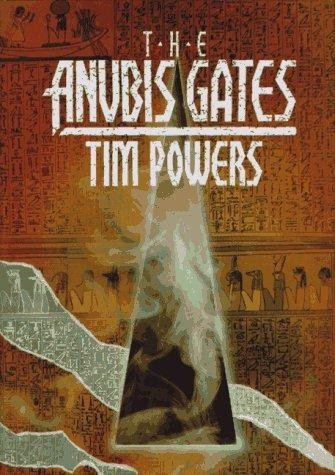
Tim Powers’ The Anubis Gates is not Victorian London, despite being repeatedly shoved into that cupboard by people who sort history with boxing gloves. Much of its London adventure is earlier nineteenth century. Still, it belongs in the wider ancestry because it understands London as a labyrinth of poets, beggars, sorcerers, criminals, time slips and old streets with unpleasant habits. It is not brass-heavy steampunk in the modern sense, but it helped establish the usefulness of London as a place where history can go sideways and mug you in an alley.
Then there is Kim Newman’s Anno Dracula, which proves that Victorian London can always be made worse by improving the monarchy with vampires. Newman’s alternate 1888 London is a Gothic political carnival where Dracula has not merely survived but joined the national furniture. The result is not pure steampunk, but it shares the genre’s delight in public domain collision, alternate history and the city as a cabinet of cultural monsters. London becomes a place where literature, politics and horror walk the same streets, usually after dark and with poor intentions.
Alan Moore and Kevin O’Neill’s The League of Extraordinary Gentlemen turns Victorian London and the broader Victorian imagination into a crossover engine. Mina Murray, Allan Quatermain, Captain Nemo, the Invisible Man and Mr Hyde gather in a universe where the literature of the age has been treated as historical record by someone with a very large filing cabinet and no instinct for restraint. London becomes less a city than a headquarters for the entire imperial imagination. It is brilliant, grubby, layered and full of jokes that require footnotes, maps and possibly a minor degree in obsession.
Moore returns to late Victorian London in a very different mood with From Hell, drawn by Eddie Campbell. This is not steampunk, and it should not be shoved into the genre just because it wears the same historical coat. But it is crucial to understanding why London’s shadows remain so powerful. From Hell treats Whitechapel, architecture, murder, class and mythology as parts of a single black mechanism. It reminds any steampunk writer that fog is not decoration. Fog can be concealment, poverty, fear, smoke, official neglect and the city’s refusal to be understood.
Penny dreadfuls, Gothic fiction and stage melodrama also haunt the genre’s London. Penny Dreadful gathers Frankenstein, Dorian Gray, Dracula’s world and other literary horrors into a late-Victorian theatrical gloom. It is more Gothic horror than steampunk, but the overlap is obvious: gaslight, science, monsters, class, empire, occult danger and the sense that every respectable house has either a secret laboratory or a locked room containing a consequence. London works beautifully for this because it already feels like a city built on buried chapters.
Television’s The Nevers offers a more openly speculative Victorian London, with women and others known as the Touched acquiring strange abilities in a society that responds, predictably, with fear, exploitation and committees. Its London is a city of class, gender, invention and panic. It is not always tidy, but it understands the appeal of setting superhuman disruption inside a Victorian social machine. Give the marginalised powers, and suddenly the drawing room becomes a battlefield with better wallpaper.
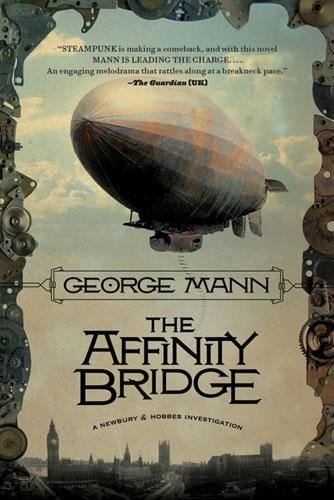
George Mann’s Newbury and Hobbes novels, beginning with The Affinity Bridge, supply a more straightforward steampunk London: airships, investigations, strange police, mechanical trouble, royal agencies and a city where almost any mystery may involve steam technology, revenants or both. This is London as adventure board: foggy, busy, dangerous and fitted with enough contraptions to keep the plot clanking. It scratches the Sherlockian itch while adding airship grease under the fingernails.
Gail Carriger’s Soulless and the Parasol Protectorate books give us another useful variation: comedy of manners in a supernatural Victorian London of vampires, werewolves, dirigibles, etiquette and weaponised politeness. Carriger’s London is social machinery as much as mechanical machinery. Who may call on whom, who is invited where, who drinks what, who bites whom, and whether a parasol may be considered a tactical object: these are all serious questions when society itself is part of the engine.
Natasha Pulley’s The Watchmaker of Filigree Street softens the machinery into clockwork, intimacy and historical strangeness. Its 1880s London is quieter than the cannon-and-airship version, but still deeply useful to the field. The city becomes a place of watches, bureaucracy, telegraphy, Japanese connection, memory and fate ticking away in small mechanisms. Not every steampunk London needs an explosion over Westminster. Sometimes one clockmaker is enough to unsettle the century.
Philip Reeve’s Mortal Engines performs the most gloriously impolite act of all: it takes London out of London. The city becomes a gigantic traction predator, a mobile machine roaming a post-apocalyptic world and eating smaller towns. This is not Victorian London, but it is London as imperial appetite made literal. The metaphor has put on caterpillar tracks. All those old habits of consumption, hierarchy and self-importance have become engineering. If standard steampunk asks what London might look like with more machines, Mortal Engines asks what if London itself was the machine, and then wisely advises everyone to run.
This is one reason London endures in steampunk: it can be literal, symbolic or monstrous. It can be the capital of empire, the birthplace of mechanical computation, the city of Sherlockian deduction, the Gothic maze, the vampire court, the airship hub, the occult sewer, the moving predator or the foggy page on which genre writes its invitations in black ink.
London also gives steampunk class in concentrated form. The city contains the drawing room and the slum within cab distance of each other. It lets a story move from clubland to dockland, from palace to pawnshop, from opera house to sewer, from ministry to morgue. This is wonderfully efficient for writers and dreadful for inhabitants. Every time a gentleman inventor announces that progress will benefit all mankind, the reader should look for the nearest chimney sweep and ask whether he has been consulted.
The city’s plumbing matters more than people admit. Steampunk likes airships because they look splendid. It likes automata because they ask philosophical questions. It likes steam computers because they make bureaucracy dramatic. But London’s sewers, pipes, tunnels, drains, underground rivers and railway cuttings are just as important. They make the city layered. Above ground is respectability. Below ground is infrastructure, waste, secrets, corpses, fugitives, workers and the occasional monster that really ought to have been reported to the council.
A London story gains power when it remembers that the city is built vertically and morally uneven. The aristocrat rides above the mud. The clerk files the paperwork. The engineer keeps the pressure down. The servant hears the secret. The poor breathe the smoke. The empire’s wealth arrives through docks and warehouses, then reappears as jewellery, museum exhibits, bank deposits and speeches about civilisation. Steampunk London should never be allowed to forget where its brass came from.
That is the “for better and for worse” of it. London gives the genre a superb set of tools, but it can also narrow the field. If steampunk becomes only London, it becomes a monocle staring at itself. The wider genre needs Paris, Tokyo, Cairo, Calcutta, New Orleans, Mars, Mechancia, floating islands, American railroads, African retrofutures, Chinese clockwork states, Caribbean airship ports and invented worlds with no obligation to bow toward Westminster. London is a powerful engine, not the whole factory.
Stephen Hunt’s Jackelian books are a useful reminder that British steampunk fantasy does not need to live in Victorian London to inherit some of its pressures. The Jackelian world takes the machinery of class, bureaucracy, airships, steam-driven wonders, ancient institutions and political absurdity, then translates them into a secondary world. That can be more freeing than returning to the same gaslit street yet again. Sometimes the best way to write London is to build a strange cousin with different street names and the same habit of making life complicated.
Still, we return. Of course we do. London is too good to abandon. It has the Thames, the fog, the clubs, the bridges, the railways, the theatres, the newspapers, the museums, the laboratories, the rookeries, the gentlemen, the criminals, the radicals, the clerks, the coroners, the cabbies, the occultists, the mad doctors, the wronged women, the ambitious machines and the sense that something terrible is happening three streets away and will shortly require a hansom cab.
The trick is not to avoid London. The trick is to make it work for its supper.
Use the fog, but know what it hides. Use the gaslight, but remember who paid for it. Use the grand houses, but open the servants’ stairs. Use the laboratory, but visit the factory. Use the gentleman detective, but let the witness speak. Use the empire, but do not let it narrate unchallenged. Use the sewers, because frankly the genre has not used nearly enough plumbing.
Victorian London remains one of steampunk’s great capitals because it is already half machine, half theatre and half crime scene, which is too many halves but exactly enough city. It can be lazy shorthand or magnificent engine. It can trap the genre in old habits or give it a pressure chamber where history, technology and class all start banging on the pipes.
So yes, send us back to London. Give us fog, gaslight and a clock tower with suspicious vibrations. Give us a Babbage engine in Whitehall, an automaton in a Mayfair parlour, vampires at court, detectives in alleys, airships over the Thames and a traction version of the city preparing to eat Kent.
But somewhere beneath it all, let the drains gurgle.
That is where London keeps the truth.
Beyond the postcard
The trouble with a default setting is that it can become wallpaper. The works that last do something with the city rather than merely photographing it. Tim Powers’ The Anubis Gates fills its London with beggar guilds and body-swapping sorcerers; the gaslight hides genuine menace.
Even stories that leave London keep it as a reference point. The city is the genre’s sea level, the thing everything else is measured against.
Why it matters
London gives steampunk a ready-made stage of class, empire and invention. The danger is nostalgia; the reward, when a writer resists it, is a setting that already contains every argument the genre wants to have.
From the cabinet
Entries that show this theme at work
 Core / Literary Mash-up
The League of Extraordinary Gentlemen
Alan Moore and Kevin O'Neill's League of Extraordinary Gentlemen is a core steampunk comics mash-up of Victorian literature.
Core / Literary Mash-up
The League of Extraordinary Gentlemen
Alan Moore and Kevin O'Neill's League of Extraordinary Gentlemen is a core steampunk comics mash-up of Victorian literature.
 Core Steampunk / Gaslamp Fantasy
The Anubis Gates
Tim Powers's The Anubis Gates is a first-wave steampunk and gaslamp landmark of time travel, Egyptian magic and London underworlds.
Core Steampunk / Gaslamp Fantasy
The Anubis Gates
Tim Powers's The Anubis Gates is a first-wave steampunk and gaslamp landmark of time travel, Egyptian magic and London underworlds.
 Gaslamp Fantasy / Steampunk-adjacent
Anno Dracula
Kim Newman's Anno Dracula is gaslamp-adjacent alternate history, turning Victorian vampire fiction into a sharp literary crossover.
Gaslamp Fantasy / Steampunk-adjacent
Anno Dracula
Kim Newman's Anno Dracula is gaslamp-adjacent alternate history, turning Victorian vampire fiction into a sharp literary crossover.
 Core Steampunk / Detective Steampunk
The Affinity Bridge
George Mann's The Affinity Bridge is detective steampunk, pairing Newbury and Hobbes with airships, zombies and Victorian intrigue.
Core Steampunk / Detective Steampunk
The Affinity Bridge
George Mann's The Affinity Bridge is detective steampunk, pairing Newbury and Hobbes with airships, zombies and Victorian intrigue.