
Why it matters
It gives steampunk one of its key ancestral devices: a Victorian machine that turns history itself into terrain.
The Time Traveller does not merely invent a machine. He invents a new way for dinner guests to regret asking follow-up questions.
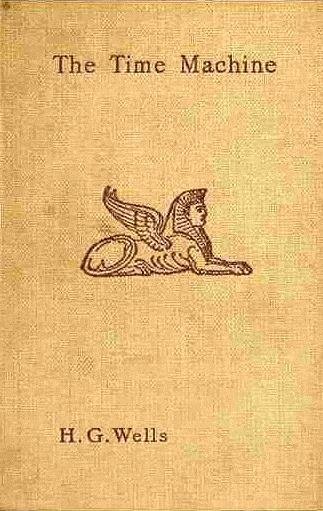
H. G. Wells's The Time Machine is a foundational scientific romance and one of the great ancestors of steampunk's time-travel branch. Its central device is not described with the decorative fuss of later brass-and-gauge contraptions, but the image is irresistible: a nineteenth-century inventor stepping out of his own age by means of a machine built in a drawing-room world of sceptical gentlemen and polished conversation.
The story sends the Time Traveller into the far future, where he encounters the delicate Eloi and the subterranean Morlocks. What first appears to be a pastoral after-human idyll curdles into a grim evolutionary fable about class division. The comfortable have become helpless. The labouring underworld has become predatory. Wells turns social structure into biology, which is about as cheery as a factory inspection conducted by a prophet with indigestion.
For steampunk, the immediate attraction is the machine itself. Later retrofuturist fiction loves devices that make the impossible look like a matter of engineering. Time travel becomes not magic, not divine intervention, but a problem of levers, principles and nerve. The Time Traveller sits at the start of a long line of inventors who assume that a good enough apparatus can bully reality into providing a door.
Yet the book's deeper value is its refusal to separate invention from society. The machine does not lead to a clean adventure playground. It leads to a future shaped by present injustice. That is why The Time Machine remains so useful to steampunk and gaslamp fantasy: it demonstrates that the speculative machine can expose the political machinery underneath respectable civilisation.
The Morlocks are especially important to later genre history. K. W. Jeter's Morlock Night would make an early steampunk move by taking Wells's future horrors and dragging them back into Victorian adventure. The Morlock becomes not merely a monster but a sign that history is leaky. The future can invade the past, and the polite parlour can find teeth marks on the furniture.
Purists may object to filing Wells beside modern steampunk novels. Fair enough. Wells was not writing a nostalgic alternate Victorian future. He was using scientific romance to assault complacency from inside the late nineteenth century. But that is exactly why the book is such valuable ancestry. Steampunk often works by revisiting that age with hindsight, regret and mischief. Wells provides the original wound.
Readers who arrive expecting a rollicking machine adventure may be surprised by how brief and cold the book feels. It is not a sprawling gadget carnival. It is sharp, strange and rather pitiless. That economy is part of its power. Wells does not need a warehouse of machinery when one chair-like contraption and a terrible future will do the job.
The frame narrative matters too. The Time Traveller first presents his claims to a room of listeners who are educated, sceptical and socially secure. That drawing-room setting is a perfect launchpad for proto-steampunk because it places impossible science inside ordinary late-Victorian manners. The fantastic enters not through a castle gate but through conversation, demonstration and the awkward question of whether one's host has lost his mind.
Wells also gives later writers a model for how far a machine story can travel without becoming a manual. The mechanics remain suggestive rather than fully explained. What counts is the conceptual leap: time as dimension, history as destination, evolution as nightmare. Steampunk often works best when it remembers this balance. A clever device is charming, but a clever device that changes the moral scale of the world is far harder to shake off.
It is also one of the neatest demonstrations that a small cast can carry a vast speculative idea. The Time Traveller, his listeners, the Eloi and the Morlocks are enough. The world beyond them is implied, and that implied world keeps expanding in the reader's head long after the machine has stopped moving.
Is it really steampunk?
Not in the strict modern sense. The Time Machine is proto-steampunk and scientific romance, a work steampunk inherits rather than a work written in the genre. Its machine, late-Victorian setting and class critique make it central to the field's ancestry, but its method is leaner and less decorative than later retrofuturism.
The novel also matters because it shows the genre's time obsession at full strength. Steampunk is often accused of being backward-looking, but Wells makes looking backward and forward part of the same problem. What future is being built by the present? Who gets to live in the sunlight? Who is being pushed underground, metaphorically or otherwise, while the clever men admire their instruments?
The Time Machine is a necessary stop before Morlock Night, The Difference Engine and countless Victorian time-slip stories. It teaches that a machine can be both a wonder and an accusation, which is exactly the sort of double function steampunk does best when it is awake.
Find it
If you would like to track down The Time Machine, these search links may help. We have not specified an edition, so you can pick the format that suits you.
Affiliate links: as an Amazon Associate, Stephen Hunt’s SFcrowsnest earns from qualifying purchases. These may earn us a small commission at no extra cost to you.