
Why it matters
It is not steampunk, but its courtly spectacle, revolution, gender play and historical melodrama make it a key neighbour for period fantasy and gaslamp taste.
Riyoko Ikeda's The Rose of Versailles proves that a powdered court can be every bit as dangerous as a laboratory, especially when everyone is dressed beautifully and history has already sharpened the blade.
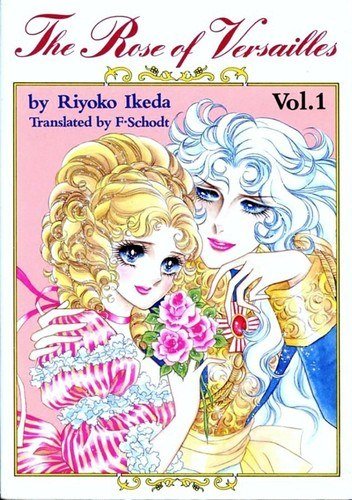
The Rose of Versailles is one of the landmark works of shoujo manga. Set around the French court and the Revolution, it follows figures including Marie Antoinette and the fictional Oscar François de Jarjayes, a noblewoman raised as a man and serving in the royal guard. That mixture of history, melodrama, politics and gender performance made the work enormously influential.
Its place near steampunk is indirect but useful. Steampunk and gaslamp fiction often borrow from periods of aristocracy, revolution, costume, etiquette and social pressure. Ikeda's manga offers all of that without needing machinery. The engine here is history itself: court privilege, public anger, gendered expectation and the awful momentum of a society approaching the edge.
Oscar is the key to the manga's continuing power. The character's gender performance, military role and emotional conflict give the work more than costume drama. Steampunk often likes characters who cross social boundaries through disguise, invention or profession. Oscar crosses and exposes boundaries through rank, upbringing, gender and duty. No goggles required.
The French Revolution setting also gives the work a useful contrast with Victorian or Edwardian gaslamp material. It belongs earlier historically, but the concerns overlap: who holds power, how social roles are staged, what happens when performance fails, and how public history crushes private feeling. Period fiction does not need a boiler to understand pressure.
The manga's influence on anime and shoujo storytelling is another reason it belongs in the wider discussion. It helped prove that historical drama, political upheaval and emotional intensity could carry an enormous readership. That matters for steampunk's neighbours because period imagination is not only a matter of machinery. It is also costume, class, romance, duty and the awful moment when society's theatre catches fire.
Oscar's appeal also makes the work feel more modern than a simple court romance. The character lets Ikeda explore gendered performance inside a rigid aristocratic world. That gives the manga a sharpness that later gaslamp and retro-historical fiction often seeks: the spectacle of old systems being exposed by someone forced to live inside their contradictions.
It also gives the work a bridge to readers who come to period fiction for identity, not only scenery. The clothes are splendid, but the roles are the real trap.
Purists would be right to keep it out of the core steampunk box. There are no retrofuturist machines, alternate technologies or industrial fantasies. But the manga belongs in the borderlands because later steampunk and gaslamp works often draw on exactly this kind of theatrical history: aristocratic interiors, uniforms, secrets, rebellion and doomed elegance.
Is it really steampunk?
No. The Rose of Versailles is historical manga and revolutionary melodrama. Its relevance is gaslamp-adjacent and thematic rather than mechanical. It helps readers understand the wider period-imagination shelf, especially where costume, revolution and gender performance matter.
Readers of steampunk who enjoy court intrigue, upheaval and characters caught between identity and institution should find it valuable context. It is not a machine, but it is certainly a pressure system, and Versailles supplies more than enough pressure.
Find it
If you would like to track down The Rose of Versailles, these search links may help. We have not specified an edition, so you can pick the format that suits you.
Affiliate links: as an Amazon Associate, Stephen Hunt’s SFcrowsnest earns from qualifying purchases. These may earn us a small commission at no extra cost to you.