
Why it matters
It is a landmark of superhero period remixing and one of the clearest gaslamp routes into Batman.
Gotham by Gaslight takes Batman to the nineteenth century, which is only fair. Gotham always looked as if it had been built by a Victorian architect who distrusted daylight and had strong opinions about gargoyles.
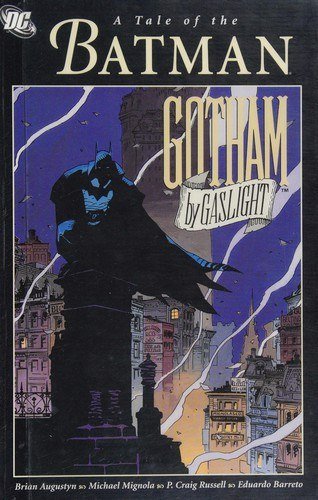
Written by Brian Augustyn with art by Mike Mignola, Gotham by Gaslight reimagines Batman in a Victorian-era Gotham and sets him against Jack the Ripper. It is commonly associated with DC's Elseworlds tradition, where familiar heroes are moved into alternate settings and allowed to develop new shadows.
The premise is simple and extremely effective. Batman already belongs to gothic urban myth: alleys, fog, guilt, wealth, crime, theatrical identity and a city that seems to require a moral exorcist in a cape. Move him into the gaslamp period and surprisingly little breaks. The cowl changes its historical furniture, but the basic machinery of fear still works.
Mike Mignola's art is central to the comic's staying power. His heavy shadows, stylised figures and architectural mood make Victorian Gotham feel less like a costume party and more like a civic nightmare in good masonry. The city becomes a gaslit stage for crime, suspicion and masked vengeance.
The Jack the Ripper element is obvious period bait, but it also clarifies the comic's relationship to gaslamp fiction. This is not cheerful brass adventure. It is gothic crime, urban dread and historical horror folded into superhero myth. That makes it a useful companion to The League of Extraordinary Gentlemen, Adele Blanc-Sec and other works that move popular characters through nineteenth-century genre machinery.
As steampunk, it sits on the gaslamp superhero side rather than the engineering side. There are not enough machines here to satisfy someone looking for boilers and Babbage engines. But steampunk has always had a strong remixing instinct, and Gotham by Gaslight is one of the cleanest examples of remixing a modern icon through Victorian atmosphere.
The comic also matters because it helped establish how flexible superhero continuity could be. Move the myth, keep the emotional machinery, and see what changes. Bruce Wayne remains grief, discipline, wealth and theatre in human form. Gotham remains a city that looks at crime and answers with architecture, fog and poor urban planning.
That flexibility would become a major part of later comics culture. Elseworlds-style reinvention opened doors for many period and genre remixes, some more successful than others. Gotham by Gaslight works because the match is not arbitrary. Batman was already half gaslamp in spirit; the comic simply hands him the correct street lighting.
It also gives superhero readers an easy route into gaslamp logic. Once Gotham has fog, murder and top hats, the cape looks almost sensible.
Is it really steampunk?
Yes, broadly, if the label includes gaslamp superhero fiction and Victorian alternate-continuity remixing. It is not machine-centred steampunk, but it is a core gaslamp comics landmark: fog, period Gotham, Jack the Ripper, gothic crime and a modern hero recast through nineteenth-century anxieties.
Readers who like Batman, Victorian horror and alternate-history comics should find it essential. It is also useful because it shows how easily some modern myths slide into the nineteenth century. Batman did not need much winding. Gotham had clearly been keeping the gas lamps ready.
Find it
If you would like to track down Gotham by Gaslight, these search links may help. We have not specified an edition, so you can pick the format that suits you.
Affiliate links: as an Amazon Associate, Stephen Hunt’s SFcrowsnest earns from qualifying purchases. These may earn us a small commission at no extra cost to you.