
Why it matters
It is one of the defining comics works of modern steampunk, turning the nineteenth-century library into a shared universe with teeth.
Alan Moore and Kevin O'Neill looked at Victorian literature and decided what it really needed was a cross-continuity security problem, a submarine, several monsters and no patience for respectable myth-making.
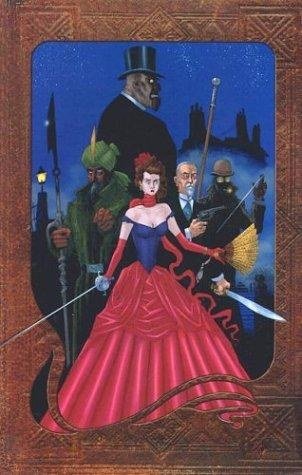
The League of Extraordinary Gentlemen gathers figures from Victorian and Edwardian popular fiction into a single speculative world. Mina Murray, Allan Quatermain, Captain Nemo, the Invisible Man and Dr Jekyll become a team operating inside a version of empire-era Britain that is both thrilling and morally diseased.
The brilliance of the premise is that it treats literature as infrastructure. Characters who once lived in separate books are made to share streets, institutions and consequences. The result is not simply a parlour game of recognition. It becomes a critique of empire, masculinity, adventure fiction, secrecy and the appetite for wonders that behave badly.
Kevin O'Neill's art gives the world its indispensable ugliness and energy. His machines, faces, costumes and cities are never blandly handsome. They have stains, angles and intent. The Nautilus is not just a Verne reference parked for applause; it is a design statement, a political object and a reminder that Nemo's rage has better engineering than most governments.
The series also matters because it makes visible one of steampunk's central habits: remixing the nineteenth century's fiction as a shared, dangerous inheritance. Moore and O'Neill are sharper than many imitators. They know that the old stories have histories, prejudices and sharp edges.
Its relationship to Anno Dracula is obvious. Both works build alternate Victoriana from literary figures, public myth and genre memory. The League leans more toward comics grotesquerie and adventure-team structure, while Anno Dracula uses vampirism as political infection. Together, they define a major route through literary gaslamp and steampunk remixing.
The team structure is also part of the appeal. Superhero comics had trained readers to understand teams as collections of powers and temperaments. Moore and O'Neill apply that grammar to nineteenth-century fiction, turning Victorian literature into a cracked precursor of the modern crossover. The joke is clever, but it also reveals how much of popular fiction was already building reusable myths.
Mina Murray's role is especially important. She is not simply a familiar name placed on a cover. She becomes the organising intelligence of a group of damaged, dangerous men, many of whom carry the moral stains of their source texts. Through her, the series can enjoy adventure while keeping a sceptical eye on masculine heroics.
The series can be unpleasant, deliberately so. That is part of its method, though not always comfortable. It asks readers to look again at books and characters they may love, then notice the violence, racism, misogyny and imperial appetite tucked into the old thrills. The result is entertaining, but it is not a cosy museum tour.
Is it really steampunk?
Yes. It is core steampunk and gaslamp literary mash-up, even when the machinery is only one part of the appeal. The Nautilus, Victorian setting, altered literary history, imperial critique and speculative recombination make the fit secure.
Readers should not mistake it for cosy nostalgia. The series is funny, clever and packed with references, but it is also nasty in deliberate ways. It treats the Victorian adventure tradition as something fascinating, powerful and frequently guilty. That is exactly why it belongs near the centre of the map.
Find it
If you would like to track down The League of Extraordinary Gentlemen, these search links may help. We have not specified an edition, so you can pick the format that suits you.
Affiliate links: as an Amazon Associate, Stephen Hunt’s SFcrowsnest earns from qualifying purchases. These may earn us a small commission at no extra cost to you.