
Why it matters
It gives the field one of its defining machines: the Nautilus, a self-contained marvel that is vehicle, refuge, weapon and moral argument.
If steampunk has a sacred engine room, there is a fair chance Captain Nemo has already locked himself inside it and left a polite but final note on the door.
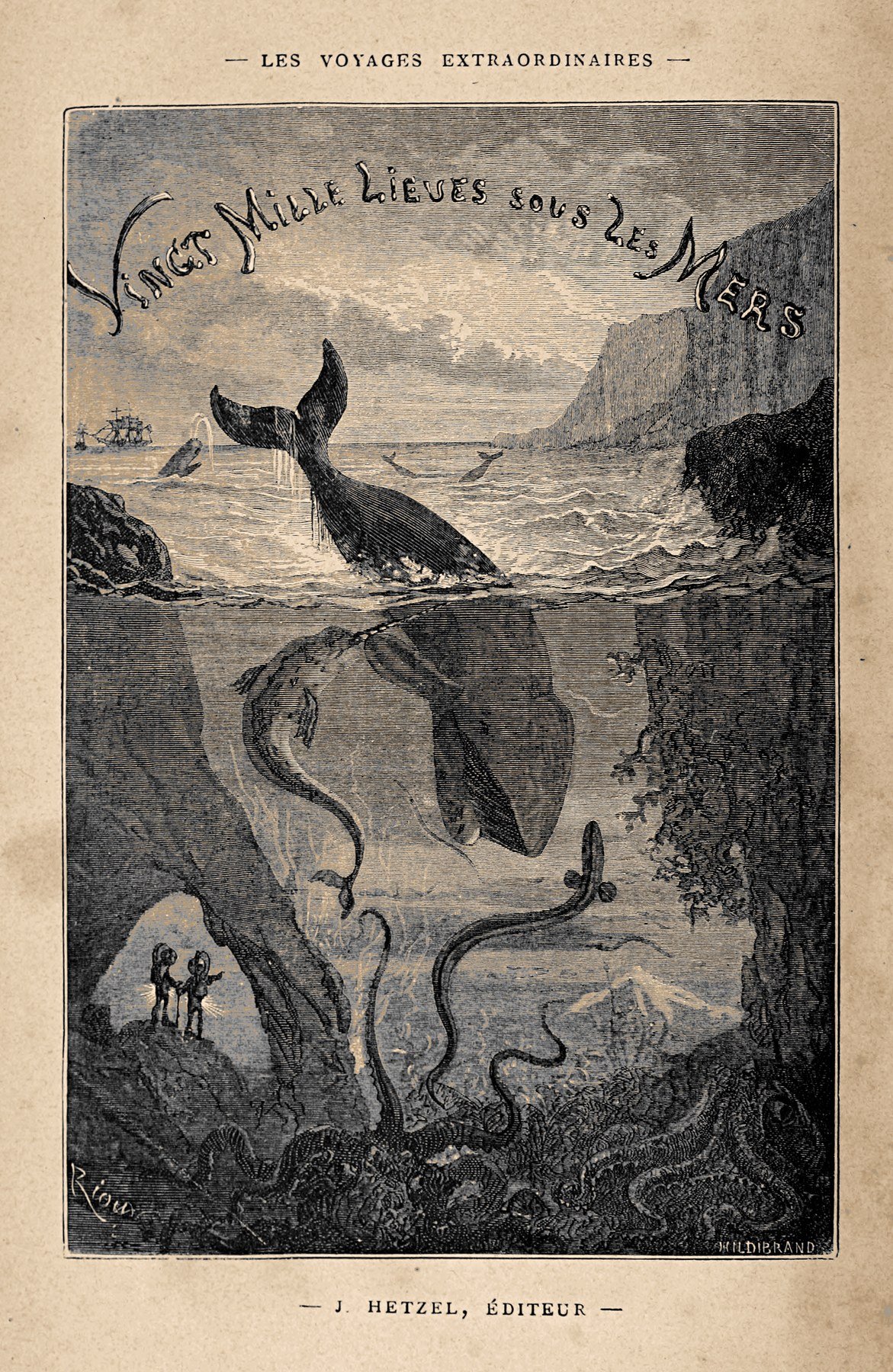
Jules Verne's Twenty Thousand Leagues Under the Seas is one of the essential ancestors of steampunk because it treats machinery as romance without pretending machinery is innocent. The Nautilus is not just transport. It is a private nation, a revenge instrument, a museum, a prison and a very expensive way of avoiding dinner parties on land. Nemo's submarine turns the ocean into territory and makes the modern world feel suddenly negotiable.
The novel follows Professor Aronnax, his servant Conseil and the harpooner Ned Land after they are taken aboard the Nautilus by the mysterious Captain Nemo. That premise could easily become a simple tour of underwater curiosities, and Verne certainly enjoys the tour. There are reefs, wrecks, strange creatures and scientific lectures with the sleeves rolled up. Yet the book keeps returning to Nemo himself, a man whose technological brilliance is inseparable from grief, politics and withdrawal.
For steampunk readers, the appeal is obvious. Here is a machine built at a level beyond its age, operated by a brilliant outsider, moving through an imperial world while refusing ordinary national loyalties. Later steampunk would build a whole hangar full of similar wonders: airships, difference engines, mechanical cities, aether craft and private laboratories with suspiciously good brasswork. The Nautilus gets there early and does it with icy dignity.
It also matters because it complicates the romance of invention. Nemo is not a cosy boffin. His scientific power gives him freedom, but also removes him from normal human restraint. The result is thrilling and uneasy. The submarine is beautiful, but beauty does not make it harmless. It is a marvel with a grudge.
The "steam" in steampunk is not always literal, and this novel is one of the reasons why. The Nautilus is electrically powered, a futuristic choice for Verne's day, but it belongs to the same nineteenth-century dream of engineered mastery. It says the world can be mapped, crossed, pierced and possessed by human intelligence, while also asking who pays when intelligence goes private and starts carrying torpedoes.
Purists should treat it as proto-steampunk rather than core steampunk. It predates the genre label by a century, and Verne was not writing retro-Victorian fantasy. He was writing scientific romance from inside the age whose future he was imagining. That makes the book more ancestor than descendant, more boilerplate for later dreams than example of the finished costume.
Its motifs are now everywhere: the secret vessel, the ambiguous captain, the scientific refuge, the machine that leaves empire behind while still being shaped by empire's violence. Nemo's shadow falls across undersea adventures, airship captains, anti-imperial wanderers and every wealthy inventor who insists the law stops at the hatch.
The book also shows how a machine can become an aesthetic environment. The Nautilus is not only a vehicle with a plot function. It has rooms, collections, routines and an interior life. That detail matters to steampunk, which often loves the inhabited machine: the airship with a galley, the walking city with class districts, the laboratory with personal habits burned into every bench. Verne understands that a marvellous machine becomes more persuasive when people actually live inside it.
Nemo's politics are another reason the novel remains useful rather than merely picturesque. He is wounded by empire and yet armed with a power that can become imperial in miniature. That contradiction gives later writers something richer than a simple rebel captain. The Nautilus is freedom and isolation, justice and revenge, curiosity and menace, all bolted together under pressure.
Is it really steampunk?
Not exactly, but it is one of steampunk's deep roots. Twenty Thousand Leagues Under the Seas is Vernean scientific romance: speculative engineering imagined close to its own historical moment. It becomes steampunk when later writers look back at that machinery, that confidence and that unease, then rebuild them as retrofuturist myth.
The book is still worth reading because it is not merely a list of wonders. Nemo gives the Nautilus emotional weight. He is grand, bitter, learned and impossible, the sort of captain who can turn a natural history lesson into a declaration of war against civilisation. One admires the submarine while remaining unsure whether one should accept tea from its owner.
This entry connects strongly to the Vernean line: voyages, engineering, imperial routes, maritime invention and the romance of technical possibility. It also connects to darker steampunk, where the machine is a sanctuary for people the world has wounded, and sometimes a way for them to wound it back.
Find it
If you would like to track down Twenty Thousand Leagues Under the Seas, these search links may help. We have not specified an edition, so you can pick the format that suits you.
Affiliate links: as an Amazon Associate, Stephen Hunt’s SFcrowsnest earns from qualifying purchases. These may earn us a small commission at no extra cost to you.