
Why it matters
It turns nineteenth-century global adventure, airship travel, secret societies and lost civilisations into a compact JRPG with clear steampunk lineage.
Nostalgia is a Nintendo DS RPG that hears "nineteenth-century adventure" and immediately books an airship, because walking would be vulgar.
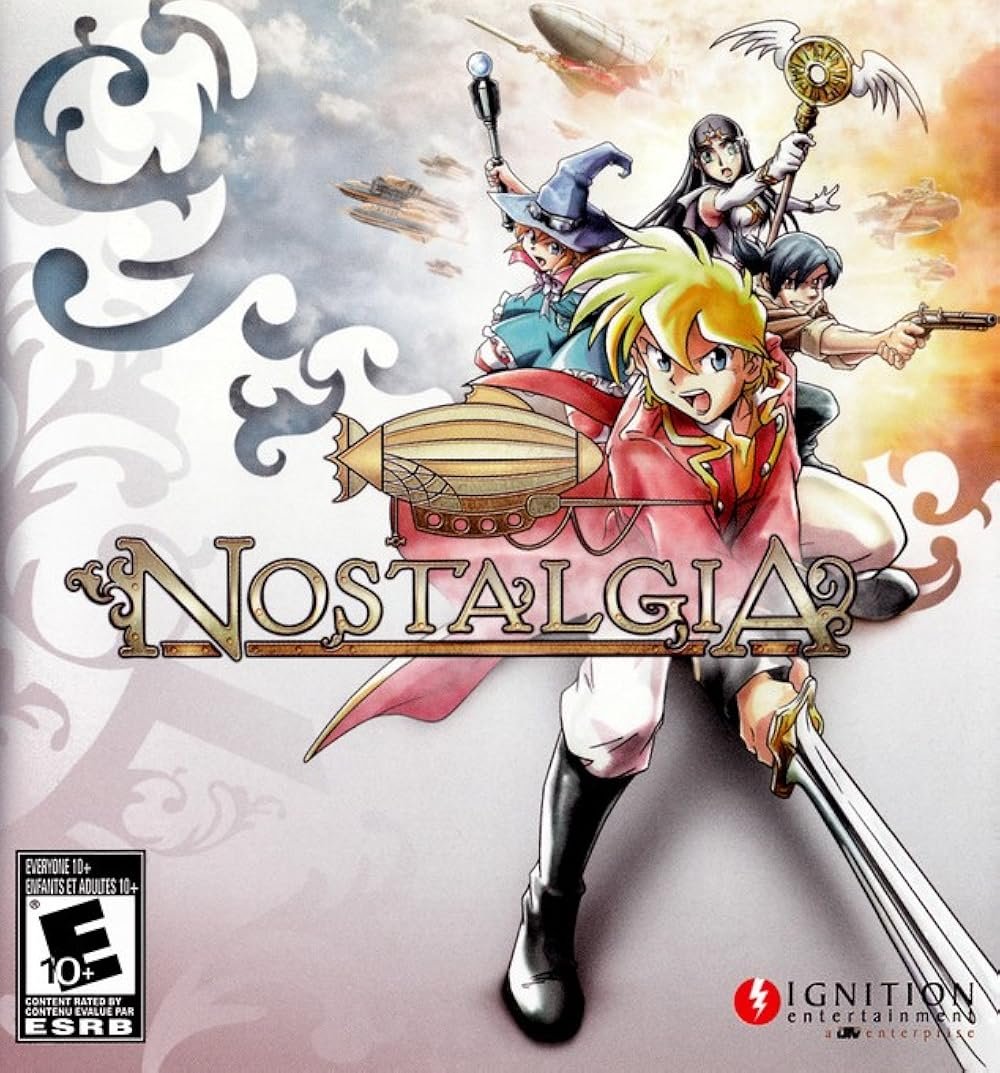
Developed by Matrix Software with Red Entertainment and released for the Nintendo DS in 2008, Nostalgia follows a young adventurer through an alternate nineteenth-century world of airships, ruins, mysterious organisations and globe-trotting danger. The title is honest. This is a game built from affection for older adventure forms, polished into handheld JRPG shape.
The airship is central. Like Skies of Arcadia, Nostalgia understands that flight is not merely transport. It is freedom, structure and tone. A world tour becomes much more attractive when the party has a vessel that can turn geography into possibility. The game uses that promise to connect cities, ruins and secret histories into one adventure map.
Its nineteenth-century setting gives it a stronger steampunk claim than many fantasy JRPGs. This is not only airship fantasy. It is airship fantasy dressed in period exploration, imperial-era geography and the old thrill of maps with too many blank spaces. That places it near Around the World in Eighty Days and Space: 1889, though the tone is more colourful and game-like.
The secret-society and lost-civilisation elements are equally important. Steampunk adventure often thrives on the suspicion that history has hidden compartments. Ancient ruins, coded legacies and clandestine groups turn the world into a puzzle with excellent transport options. Nostalgia uses those ingredients in a familiar but satisfying way.
The game also benefits from its clean sense of route. London, ancient sites and far-flung destinations give the adventure a brisk serial rhythm, as if the old boys' own expedition story had been rebuilt with JRPG menus and a kinder heart. That straightforwardness is part of the appeal. The airship moves, the map opens and the world keeps producing secrets.
As a DS game, it also shows steampunk becoming portable. By 2008, the visual language of airships, brass adventure and retro-world travel was familiar enough to fit comfortably on a handheld RPG. The genre no longer needed a huge budget or a cult PC audience. It could arrive in a player's pocket, ready for a commute, provided the commute had fewer secret societies.
Its creators also connect it to wider Japanese adventure traditions. Red Entertainment had been involved with Sakura Wars, another key example of Japanese steampunk imagination. Nostalgia is less theatrical and less mecha-focused, but it shares the same willingness to blend period flavour, machines, romance and adventure.
The game is not a radical reinvention. Its charm lies in being almost deliberately classical: airships, young heroes, global routes, ancient mysteries and a sense that the world is there to be travelled. Steampunk has room for that. Not every entry has to dismantle modernity. Some simply hand you a map, a ship and a reason to look up.
Is it really steampunk?
Yes. Nostalgia is core JRPG steampunk adventure: nineteenth-century world touring, airship travel, secret societies, lost civilisations and retro-scientific romance all folded into RPG form.
It suits players who want Skies of Arcadia energy with more real-world geography and a handheld sense of expedition.
Find it
If you would like to track down Nostalgia, these search links may help. We have not specified an edition, so you can pick the format that suits you.
Affiliate links: as an Amazon Associate, Stephen Hunt’s SFcrowsnest earns from qualifying purchases. These may earn us a small commission at no extra cost to you.