
Why it matters
It turns steam-age transport, imperial routes and clockwork scheduling into the engine of adventure.
Phileas Fogg does not conquer the world with a ray gun, an airship or a mechanical spider. He does something far more alarming to the British imagination: he reads a timetable and believes it.
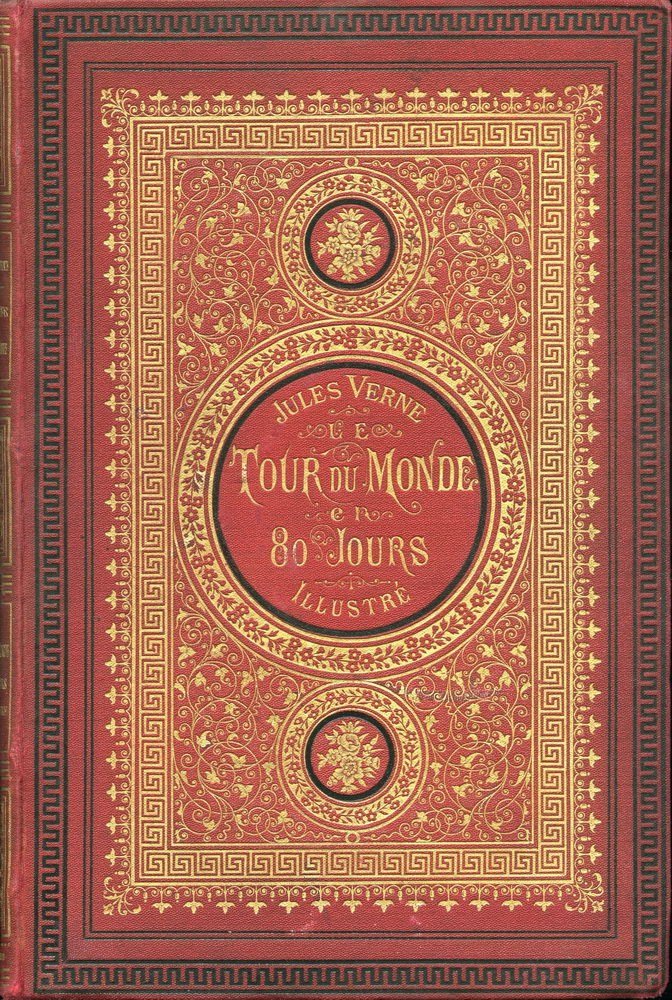
Jules Verne's Around the World in Eighty Days is one of those works that looks less steampunk the closer one stands to the machinery, and more steampunk the further one steps back to view the map. There is no single speculative invention at the centre. The miracle is the network: trains, steamships, colonial routes, telegraphs, rail connections, port schedules and the terrifying confidence that a gentleman with enough nerve can turn the planet into an itinerary.
The plot is famously lean. Fogg, a wealthy and exacting London clubman, accepts a wager that he can circle the globe in eighty days. With his newly hired French valet Passepartout, he sets off through a world already knitted together by modern transport. Meanwhile, Detective Fix mistakes him for a bank robber and trails him with all the grim persistence of a man who has confused punctuality with guilt.
The book matters because it supplies one of the genre's great backgrounds: the nineteenth-century world as system. A lot of later steampunk enjoys the visible machine, the piston, gear and pressure gauge. Verne also grasps the invisible machine: international scheduling, imperial infrastructure, finance, paperwork and the social confidence of men who think the globe exists partly to test their personal efficiency.
That makes Around the World in Eighty Days a useful corrective to the more workshop-bound parts of steampunk. It reminds us that the age of steam was not only about inventors. It was also about networks, labour, ports, colonial authority, travel documents, shipping companies and the strange human comedy of trying to make reality obey a printed table.
It is also a comedy of temperament. Fogg is not the usual adventure hero. He is a human chronometer with a bank account. Passepartout brings warmth, exasperation and athletic inconvenience. The book's pleasures often come from the contrast between Fogg's mathematical calm and the world, which keeps producing festivals, rescues, delays and misunderstandings with the enthusiasm of a badly managed railway buffet.
Purists will quite rightly say this is not core steampunk. It is an adventure of contemporary modernity rather than retrofuturist invention. Yet the ingredients are important: steam power, global movement, empire-age confidence, acceleration, and the way machines alter human expectation. Later steampunk often begins by asking what else might have happened if this transport web had carried stranger cargo.
The book's borderland status is therefore useful. It helps explain why steampunk is not only a style of gadgetry but a way of thinking about history as machinery. The wager works because the world has become newly measurable. Fogg's journey is a human being placed inside a system and asked whether the system can be trusted.
There is a reason later retrofuturist stories keep returning to maps, routes and deadlines. A chase across a steam-age world turns geography into drama. Miss a train and the empire wobbles. Lose a passport and the plot acquires teeth. Verne's novel understands that modern transport changes not just speed but expectation: people begin to believe distance is an inconvenience that can be defeated by planning, money and a heroic tolerance for bad connections.
Passepartout is vital to that machinery because he brings human friction into Fogg's timetable. He is the body in the system, the man who gets tired, distracted, brave and occasionally inconvenient. Without him, Fogg would risk becoming a pocket watch in a hat. With him, the book becomes a comedy of precision meeting ordinary life, which is much nearer to how machines actually behave around people.
Is it really steampunk?
Only at the edges. Around the World in Eighty Days is best understood as Vernean proto-steampunk and a borderland work. It lacks the speculative engine of Twenty Thousand Leagues Under the Seas or The Time Machine, but it gives steampunk its rails, steamship lanes and imperial geography.
Modern readers should come for the briskness and the historical machinery, while keeping a clear eye on the colonial assumptions baked into the route. The novel's world is fast, exciting and often complacent about who built the tracks and who gets to travel first class. That tension is exactly why it remains useful to the field. Steampunk that forgets the politics of its transport becomes mere luggage with goggles.
In the broader guide, this entry connects to airship adventure, imperial alternate history and any work where the map is as important as the hero. Fogg may not carry a ray pistol, but he does carry the dangerous idea that modernity can be timed, booked and settled by a bet at the Reform Club.
Find it
If you would like to track down Around the World in Eighty Days, these search links may help. We have not specified an edition, so you can pick the format that suits you.
Affiliate links: as an Amazon Associate, Stephen Hunt’s SFcrowsnest earns from qualifying purchases. These may earn us a small commission at no extra cost to you.