
Why it matters
It gives Philip Pullman's trilogy a fuller screen treatment than the 2007 film, bringing daemons, alethiometers, airships and parallel worlds into prestige television form.
The His Dark Materials television series brings daemons, airships and theological trouble to the screen, giving alternate-world fantasy the look of a universe that owns both brass instruments and very dangerous questions.
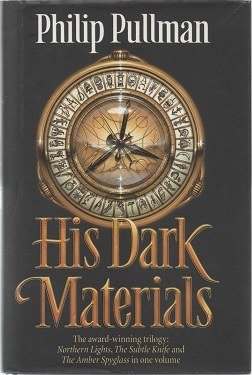
Written for television by Jack Thorne and based on Philip Pullman's novels, the series follows Lyra Belacqua through worlds of daemons, Dust, religious authority, scientific mystery and political danger. It adapts the same material earlier touched by The Golden Compass, but with more room for theology, character and the trilogy's expanding cosmology.
The steampunk adjacency is familiar from the books. Lyra's world is not Victorian Britain, but it borrows enough from Oxford, scholastic institutions, airship travel, brass instruments, explorers and mechanical devices to sit close to gaslamp fantasy. The alethiometer alone is a perfect borderland object: part instrument, part mystery, part moral inconvenience.
The television format helps the machinery breathe. Airships, laboratories, armoured bears, daemons and parallel-world devices all have space to feel like parts of a coherent cosmology rather than a hurried catalogue. That matters because Pullman's world is not a steampunk showroom. Its objects are tied to religion, knowledge, authority and rebellion.
Compared with the 2007 film, the series is less glossy doorway and more inhabited route. It can spend time with institutions, families, betrayals and the cost of curiosity. That allows the gaslamp elements to do quiet work in the background while the story widens from adventure into metaphysics.
Its audience includes fantasy viewers first, but steampunk readers have plenty to enjoy. The series offers alternate-world Oxford, air travel, scientific instruments, explorers, authoritarian systems and a strong sense that knowledge has consequences. It is a sibling to steampunk rather than a child of it.
The adaptation also reinforces how often modern screen fantasy uses steampunk ingredients without accepting the label. A world can include airships, brass devices and alternate science while still being primarily theological fantasy. That is not a problem. It is how the borderlands stay interesting.
The daemons are just as important as the machines, because they keep the setting from becoming a simple gadget shelf. Every person carries a visible soul, which means the series' technology exists inside a world already thick with metaphysics. That makes the alethiometer feel less like a device from a laboratory and more like an instrument tuned to moral weather.
For viewers coming from the 2007 film, the television version also changes the balance. It has time to let Lyra's world feel lived in, and time to make other worlds feel genuinely different. That slower approach gives the gaslamp-adjacent details more room to settle rather than arriving as glossy scenic proof.
The Magisterium's power gives the setting a cold institutional weight. Steampunk and gaslamp fantasy often become most interesting when invention meets authority, and Pullman's world has plenty of both. The machines matter, but so do the people deciding which questions are forbidden.
Its audience is therefore broader than gadget lovers. This is for readers who like machinery tied to theology, childhood, rebellion and the alarming possibility that adults are wrong at scale.
Is it really steampunk?
Adjacent. His Dark Materials is gaslamp-adjacent alternate-world fantasy. Its relevance comes from airships, instruments, Oxford institutions, alternate science and the political machinery of religious authority.
It belongs near steampunk because its wonders have weight. The brass is pretty, but the questions are armed.
Find it
If you would like to track down His Dark Materials, these search links may help. We have not specified an edition, so you can pick the format that suits you.
Affiliate links: as an Amazon Associate, Stephen Hunt’s SFcrowsnest earns from qualifying purchases. These may earn us a small commission at no extra cost to you.