
Why it matters
It is a modern television example of gaslamp fantasy with steampunk-adjacent design, using a Victorian-industrial city to examine empire, migration, policing and other cheerful matters.
Carnival Row builds a city of fae refugees, imperial guilt and police procedural gloom, then lights the gaslamps and waits for everyone to behave terribly.
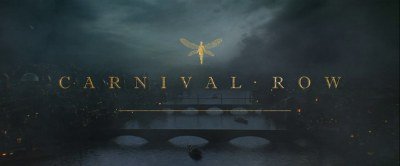
Created by Travis Beacham and Rene Echevarria, Carnival Row is set in the Burgue, a city where human power and fae displacement collide after colonial wars. The series combines murder investigation, fantasy races, political tension and a sooty urban world that looks as if progress has been left out in the rain.
The steampunk fit is adjacent rather than pure. The show is more gaslamp fantasy than machinery-first retrofuturism. Its central energies are empire, xenophobia, police procedure and mythic beings in a grim industrial city. Still, the costumes, streets, factories, class divisions and technological atmosphere place it firmly near the genre's modern television borderlands.
Its connection to China Mieville's Perdido Street Station is easy to understand, though the works are very different. Both are interested in fantasy creatures inside dense cities shaped by class and power. Carnival Row is more recognisably television melodrama, but it shares the idea that the fantastic becomes sharper when forced into urban administration.
The fae refugee material gives the series its strongest political engine. Steampunk and gaslamp settings can easily turn empire into scenery. Carnival Row keeps insisting that empire produces displaced people, resentment, policing and compromised romance. The wings may be fantastical, but the border controls are unpleasantly recognisable.
The procedural element keeps the story moving through alleys, institutions and private rooms. That is a useful gaslamp structure: investigation becomes a tour of social pressure. Every clue also exposes who is allowed comfort, who is treated as a problem and who profits from the city's arrangements.
The show is not subtle, and subtlety may not be its preferred weapon. It is moody, ornate and frequently grim. Yet as modern steampunk-adjacent television, it matters because it tries to give the gaslamp city political weight rather than treating it only as a handsome backdrop for waistcoats.
Its audience is the viewer who wants fantasy politics with the velvet rubbed thin. The Row itself is not a quaint neighbourhood of charming oddities. It is a site of overcrowding, surveillance, exploitation and grief. That gives the show's fantasy species more work to do than simply decorate the skyline.
The procedural elements can be uneven, but they serve a useful purpose. Murder investigation forces the camera through class boundaries, police rooms, drawing rooms and streets where official stories begin to fray. In gaslamp fantasy, a corpse is often the fastest way to make a city tell the truth.
The series also shows how far the modern gaslamp look has travelled. Its streets, uniforms, factories and clubs are instantly legible to viewers trained by steampunk and dark fantasy, even when the story's main engine is political rather than mechanical. That fluency is part of its value.
It also offers a useful warning to the genre: atmosphere alone is not enough if the city has no social teeth. Carnival Row may be heavy-handed, but it does give the teeth something to bite.
Is it really steampunk?
Adjacent. Carnival Row is gaslamp fantasy with steampunk-adjacent urban design. Its relevance comes from Victorian-industrial atmosphere, empire, police procedure, class conflict and fantasy beings caught in modernising systems.
It belongs near the darker city works: not boiler-room steampunk, but gaslit fantasy with soot under the fingernails and immigration policy in the wound.
Find it
If you would like to track down Carnival Row, these search links may help. We have not specified an edition, so you can pick the format that suits you.
Affiliate links: as an Amazon Associate, Stephen Hunt’s SFcrowsnest earns from qualifying purchases. These may earn us a small commission at no extra cost to you.