
Why it matters
It gives modern European comics a beautifully drawn route back to Vernean space dreams, imperial intrigue and youthful scientific romance.
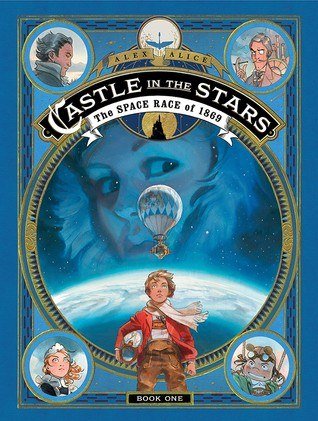
Alex Alice's Castle in the Stars looks at nineteenth-century Europe, remembers that Verne made the impossible feel respectable, and sends the whole thing upward in search of aether.
Castle in the Stars is a French graphic novel series by Alex Alice, set in an alternate nineteenth century where aether theory opens the possibility of space travel. Its young hero, Seraphin, becomes caught in a world of invention, politics and skyward ambition. The result is one of the cleanest modern examples of Vernean steampunk in comics.
The series is built from scientific romance rather than grim industrial critique. That does not make it lightweight. It means its emotional engine is wonder: the belief that calculation, courage and a machine of improbable elegance might carry human beings beyond the ordinary world. Verne's ghost is nearby, checking the rivets.
The aether premise gives the work its speculative permission. Steampunk often changes one technological or scientific assumption, then watches history lean in a new direction. Here, aether becomes the route to space, creating a bridge between nineteenth-century science, imperial competition and the old dream of leaving Earth without waiting for modern rockets.
The European setting matters. This is not another London-first work. French comics bring their own visual tradition, pacing and appetite for album-scale splendour. Alice's pages have a luminous quality, making the machinery feel elegant rather than greasy. The series is adventure, but it is also design romance.
The youthful perspective helps too. Like Airborn or Nausicaa, Castle in the Stars understands that young protagonists can carry wonder without making the world simple. Seraphin's adventure opens the machinery to readers who want discovery, danger and political stakes without being crushed under cynicism.
It belongs beside Space: 1889, A Trip to the Moon and From the Earth to the Moon because all share the desire to make nineteenth-century space travel feel imaginable. The difference is tonal. Castle in the Stars has modern pacing and lavish comics art, but its heart is old scientific romance.
The imperial European setting adds tension to the beauty. Aether spaceflight is not merely a family adventure device; it is something states and rulers would want to control. That gives the series a useful political edge without smothering its sense of wonder.
Alice's art is a large part of the pleasure. The pages have the airy clarity of classic adventure illustration, with machines that feel designed for awe rather than grime. This makes the work a good counterbalance to darker steampunk. The field needs soot, but it also needs sunlight on the brass from time to time.
The series is particularly good for readers who want young-adult-accessible steampunk that still respects its influences. It knows Verne, it loves the old dream of space travel, and it understands that wonder works best when danger is close enough to hear the rivets complain.
Is it really steampunk?
Yes. Castle in the Stars is Vernean steampunk: alternate nineteenth-century science, aether spaceflight, imperial Europe, elaborate machines and adventure built from scientific possibility.
Readers looking for grime may find it too graceful. Readers who love Verne, skyward machines, European comics and the romance of impossible engineering should find it a delight. This is steampunk with the windows open and a clear view of the stars.
Find it
If you would like to track down Castle in the Stars, these search links may help. We have not specified an edition, so you can pick the format that suits you.
Affiliate links: as an Amazon Associate, Stephen Hunt’s SFcrowsnest earns from qualifying purchases. These may earn us a small commission at no extra cost to you.