
Why it matters
It gives younger readers a graceful airship entry point into steampunk-adjacent adventure without drowning them in brass clutter.
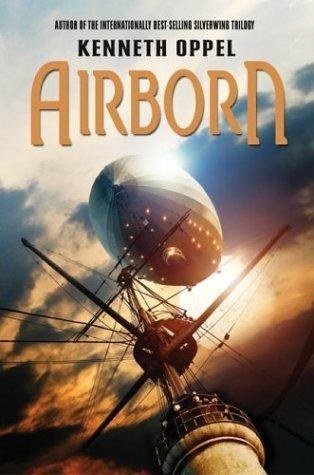
Kenneth Oppel's Airborn understands that an airship is not only a vehicle. It is a promise that adventure may arrive with polished rails, bad weather and a dining room at altitude.
Airborn is set in an alternative world where great airships dominate long-distance travel. Its young protagonist, Matt Cruse, serves aboard the passenger airship Aurora, and the story combines skyfaring adventure, class tension, natural wonder and the romance of travel. It is not the grimiest or most politically savage work in the guide, but it is one of the more accessible skyward doors into the field.
The book's steampunk adjacency comes through technology, atmosphere and social arrangement rather than strict Victorian reconstruction. Airships are central, but the world is not simply our nineteenth century with a few extra propellers. Oppel builds an alternative history of travel, one where lighter-than-air craft have become everyday marvels and social spaces. The airship is workplace, hotel, stage and machine.
Matt's position aboard the Aurora gives the story a useful class angle. He is not merely a passenger admiring the view. He works in the machine of adventure, which matters. Steampunk can sometimes focus on owners, inventors and aristocrats, but airships need crews. Airborn remembers the romance of service without making labour invisible.
Kate de Vries, meanwhile, brings curiosity, scientific hunger and social privilege into the story. Her interest in undiscovered creatures and natural history gives the novel a Vernean flavour, though softened through YA adventure. The result is a partnership built around class, curiosity and the tension between rules and discovery. Sensible adults may object, but sensible adults are often what adventure fiction uses for ballast.
The book's creatures and natural-history elements keep it from being pure mechanical fantasy. Air travel opens the world to discovery, not just transport. This places Airborn near older scientific romance, where travel vehicles function as instruments of wonder. The airship does not simply move the plot; it changes what the characters can see.
Oppel's alternative world is also deliberately clean-lined. It does not bury the reader under a glossary of machinery or geopolitical footnotes. That makes it a strong gateway book. The setting feels different enough to enchant, familiar enough to follow, and mechanically plausible enough to invite the reader aboard without making them pass an engineering exam in the gangway.
The adventure also benefits from its passenger-ship setting. Airships in steampunk are often war machines or pirate craft, but the Aurora is also a workplace of service, hospitality and discipline. That gives the novel a gentler social architecture. There are passengers above, crew below, rules everywhere and weather outside, which is already most of a plot.
Airborn matters because it is a good entry point. Not every reader begins with The Difference Engine or Perdido Street Station. Some begin with a clean, exciting adventure that teaches the pleasures of alternative worlds, airship culture and speculative travel. That gateway function is important, especially for YA steampunk and adjacent fiction.
The novel also shows how airship romance can be handled without becoming empty decoration. Oppel understands the operational details and social spaces that make the Aurora feel inhabited. A good airship is not just a silhouette. It has schedules, duties, cabins, decks, hierarchies and weather. Without those, it is only a balloon with ambitions.
Is it really steampunk?
It is steampunk-adjacent rather than hard-core Victorian steampunk. Airborn uses airships, alternative-world technology and period-adventure atmosphere, but it is more broadly skyfaring YA adventure than industrial retrofuturist critique. "YA airship adventure" is the cleanest label.
That does not make it minor. The field needs works of different intensities. Airborn offers wonder, pace and skyward freedom, with enough class and scientific curiosity to keep the adventure from floating away untethered. It is a useful recommendation for readers who want airships before they want political machinery.
Its sequels, Skybreaker and Starclimber, expand the skyward and upward arc, making the series a natural path through lighter, adventurous steampunk-adjacent material. It provides a friendlier door beside heavier entries such as Mortal Engines and Perdido Street Station.
That friendliness should not be mistaken for emptiness. Airborn has a clear sense that wonder is tied to work, risk and courage. The sky is beautiful, but it is not safe, and the people who travel through it depend on hands that know ropes, engines and emergency procedures rather than just romantic speeches at the rail.
It also gives the field a humane model of adventure. The book is not trying to dismantle empire, interrogate capitalism or terrify the reader with urban monstrosity. Other entries can do that work. Airborn offers competence, curiosity and the old thrill of looking down from a deck into weather and possibility. That cleaner pleasure deserves its place beside the heavier machinery.
Find it
If you would like to track down Airborn, these search links may help. We have not specified an edition, so you can pick the format that suits you.
Affiliate links: as an Amazon Associate, Stephen Hunt’s SFcrowsnest earns from qualifying purchases. These may earn us a small commission at no extra cost to you.