
Why it matters
It is a deep-cut Japanese tactical RPG whose polluted urban setting, class conflict and machinery give steampunk one of its darker industrial game expressions.
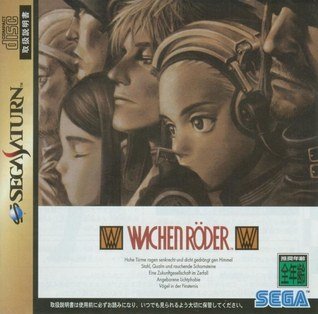
Wachenröder is a Sega Saturn tactical RPG that seems to have looked at industrial fantasy and asked whether the city could be made slightly more poisoned.
Released in Japan for the Sega Saturn in 1998, Wachenröder is one of those games that tends to appear in steampunk lists like a half-seen factory chimney. It never became an international household name, but its imagery and premise make it a strong example of industrial fantasy. The setting is a polluted city world marked by social division, machinery and revolt.
That focus on pollution gives it an immediate steampunk charge. The genre often risks becoming too polished, as if all that brass arrived without smoke, labour or disease. Wachenröder pulls the mood back toward grime. Machines have consequences. Cities have lungs. Class systems do not become kinder because someone added gears to the architecture.
As a tactical RPG, it also turns industrial conflict into positioned, deliberate play. This is not the fast arcade thrust of Steel Empire or The Chaos Engine. It is strategy, units, maps and consequence. That slower structure suits a setting where social pressure and machinery are part of the same hostile environment. The city is not just where the story happens. It is the thing pressing down.
Its class-revolt angle is especially valuable. Steampunk that forgets class becomes costume. A polluted industrial city full of machinery and inequality is much closer to the field's real dramatic engine. Wachenröder uses that tension directly, putting political anger and mechanical world-building in the same frame.
The game sits naturally beside Final Fantasy VI, though the tones differ. Both are Japanese 1990s games interested in industrial fantasy, oppressive power and technology with moral weight. Final Fantasy VI is broader, operatic and globally famous. Wachenröder is narrower, darker and more obscure. That does not make it less useful. Sometimes the deep cuts show the genre's edges more sharply.
It also belongs near the urban-industrial tradition represented by Perdido Street Station. That may sound like a large literary cousin to place beside a Saturn game, but the connection is mood rather than direct influence: polluted city, machinery, social pressure and the sense that modernity has arrived with a cough.
Wachenröder also keeps steampunk gaming history from being built only from the titles that travelled easily in English. Japanese games repeatedly developed their own industrial, clockwork and retro-mechanical fantasies. Some were bright and theatrical, like Sakura Wars. Some were airy and adventurous, like Skies of Arcadia. Wachenröder went down into the smoke.
Its obscurity now is part of the point. Not every influential-looking work gets the export, translation or reissue it deserves. Seen from the outside, Wachenröder is a reminder that steampunk games have a shadow archive: titles with strong imagery, serious craft and limited reach, waiting for curious readers to notice the chimney on the horizon.
Is it really steampunk?
Yes, in the industrial fantasy sense. Wachenröder has polluted urban machinery, class conflict, tactical conflict and a world shaped by industrial pressure.
It suits readers interested in obscure game history and the sootier end of Japanese steampunk design.
Find it
If you would like to track down Wachenröder, these search links may help. We have not specified an edition, so you can pick the format that suits you.
Affiliate links: as an Amazon Associate, Stephen Hunt’s SFcrowsnest earns from qualifying purchases. These may earn us a small commission at no extra cost to you.