
Why it matters
It is one of the major early steampunk video games, turning a broken Victorian timeline, mad machinery and industrial mutation into a sharp, top-down action game.
The Chaos Engine is what happens when Victorian invention goes wrong, then goes mobile, hostile and rather busy with the shooting.
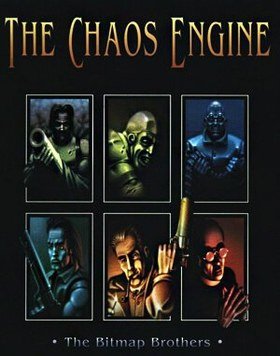
Released by The Bitmap Brothers in 1993, The Chaos Engine drops players into a steampunk Victorian Britain warped by a catastrophic invention. A time traveller's advanced technology ends up in the hands of a grand Victorian inventor, whose experiments create the titular machine and a world full of hostile consequences. In other words, the Royal Society has had one of those weeks.
The game is a top-down run-and-gun action title, but its setting is more than window dressing. The premise draws on alternate history, Babbage-like invention, industrial mutation and a world transformed by machinery that has escaped polite supervision. It is a compact game premise with a rich steampunk charge: one brilliant device, one damaged timeline and a lot of armed men discovering that progress has teeth.
Its timing is important. Published just a few years after The Difference Engine, it belongs to the same broader period in which cyberpunk-inflected Victorian speculation was becoming visible across media. The Chaos Engine is not a literary argument, but it translates the mood into arcade form. The alternate Victorian machine does not sit in a philosophical essay. It fills the screen with monsters, hazards and mechanical trouble.
The Bitmap Brothers' style helps enormously. Their games had a particular weight and polish, with chunky characters, metallic surfaces and a sense of designed aggression. The Chaos Engine uses that sensibility to make steampunk feel physical. It is not delicate brass filigree. It is steel, leather, weaponry and grim industrial mess. The name alone tells you that no one is being invited to a tasteful exhibition.
The character roster adds another layer of period flavour. The figures are archetypes of Victorian pulp and adventure fiction: mercenary, gentleman, preacher, navvie and other practical people who look as if they might solve a metaphysical crisis by loading a gun. That mix of class, occupation and pulp silhouette gives the action a sharper historical taste than a generic shooter would have managed.
Its place in the canon is especially strong beside Steel Empire. Both games show early 1990s steampunk as action rather than prose, but they choose different routes. Steel Empire is aerial, militarised and Japanese arcade spectacle. The Chaos Engine is British, ground-level and grimy, with a mad machine at its centre. One flies through the industrial war; the other fights through the consequences.
Seen now, The Chaos Engine is a useful reminder that steampunk games did not begin with cosy crafting or expansive open worlds. They could be lean, violent and stylish, built around the anxiety that Victorian invention might not merely change history but chew through it.
Is it really steampunk?
Yes. The Chaos Engine is core video-game steampunk: alternate Victorian Britain, an out-of-control machine, retro-futurist invention, industrial mutation and pulp action.
It suits players who prefer their speculative machinery loud, dangerous and already halfway through the wallpaper.
Find it
If you would like to track down The Chaos Engine, these search links may help. We have not specified an edition, so you can pick the format that suits you.
Affiliate links: as an Amazon Associate, Stephen Hunt’s SFcrowsnest earns from qualifying purchases. These may earn us a small commission at no extra cost to you.