
Why it matters
It brings superheroic and strange-power play into a gaslamp Victorian frame, connecting clubs, empire, occult weirdness and extraordinary people in tabletop form.
The Kerberos Club imagines Victorian strangeness organised through a club, because apparently even the uncanny needs membership rules and somewhere decent to sit.
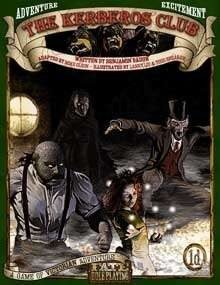
Created by Benjamin Baugh, The Kerberos Club is a roleplaying setting of Victorian-era heroes, oddities and powers gathered around the titular club. It has appeared in versions for different systems, but the core appeal remains the same: extraordinary figures moving through a world of empire, etiquette and weird possibility.
Its steampunk relationship is adjacent rather than mechanical. The focus is not steam technology or industrial engineering. It is gaslamp superheroics: powers, institutions, secret histories, club culture and a nineteenth-century society trying to make room for the impossible without admitting that its categories are falling apart.
The club frame is a clever one. Victorian fiction loves societies, lodges, gentlemen's clubs, secret orders and rooms where influence sits in expensive chairs. The Kerberos Club turns that social machinery into an adventure engine. Membership is not only flavour. It gives characters a place in the world and a reason to collide with it.
The setting belongs near The League of Extraordinary Gentlemen, though with the emphasis shifted towards player-created heroes rather than literary collage. It also anticipates the appeal of gaslamp-superhuman television like The Nevers: altered or extraordinary people moving through a society that finds them useful, threatening or indecorous.
For tabletop play, the pleasure is flexibility. Characters can be occult investigators, strange inventors, superhuman adventurers, social reformers or walking scandals. The Victorian frame supplies manners and repression; the powers supply the disruption. That is a durable recipe for trouble.
Its audience is the group that wants capes without spandex and gaslight without full historical realism. It is not core steampunk, but it uses the same fascination with hidden power under polished surfaces. The empire smiles, the club pours drinks, and someone in the corner can probably bend physics.
The superhero element is what makes the setting stand out. Victorian adventure already has explorers, inventors, occultists and detectives. Add powers, and the old social order has to explain why certain people can now break its rules physically as well as socially. That creates excellent trouble for a campaign.
The club also gives characters a useful social anchor. Many superhero games struggle to justify why wildly different figures keep meeting. Here, the answer is built into the title: a strange institution in a strange age, offering status, secrecy and a room where the impossible can compare notes.
Its relationship to empire can be played lightly or critically, depending on the table. The setting has room for dashing adventure, but also for questions about who gets called heroic and who gets called monstrous. That ambiguity belongs in gaslamp gaming.
The setting also works because clubs are natural story machines. They create obligations, rivals, patrons, rumours and locked doors. In a Victorian superhero game, that structure keeps the extraordinary from floating away into pure spectacle. Someone knows your name, your reputation and possibly your tailor.
It also offers a neat alternative to the lone masked avenger. The Kerberos Club is social by design, which suits tabletop play. Characters can be wildly different and still share a reason to gather, argue, take assignments and return with the upholstery damaged.
Is it really steampunk?
Adjacent. The Kerberos Club is gaslamp superhero roleplaying rather than classic steampunk. Its relevance comes from Victorian clubs, strange powers, empire, secret histories and the social handling of the impossible.
It belongs close to the field because it turns the nineteenth-century social room into a launchpad for weird adventure. The furniture is respectable. The members are another matter.
Find it
If you would like to track down The Kerberos Club, these search links may help. We have not specified an edition, so you can pick the format that suits you.
Affiliate links: as an Amazon Associate, Stephen Hunt’s SFcrowsnest earns from qualifying purchases. These may earn us a small commission at no extra cost to you.