Why it matters
It is one of the defining tabletop steampunk games, giving the genre a stylish alternate Europe of steamtech, magic, dragons, faeries, secret politics and card-based play.
Castle Falkenstein is the tabletop RPG that looked at steampunk, faerie romance, swashbuckling and nineteenth-century manners, then decided dice were insufficiently elegant.
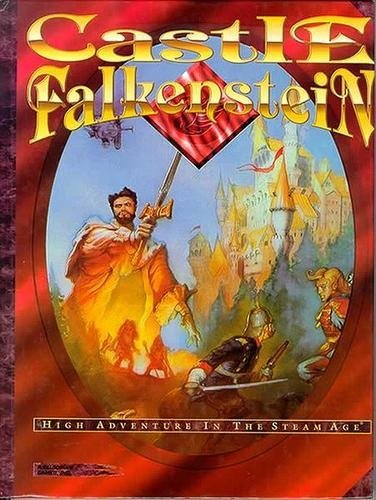
Designed by Mike Pondsmith and published by R. Talsorian Games, Castle Falkenstein presents a fantastical nineteenth century where steam technology, magic, faerie courts, dragons and high adventure all share the same social calendar. It is less grimy factory floor and more grand tour with concealed weapons, which is not a complaint.
Its card-based play is one of its famous signatures. Instead of dice, the game uses playing cards, a decision that supports the setting's salon-and-duel atmosphere. Mechanics are not neutral in tabletop roleplaying. A card in the hand feels different from a fistful of dice, and Castle Falkenstein uses that difference to make the table feel a little more like a drawing room with consequences.
The setting matters because it widens steampunk beyond Victorian machinery. There is steamtech, certainly, but there is also romance, etiquette, social intrigue, magic and continental adventure. This is steampunk as operetta, diplomatic crisis and fairytale mechanism rather than only coal smoke and class misery.
It also connects strongly to later works such as Girl Genius. Both understand the pleasure of theatrical Europe, mad science, dynastic weirdness and adventure that treats costume as part of the engine. Castle Falkenstein has a lighter, more courtly mode, but the shared joy in extravagant invention is obvious.
For players, the appeal lies in tone. The game invites daring, wit, manners, bold plans and catastrophes that look marvellous in evening wear. It is not trying to simulate every pressure valve. It wants romance and style to carry as much weight as engineering.
Its place in canon is therefore secure. Alongside Space: 1889 and Forgotten Futures, it helped show that steampunk could thrive at the gaming table. More importantly, it showed that tabletop steampunk did not have to be one flavour. It could be scientific romance, archival recovery or, in this case, faerie swashbuckling with steam.
The game's presentation is part of its appeal. Castle Falkenstein is interested in voice, letters, social standing and dramatic flourish, not only tactical procedure. That makes it feel unusually literary for an RPG, as if the campaign has one hand on a sabre and the other on a handwritten invitation.
Its alternate Europe also gives steampunk a more cosmopolitan range. The genre can become trapped in a London fogbank if no one opens a window. Castle Falkenstein moves through courts, salons, faerie politics and continental intrigue, reminding players that the nineteenth-century imagination was not confined to one capital city and one sort of hat.
The fantasy elements also keep the setting from becoming a lecture on technology. Dragons and faeries are not pasted over the steam machinery as decoration; they change diplomacy, danger and social life. That gives the game a lively tension between engineering and enchantment, with neither side politely agreeing to stay in its lane.
It remains approachable because the central promise is so clear. Be clever, be stylish, take risks, write letters, cross swords and try not to offend the wrong supernatural aristocrat. Many games need pages to explain their mood. Castle Falkenstein can do much of it with a deck of cards and a raised eyebrow.
Is it really steampunk?
Yes. Castle Falkenstein is core tabletop steampunk, though in a romantic and fantastical register. Steamtech, alternate history, social theatre, magic and nineteenth-century adventure all work together.
It suits players and readers who like their steampunk elegant, magical and ready for a duel before supper. The cards are on the table, and the table is probably in a castle.
Find it
If you would like to track down Castle Falkenstein, these search links may help. We have not specified an edition, so you can pick the format that suits you.
Affiliate links: as an Amazon Associate, Stephen Hunt’s SFcrowsnest earns from qualifying purchases. These may earn us a small commission at no extra cost to you.