
Theme
Steam Computers
What if the information age had arrived a century early, powered by brass cogs and punch cards instead of silicon? Steampunk keeps asking, and keeps building the machines to answer.
The engine that almost was
Charles Babbage really did design a programmable mechanical computer in the nineteenth century, and Ada Lovelace really did write the first algorithm for it. The machine was never finished in their lifetimes. Steampunk treats that near miss as an open door.
Gibson and Sterling walked straight through it in The Difference Engine, imagining a Britain where Babbage’s computer works, the information age arrives in stovepipe hats, and clattering rooms of gears quietly reorganise the state. It remains the founding text of the whole idea.
The information age, we are often told, arrived with silicon, transistors, plastics, clean rooms and people in fleece gilets saying “platform” as if they had discovered fire.
Steampunk knows better. It looks at the nineteenth century, with its railways, telegraphs, factories, clerks, census forms, empire, finance, insurance, mathematics and alarming hats, and asks a far more interesting question: what if the computer had arrived early? What if the digital age had been born not in California garages, but in smoky workshops, government ministries and brass-bound calculation halls? What if the cloud was made of steam?
This is the dream of the steam computer. Not a laptop with goggles, not a desktop PC painted copper by someone with a glue gun and a mild fever, but a vast mechanical intelligence of cogs, cams, wheels, punched cards, levers, pressure gauges and clerks who have inhaled too much coal dust to fear modernity. In steampunk, the computer is not hidden inside a silent black rectangle. It is the size of a chapel, sounds like a regiment of kettles and requires a man called Wilkins to change the decimal drum before Tuesday.
The steam computer begins, inevitably, with Charles Babbage and Ada Lovelace, the great patron saints of mechanical computation. Babbage’s Difference Engine and Analytical Engine were not steampunk inventions, because steampunk had not yet been issued its certificate, waistcoat and small brass octopus. They were real nineteenth-century attempts to imagine machines that could calculate with precision. Lovelace, seeing further than most of her age, understood that such machines might manipulate symbols as well as numbers. That one thought opens a trapdoor under history.
Steampunk tumbles joyfully through that trapdoor.
The attraction is obvious. The nineteenth century was already drowning in information. Empires require maps, shipping records, tariffs, censuses, military logistics, tax systems, trade routes, banking ledgers, railway timetables, stock prices, court records, patents, poor-law paperwork and the names of everyone who owes a duke money. A society does not need smartphones before it needs data. It only needs enough ambition, enough paperwork and enough people being counted by people who have no intention of asking politely.
Add mechanical computers to that world and the past changes shape. The government becomes faster. The banks become stranger. The police become more efficient, which is rarely good news for anyone interesting. The military gains new logistics. The stock market grows teeth. Newspapers find new methods of being wrong at speed. Bureaucracy, that pale monster in a frock coat, discovers automation.
This is why the steam computer is one of steampunk’s best ideas. It is not just decorative machinery. It changes society. An airship changes travel. An automaton changes labour. A steam computer changes knowledge, power and control. It asks who gets counted, who does the counting, who owns the machine and who is quietly fed into it as a line of punched holes.
William Gibson and Bruce Sterling’s The Difference Engine remains the great landmark here. It imagines an alternate nineteenth-century Britain transformed by mechanical computation, a world where Babbage’s engines work and the computer revolution arrives early in an age of class struggle, science, radical politics and information control. The brilliance of the premise is that it does not simply bolt brass onto modern computing. It asks what computation would have meant to Victorian society. The answer is not “nicer keyboards.” The answer is power.
A steam computer in a steampunk story should never be only a clever adding machine. It should be a political animal. It should sit inside a ministry, bank, university, factory, railway company, intelligence bureau or royal archive and quietly alter the structure of the world. It should make some people rich, some people visible, some people invisible and some people very nervous indeed. The best fictional machines do not merely run. They have consequences.
Punch cards are especially useful because they are small, physical and faintly sinister. A punch card looks harmless, but so does a legal form until it ruins your afternoon. In steampunk, the punched card is data made visible. It can be filed, stolen, forged, smuggled, decoded, shredded, duplicated or misread by a tired clerk. It gives information weight. You can hold it in your hand and still not know whether it contains railway schedules, military orders, bank records, criminal identities or the formula for a pudding of national importance.
That physicality is one reason steam computers feel so satisfying in fiction. Modern computing often vanishes into abstraction. Data hides in servers, cables, chips and cloud systems that most people never see. Steampunk drags information back into the room. The gears turn. The cards rattle. The printer hammers. The pressure rises. The machine develops a smell. If the computation goes wrong, someone may have to climb inside with a spanner and a prayer.
There is comedy in this, of course. A steam-powered search engine would be magnificent. You would submit a query on punched card, wait for the pistons to consult the index cylinders, then receive three answers, two advertisements for patent liver tonics and a warning that the Ministry has noted your curiosity. A Victorian social network would involve pneumatic tubes, coded visiting cards, scandal indexes and an elderly aunt capable of destroying reputations faster than broadband. A mechanical spam filter would probably be a man with a moustache and a mallet.
But the joke has claws. The early information age would not be innocent. It would be built by the institutions with money and appetite: governments, militaries, banks, insurers, shipping firms, railway companies and empires. The first steam computers would not be used for cat pictures. They would be used to count taxes, predict revolts, calculate artillery tables, manage colonies, optimise factories, track debtors and decide which citizens have become inconvenient.
Steampunk, at its sharpest, understands that a machine does not become neutral because it is beautiful. A brass casing does not absolve a system. A polished lever can still pull a cruel decision. The operator may wear cuffs, the engine may gleam, the interface may be a lovely mahogany console, but if the machine is sorting human beings into profitable and disposable categories, we have not escaped the future. We have merely dressed it better.
Transaction Engines and the Jackelian realm
Stephen Hunt’s Jackelian novels give the steam computer a national role. The kingdom of Jackals runs in part on vast Transaction Engines, steam-driven punch-card computers that help administer the realm and occasionally develop opinions of their own.
It is a useful reminder that a computer is never only a calculator. Give a society a thinking machine and you have given it a new place to keep its secrets, its prejudices and its accidents.
Stephen Hunt’s Jackelian books understand this wonderfully through the kingdom’s Transaction Engines. These vast steam-driven punch-card computers are not parlour curiosities. They help drive the realm itself. They are administrative giants, civic brains and bureaucratic furnaces, processing the information on which the Jackelian kingdom depends. They make the state feel mechanical in more than the decorative sense. Here, the computer is not a gadget in the corner. It is part of the nervous system of government.
That is exactly what gives them their force. The Transaction Engines suggest a society where governance, commerce, identity and authority have become entangled with calculation. The kingdom is not just ruled by people in offices. It is processed by machines in offices. This is funny until one imagines being on the wrong side of an error. A misplaced card, a flawed entry or a bureaucratic calculation could do what armies do, only with less shouting and more filing.
This is where steam computers connect to automata. A mechanical person asks whether machines can become human. A mechanical state asks whether humans can survive becoming data. The steamman of Mechancia may show dignity, culture and feeling, making human prejudice look under-maintained. The Transaction Engines, by contrast, show a realm turning itself into a machine of records, procedures and outputs. One kind of machinery rises toward personhood. The other pulls personhood into paperwork.
That tension is pure steampunk.
Steam computers also let the genre talk about class. Who operates the engines? Who designs them? Who owns them? Who is trained to read their output? Who is reduced to input? Every great calculation hall must have a hierarchy: gentlemen mathematicians, engineers, punch-card clerks, maintenance crews, messengers, guards, cleaners and some haunted junior operator who has realised the machine is predicting civil unrest because the aristocracy cannot stop being awful. The engine may be mechanical, but the society around it is not.
A good steam-computer story should care about the engine room and the boardroom. It should notice both the inventor and the card-punch girl. It should understand the glamour of the machine and the cost of feeding it. Information does not enter systems by magic. Someone collects it. Someone formats it. Someone checks it. Someone is punished when the machine says no. Even in a brass-plated alternate history, data has fingerprints.
The visual possibilities are glorious. Imagine a calculation cathedral under the Treasury, its vaulted halls filled with rotating brass columns, steam pipes, punched-card looms and clerks moving along gantries like priests attending a metal god. Imagine a detective consulting a crime engine that prints suspect probabilities on cream paper. Imagine a stock exchange where mechanical predictors clatter faster than human fear. Imagine a rebel group smuggling altered cards into a ministry machine to make the empire misplace an entire regiment. Imagine the world’s first computer virus as a pattern of holes in a card, passed hand to hand in a velvet envelope.
This is why steam computers are not merely background furniture. They create plots. They can be hacked, sabotaged, worshipped, misunderstood, nationalised, privatised, haunted, infected, overloaded or made self-aware if the author has had enough tea. They can reveal secrets, bury crimes, create fortunes, start wars, prove prophecies false or accidentally generate poetry so dreadful that Parliament has to intervene.
They also allow steampunk to talk about our own age without dragging in smartphones and app stores. We live inside systems of calculation: credit scores, recommendation engines, surveillance networks, logistics platforms, algorithmic decisions, predictive policing, automated bureaucracy and data markets. Steam computers let fiction relocate those anxieties into a world of visible machinery. The result is oddly clarifying. It is easier to question the machine when you can hear it breathing.
And that may be the secret pleasure of the steam computer. It makes the invisible visible. Modern computation is quiet, seamless and smug. Steampunk computation is noisy, physical and guilty-looking. It cannot pretend it is not there. It shakes the floorboards. It stains the ceiling. It requires coal, labour and a maintenance rota. It reminds us that information systems are built things, operated by people, serving interests, consuming resources and occasionally producing nonsense with great authority.
The steam computer also has one great advantage over modern devices: it is honest about being ridiculous. A modern laptop may crash silently after an update and offer no explanation beyond a spinning icon of doom. A steam computer, at least, would explode with dignity. There would be a whistle, a pressure warning, perhaps a clerk shouting “not the actuarial cylinder!” before the room filled with smoke and the national insurance records became confetti.
Yet beneath the comedy sits wonder. There is something beautiful in the idea of thought made mechanical, not because it replaces human imagination, but because it extends the reach of pattern, number and memory. A Babbage-style engine is a promise that the mind can build tools for thinking. Ada Lovelace saw that the machine might do more than arithmetic, that it might operate on symbols, perhaps even music. That is the doorway through which the modern age eventually walks, carrying a briefcase, wearing unsuitable shoes and asking where the nearest plug socket is.
Steampunk simply opens that door early and asks what follows.
The answer is never simple. If the information age arrives a century early, it does not arrive clean. It arrives through empire, class, labour, war, science, finance and bureaucracy. It arrives in brass and steam, wearing a top hat and carrying a ledger. It gives humanity new powers and new excuses. It lets the clever calculate, the powerful administer, the rebels disrupt and the machines clatter on long after everyone has forgotten why they were built.
Steam computers are therefore among the most important engines in steampunk. They are not as graceful as airships, not as charming as automata, not as dramatic as rayguns and infernal devices. But they may be more dangerous than all of them, because they do what power loves most.
They remember.
A cannon can destroy a wall. An airship can conquer a sky. An automaton can frighten a parlour.
But a Transaction Engine, a Difference Engine, a vast brass thinking machine in the belly of the state, can decide who you are, where you belong, what you owe and whether the system has room for you.
And if the answer comes back on a punched card, with the holes in the wrong places, good luck arguing with the boiler.
Why it matters
The steam computer lets the genre ask a sharp modern question in fancy dress. Who controls the engine? Whose data does it hold? What happens when the calculations start making decisions about people? The brass is period costume. The anxiety is entirely current.
Common questions
What is a transaction engine?
In Stephen Hunt's Jackelian novels, a transaction engine is a vast steam-driven, punch-card computer used to help run the kingdom of Jackals. It is the genre's most fully imagined steam-age computer state.
From the cabinet
Entries that show this theme at work
 Core Steampunk
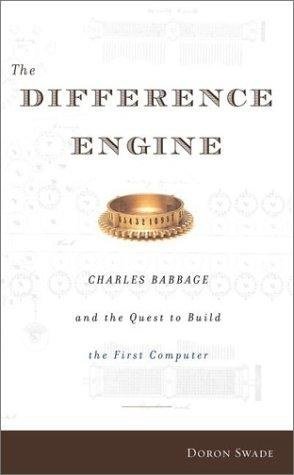
The Difference Engine
Gibson and Sterling's The Difference Engine is a core steampunk landmark, imagining a Babbage-powered Victorian information revolution.
Core Steampunk
The Difference Engine
Gibson and Sterling's The Difference Engine is a core steampunk landmark, imagining a Babbage-powered Victorian information revolution.
 Historical Alternate / Core-adjacent
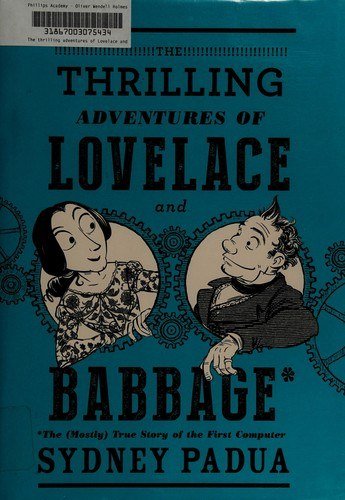
The Thrilling Adventures of Lovelace and Babbage
Sydney Padua's The Thrilling Adventures of Lovelace and Babbage is comic alternate history about computing's great might-have-been.
Historical Alternate / Core-adjacent
The Thrilling Adventures of Lovelace and Babbage
Sydney Padua's The Thrilling Adventures of Lovelace and Babbage is comic alternate history about computing's great might-have-been.
 Core Steampunk Fantasy
Jack Cloudie
Stephen Hunt's Jack Cloudie is core Jackelian steampunk fantasy, effectively Hornblower with airships and the Royal Aerostatical Navy.
Core Steampunk Fantasy
Jack Cloudie
Stephen Hunt's Jack Cloudie is core Jackelian steampunk fantasy, effectively Hornblower with airships and the Royal Aerostatical Navy.