
Why it matters
It brings steampunk-adjacent airship adventure into big, accessible crossover fantasy, with enough sky combat and strange technology to rattle the rigging.
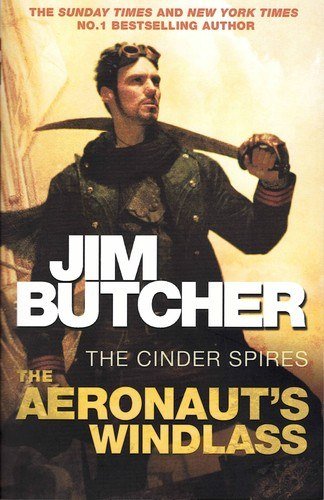
Jim Butcher's The Aeronaut's Windlass arrives with spire cities, airships, crystal technology and cats who appear to have read the contract and improved their own billing.
The Aeronaut's Windlass opens Jim Butcher's Cinder Spires series. Butcher was already a major name in popular fantasy thanks to The Dresden Files, so this book gave skyborne, steampunk-adjacent adventure a large mainstream fantasy platform. The result is not strict Victorian retrofuturism, but a buoyant airship fantasy with its own technological logic.
The setting is built around spires, vast vertical communities that rise above a dangerous world. That immediately gives the book a different structure from London-centred steampunk or industrial city fiction. The action lives in height, class, military obligation and aerial movement. If Senlin Ascends turns the tower into bureaucracy, The Aeronaut's Windlass turns vertical civilisation into a stage for airship combat and honourable peril.
The technology is not steam in the old sense. Crystal-based systems and etheric-seeming forces do much of the work, which pushes the book toward fantasy rather than mechanical alternate history. Still, the visible pleasures overlap with steampunk: ships, officers, engineers, social hierarchies, martial codes, goggles by implication if not always by necessity, and the thrill of machines sailing through hostile air.
Captain Grimm and his airship, the Predator, give the book its most obvious steampunk-adjacent identity. Airship captains are one of the field's great temptations, because they combine naval romance, aviation glamour and the possibility of shouting orders while something catches fire. Butcher understands that appeal and gives the aerial material plenty of room to breathe.
The military and social codes also do useful work. Airship fantasy can become empty spectacle if ships are only floating platforms for explosions. Here, rank, loyalty, training and reputation give the action a frame. The people aboard these vessels have duties as well as dramatic coats, which is always a relief. A sky battle lands harder when the crew feels like a working organism rather than scenery with boots.
The cats deserve mention because the book gives them social weight rather than using them as decoration. Rowl and his people bring a gleeful oddness to the story, and they help keep the world from being merely a set of sky-navy manoeuvres. Steampunk can sometimes take itself so seriously that one longs for a creature willing to knock the compass off the table. Here, the cats may have already done so and blamed poor navigation.
As a steampunk-adjacent work, the novel matters because of audience reach. Not every reader comes to the field through Gibson, Sterling, Blaylock or Moorcock. Some arrive through large-scale fantasy adventure, airship battles and a familiar author's new toy box. That gateway function is valuable, even when the fit needs a careful label.
Is it really steampunk?
Not strictly. The Aeronaut's Windlass is airship fantasy with steampunk-adjacent machinery, manners and aerial romance. It is not primarily about steam-age history, industrial politics or Victorian technological divergence. Its engines run on different rules.
Even so, it belongs near the field because it makes the sky central. Readers who enjoy Leviathan, Airborn, Jack Cloudie and other airship-heavy works will recognise the appeal: crews, codes, battles, vertical worlds and the alarming idea that civilisation may depend on people who willingly climb aboard armed balloons.
Find it
If you would like to track down The Aeronaut's Windlass, these search links may help. We have not specified an edition, so you can pick the format that suits you.
Affiliate links: as an Amazon Associate, Stephen Hunt’s SFcrowsnest earns from qualifying purchases. These may earn us a small commission at no extra cost to you.