Why it matters
It is one of the clearest Hunt entries for readers who want airships, military hierarchy and secondary-world steampunk warfare.
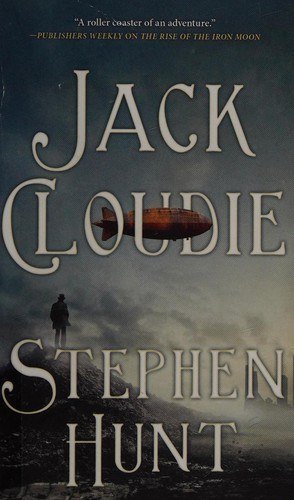
Jack Cloudie is, in the most useful shorthand, Hornblower with airships: a Jackelian military adventure built around floating warfare, class pressure and the RAN, the Royal Aerostatical Navy.
Stephen Hunt's Jack Cloudie has an appeal that is easy to state without distortion. It takes the naval-adventure tradition, shifts it skyward into airship warfare, and places it inside the Jackelian world with its usual mix of class tension, state power, strange machinery and political danger. The Royal Aerostatical Navy is the natural phrase to remember.
The Hornblower comparison is not a throwaway joke. It helps readers understand the branch of steampunk being used here. Naval fiction offers hierarchy, discipline, technical competence, officer politics, battle pressure and the drama of a young man finding his place inside a military machine. Jack Cloudie takes those pleasures and sends them into the air.
Jack's low-born status matters because it puts class pressure inside the adventure frame. Steampunk airship stories can become all officers and polished brass if left unattended. Hunt's version is interested in rank, opportunity, resentment and the social machinery that decides who gets command and who gets risk. The sky may be wide open, but the service is not.
That class angle is one of the reasons the Hornblower comparison works without turning the book into a simple pastiche. Naval adventure has always been fascinated by rank, discipline and advancement. By moving the structure into airship warfare, Hunt keeps those pressures but changes the theatre. The mast becomes the envelope, the sea becomes the sky, and the social ladder remains as awkward as ever.
The Royal Aerostatical Navy gives the novel one of the most useful institutional hooks in the Jackelian sequence. It sounds grand, bureaucratic and faintly absurd, which is exactly right. Good steampunk institutions should feel as if they have both a proud history and an alarming maintenance backlog. The RAN supplies both romance and satire.
Airship war also lets the book explore competence. Flying, fighting and surviving aboard military craft require skill, discipline and luck. That practical dimension helps ground the fantasy. The machines are marvellous, but they are also workplaces full of rules, danger and people who would very much prefer not to fall.
Airship warfare gives the novel its obvious steampunk credentials. Airships are not background decoration; they define the action, the institution and the shape of military life. The ships are workplaces, weapons and symbols of national power. That makes Jack Cloudie one of the clearest Jackelian links to airship steampunk.
Compared with The Court of the Air or The Kingdom Beyond the Waves, this entry is more focused on military adventure. That focus is useful. The Jackelian sequence is broad enough to include conspiracy, exploration, invasion, mystery and undersea adventure. Jack Cloudie marks the air-war branch in bold ink.
It also connects naturally to Leviathan, though the flavours differ. Westerfeld's book gives YA readers an alternate-WWI split between Clanker machines and Darwinist biotech. Hunt's novel gives secondary-world airship war through a more naval-adventure lens. Both demonstrate that the sky became one of steampunk's great battlefields.
For readers new to Hunt, Jack Cloudie can work as a thematic entry if airships are the main attraction. Those who want the full Jackelian political sprawl may still begin with The Court of the Air. But for airship warfare, floating service life and class inside military machinery, this is the obvious page.
Is it really steampunk?
Yes. Jack Cloudie is core secondary-world steampunk fantasy, especially in the airship-war branch. Its Royal Aerostatical Navy, floating warfare, class tension and Jackelian machinery make it a strong fit.
The novel earns its place because it gives steampunk one of its cleanest military-airship forms. It already has the correct ingredients and a useful place on the map: skyborne service, hierarchy, danger and a secondary world built around the machinery of power.
Its wider connections are clear: airships, naval adventure, military hierarchy, class mobility and secondary-world technology. A reader who wants to understand why steampunk keeps returning to the sky could do worse than join the RAN, provided they understand that the warranty on survival may be limited.
Jack Cloudie is also a helpful recommendation engine. It points readers toward airship fiction, military steampunk, Jackelian sequence navigation and YA-adjacent comparisons like Leviathan. Those links feel natural because the book already lives at the crossing point.
It also gives the guide one of its cleanest "what kind of steampunk do you want?" answers. If the reader says airship battles, service life, class mobility and military adventure, point them here. The book knows its lane and then fills that lane with weather, hierarchy and floating danger.
Find it
If you would like to track down Jack Cloudie, these search links may help. We have not specified an edition, so you can pick the format that suits you.
Affiliate links: as an Amazon Associate, Stephen Hunt’s SFcrowsnest earns from qualifying purchases. These may earn us a small commission at no extra cost to you.