
Why it matters
It is an early pre-coinage example of treating Victorian science as a route to terrifying modern power.
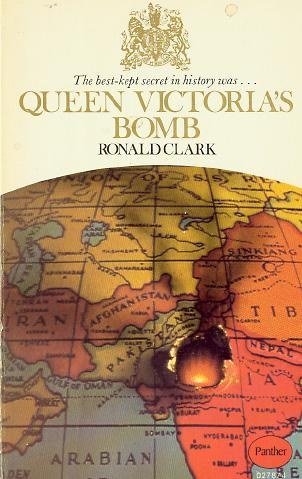
Some alternate histories begin with a battle going the other way. Ronald W. Clark's Queen Victoria's Bomb begins with the much more British nightmare that the nineteenth century might discover nuclear weapons and then form a committee.
Published before "steampunk" was a handy label, Queen Victoria's Bomb sits in the awkward and fascinating pre-coinage zone. It is not a brass-romp adventure and not a gadget catalogue. Its speculative hook is far colder: what if nuclear knowledge arrived in the Victorian period, placing unprecedented destructive power inside the politics, secrecy and imperial assumptions of the nineteenth century?
That premise makes the book a useful cousin to later steampunk, even if it does not wear the genre's familiar waistcoat. Steampunk often delights in giving the past advanced machines. Clark asks what happens when the gift is not delightful. The result is less tea with automata, more statecraft with a migraine.
The spreadsheet places the novel under Victorian nuclear anxiety, secret weaponry and imperial politics, which is exactly the right neighbourhood. The interest is not merely technical. A nuclear device in Queen Victoria's world changes diplomacy, military thinking and the moral temperature of empire. It is an alternate history of premature modernity, where the future's worst knowledge arrives before the institutions and ethics needed to contain it.
That makes Queen Victoria's Bomb important because it widens the ancestry of steampunk beyond visible machinery. The genre is often imagined through texture: brass, goggles, rivets, polished gauges. This novel belongs to a more conceptual line: what if one crucial scientific or industrial development happened early, and history had to absorb the shock?
It also anticipates the anti-history mood that would become central to many later works. By the time The Difference Engine arrives in 1990, alternate Victorian technological acceleration is a recognised engine for speculative fiction. Clark is there earlier, asking a severe version of the same question. The past is not made charming by being given the future. Sometimes it is made more dangerous.
Purists may hesitate to call the book steampunk. They should. It is better labelled proto-steampunk or adjacent alternate history. There is no requirement here to pretend every alternate nineteenth century belongs to the same shelf. The value of Queen Victoria's Bomb is precisely that it shows another road toward the field: not adventure spectacle, but political thought experiment.
Readers looking for airship duels may find it dry. Readers interested in the darker machinery of power should pay attention. The great device in the book is not just the bomb but the state apparatus around it: secrecy, policy, fear, advantage and the fantasy that catastrophe can be administrated sensibly if only the minutes are typed up.
That dryness is not a flaw. It marks a different temperament within the same wider territory. Some proto-steampunk works approach the nineteenth century through spectacle, some through literary remixing, and some through the cold puzzle of consequences. Clark's premise belongs to the last group. The question is not how splendid the invention looks, but what sort of political creature wakes up once the invention exists.
The title itself is doing useful work. Putting Queen Victoria beside the bomb creates a collision between ceremonial stability and modern annihilation. The result is almost absurd, then quickly unpleasant. That is exactly the sort of tonal turn alternate history can manage well: begin with a clever historical mismatch, then follow it until the joke stops smiling.
For a canon list, the novel is valuable because it stops the early timeline becoming too neat. Steampunk did not simply bloom from Verne, Wells and airships. It also grew from political counterfactuals, nuclear-age fears projected backwards, and writers using the Victorian period as a pressure chamber for modern dread.
Is it really steampunk?
It is not core steampunk. It is a borderland work and a pre-coinage alternate history that later steampunk can recognise as part of its extended family. Its speculative technology is not decorative or adventurous; it is strategic, political and grim. That makes it less immediately stylish, but perhaps more unsettling.
The book helps remind the field that retrofuturism is not automatically fun. Giving the nineteenth century future knowledge can produce wonder, but it can also produce an arms race with frock coats. Clark's premise strips away the comforting idea that old-fashioned manners would make advanced weapons more civilised. If anything, the manners might make the horror easier to file.
In the wider guide, Queen Victoria's Bomb belongs near alternate-history landmarks, imperial critiques and works about state machinery. It is a good companion piece for readers who want the steampunk timeline to contain more than charming inventions and well-dressed peril.
Find it
If you would like to track down Queen Victoria's Bomb, these search links may help. We have not specified an edition, so you can pick the format that suits you.
Affiliate links: as an Amazon Associate, Stephen Hunt’s SFcrowsnest earns from qualifying purchases. These may earn us a small commission at no extra cost to you.