
Why it matters
It is not steampunk proper, but its linking books, strange mechanisms, island machines and environmental puzzle spaces shaped a powerful branch of clockwork and retro-technical adventure gaming.
Myst is the adventure game that taught a generation to distrust beautiful islands, silent rooms and any book that looks as if it might have travel arrangements hidden inside.
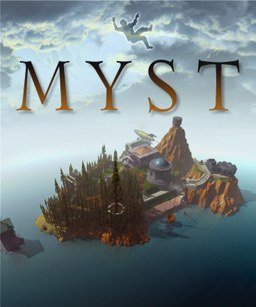
Created by Cyan and released in 1993, Myst became one of the defining adventure games of the CD-ROM era. The player arrives on the island of Myst through a mysterious book and explores a quiet world of mechanisms, clues, linked Ages and family disaster. There are no combat encounters, no bustling Victorian city and no airship docking dramatically in the fog. Instead, there are switches, rooms, journals, devices and the unsettling feeling that every object is judging one's powers of observation.
Its steampunk relevance is a matter of mood and machinery rather than strict category. Myst is not a nineteenth-century alternate history. It is not built around steam power or industrial politics. Yet its puzzle-box architecture has deep affinities with clockwork fantasy and retro-technical mystery. The player reads machines as texts and texts as machines. A book can become transport. A room can become a mechanism. A landscape can become a locked cabinet with better scenery.
That gives it a place near the broader field because steampunk is not only about visible boilers. It is also about the romance of apparatus: devices that hide purpose, mechanisms that invite interpretation and worlds where knowledge is reached by turning the correct handle in the correct order. Myst distils that pleasure into an adventure-game grammar. It asks players to slow down, observe and understand.
The linking books are especially potent. They combine old-world object, magical technology and literary metaphor in one prop. Steampunk and gaslamp fantasy often love books as artefacts: journals, maps, manuals, catalogues, secret treatises. Myst makes the book into a vehicle. That is a beautiful piece of adjacent genre thinking, even if the engine is metaphysical rather than steam-powered.
The game also helped popularise a kind of environmental storytelling that suits later steampunk and clockwork games. Instead of explaining everything directly, it lets machines, spaces and fragments imply a civilisation. Players learn by inference. That method is particularly effective for worlds of invention, because every device suggests not only a function but a culture that would build such a thing and leave it lying about for strangers to meddle with.
Its relationship to The Eidolon is worth noting. Both begin from the allure of a strange transport technology. The Eidolon is earlier, more arcade-like and more openly about a vehicle. Myst is quieter and more literary, with books and Ages replacing the laboratory contraption. Together they show different ways games can turn an artefact into a threshold.
For steampunk canon purposes, Myst belongs on the edge rather than at the centre. It is an adjacent classic, not a core specimen. But the edge matters. Many later works that feel steampunk-adjacent owe something to this style of beautiful machinery, patient exploration and spaces that unfold like elaborate boxes. Myst made stillness mechanical, which is harder than making an engine roar.
Is it really steampunk?
No, not directly. Myst is clockwork and puzzle-box adjacent rather than steampunk proper. Its importance lies in strange mechanisms, linked worlds, book technology and environmental machine mystery.
It suits readers who like the quiet end of the genre: less smoke, more switches, and the lingering suspicion that the library is up to something.
Find it
If you would like to track down Myst, these search links may help. We have not specified an edition, so you can pick the format that suits you.
Affiliate links: as an Amazon Associate, Stephen Hunt’s SFcrowsnest earns from qualifying purchases. These may earn us a small commission at no extra cost to you.