
Theme
Automata in Steampunk
Every civilisation eventually asks the same dangerous question: what if we built a person, but made it less likely to complain about the hours?
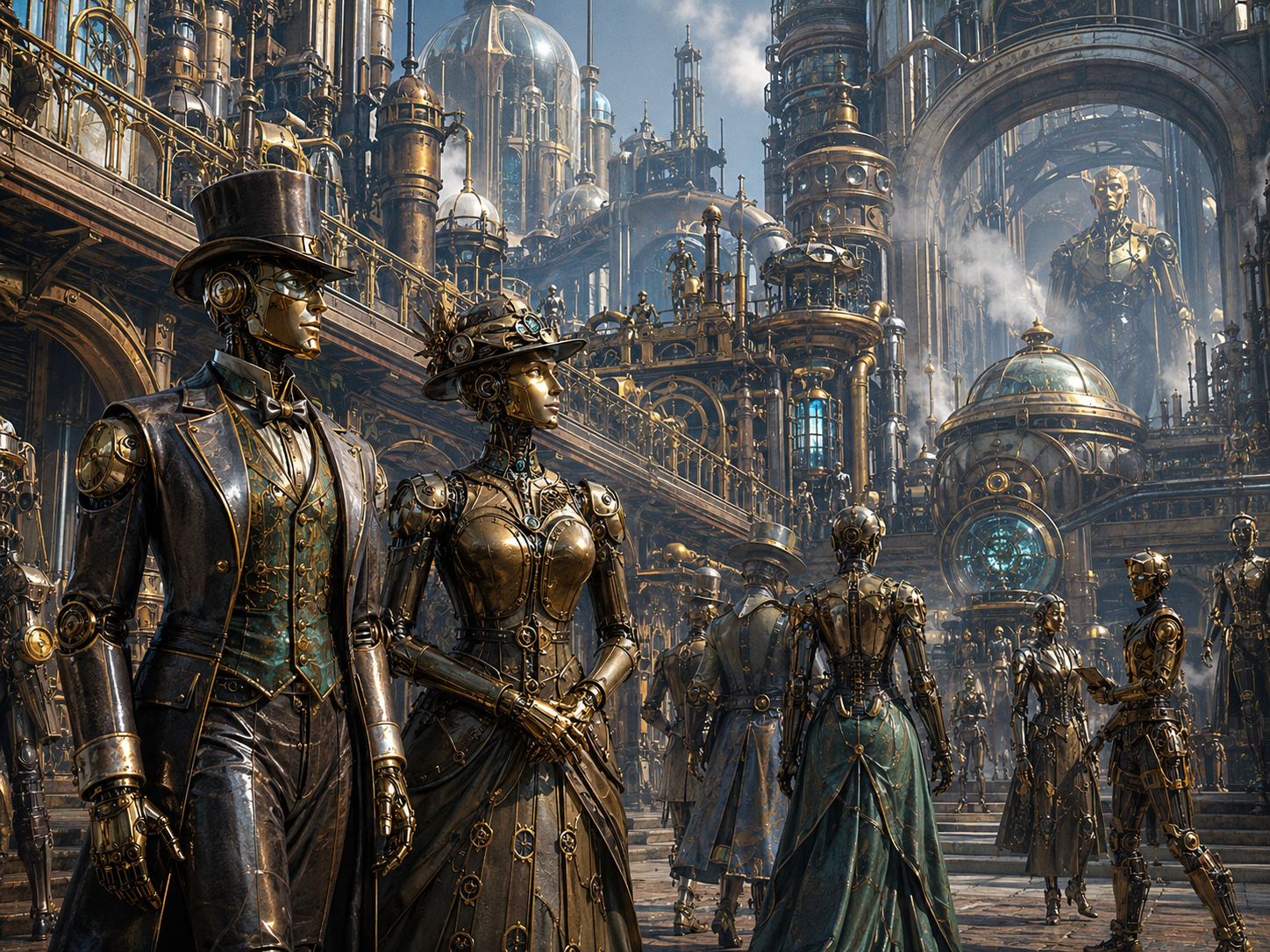
This is where automata enter steampunk, smiling with porcelain faces, ticking with brass hearts and looking just human enough to make everyone in the room uneasy. They are one of the genre’s great obsessions: mechanical servants, clockwork musicians, brass soldiers, thinking engines, artificial companions, steam-driven workers, punch-card minds, puppet assassins and robots who have somehow acquired better manners than the people who built them.
Steampunk did not invent the automaton. The fascination is ancient. Humans have been imagining artificial life for as long as humans have had tools, vanity and insufficient supervision. There were legendary bronze giants, temple mechanisms, clockwork birds, mechanical ducks, chess-playing hoaxes, dancing dolls and elaborate eighteenth-century figures that could write, play music or terrify dinner guests with the possibility that the furniture was becoming ambitious. The nineteenth century added industrial power, steam, electricity, mass production and a growing suspicion that humanity might not be as special as it had been claiming on official forms.
That makes the automaton perfect for steampunk. The genre lives at the point where the hand-made meets the industrial, where craft becomes machinery, where invention becomes empire, where a device built for wonder becomes a device built for labour, war or surveillance. A brass bird is charming. A brass clerk is useful. A brass policeman is worrying. A brass army suggests that somebody has missed the point of civilisation and should have their workshop searched.
There are several species of steampunk automaton, and it is useful to keep them apart before they start unionising.
The first is the decorative marvel: the clockwork dancer, the musical doll, the mechanical bird in the gilded cage. This is the automaton as wonder-object, a miracle of precision and craft. It belongs to courts, exhibitions, drawing rooms and cabinets of curiosity. Its purpose is to make people gasp, applaud and then wonder whether the inventor is entirely well. These automata are about beauty, delicacy and illusion. They do not usually overthrow governments, though one should never trust a mechanical swan after midnight.
The second is the servant machine: the butler, maid, valet, clerk, porter, sweeper, porterage engine or tea-carrying device with possible emotional repression. Here the automaton becomes part of class fantasy. The wealthy want servants who do not require wages, sleep, dignity or the afternoon off. Steampunk, being smarter than the people inside it, often notices that this is not an innocent dream. A mechanical servant says a great deal about the society that built it. It reveals who is expected to serve, who is allowed to command and what happens when labour is treated as a problem to be engineered away.
The third is the war automaton. This is where the genre stops smiling and starts checking the blast radius. Mechanical soldiers, steam-driven walkers, armoured engines and clockwork assassins are natural extensions of industrial society. If the factory can make cloth, guns and locomotives, why not soldiers? If the state can mechanise production, why not mechanise obedience? The war automaton is one of steampunk’s grimmest inventions because it embodies the dream of violence without conscience. That dream never ends well, but it does tend to come with excellent rivets.
The fourth is the thinking machine: not merely a moving body, but a calculating or reasoning one. This is where automata meet computers, and where steampunk becomes especially interesting. Charles Babbage’s Difference Engine and Analytical Engine haunt the genre like brass ghosts. Ada Lovelace stands nearby, looking more modern than the century deserved. The idea that a machine might calculate, remember, predict or even think is one of steampunk’s deepest wells. Once a society has mechanical computation, it does not merely gain better mathematics. It gains administration, surveillance, bureaucracy, banking, logistics, policing and all the other joys that come when information grows teeth.
That is why steam-driven computers are as important to steampunk as humanoid automatons. A clockwork man may frighten the parlour. A steam-powered data engine may run the state.
William Gibson and Bruce Sterling’s The Difference Engine understands this perfectly. Its alternate Britain is transformed by mechanical computers, punched cards, information systems and the political power that comes from counting everything before anyone has invented privacy policies. It is not merely a book about brass computers. It is a book about what happens when computation arrives early and the nineteenth century immediately uses it for all the things governments, markets and opportunists always use new technology for: control, profit, status and the efficient misplacing of human beings.
Cinema has its own automata. Hugo gives us a clockwork figure as mystery, memory and link to the earliest magic of film. The automaton is not simply a device but a wounded message, a machine that connects grief, craft and cinema history. Metropolis, though a much older and more expressionist ancestor than modern steampunk, gives us the robot double as social nightmare, technology wearing the mask of humanity and walking straight into the politics of class, labour and desire. The City of Lost Children offers machinery that feels dream-damaged, full of apparatus, experiments and stolen childhood. Automata in such worlds are rarely only machines. They are symptoms.
Anime has given us some of the most memorable mechanical beings. The robots of Castle in the Sky are astonishing because they are both terrifying and gentle. One can destroy, another tends gardens and birds in the ruins of Laputa. Miyazaki’s genius is that he makes the machine morally legible without making it sentimental. The robot is not human, but it possesses a kind of patient duty that many human characters lack. It is old power repurposed as care. That image, a great war-capable machine quietly protecting flowers, may be one of the most moving automaton moments in steampunk-adjacent cinema.
Fullmetal Alchemist approaches the question from another route. Its automail limbs are not automata in the full independent sense, but they are central to the genre’s mechanical-body imagination. Edward Elric’s prosthetic arm and leg are machinery, craft, trauma, identity and survival. They remind us that steampunk’s interest in artificial bodies is not always about replacing people. Sometimes it is about repairing them, extending them, burdening them or making their loss visible in polished steel.
Then there are the puppets and automata of darker works, from Lies of P to various clockwork Gothic tales, where the artificial body becomes uncanny, rebellious or tragic. The puppet asks a different question from the robot. The robot asks whether a machine can become human. The puppet asks who is pulling the strings, and what happens when the strings are cut. This is why clockwork beings remain so fruitful: they carry questions of agency, class, consciousness and control inside their little metal ribs.
In tabletop games and video games, automata are often too useful to resist. Iron Kingdoms gives us warjacks, steam-powered magical war machines that turn the battlefield into an argument conducted by angry boilers. Eberron gives us the warforged, living constructs created for war who must then ask what they are when the war ends. That is a very steampunk-adjacent question: what happens to a tool after it discovers it is a person? Dishonored gives us industrial mechanisms, clockwork soldiers in its sequel, and a general atmosphere in which aristocrats trust machinery more than morality, which is rarely a good sign.
The Jackelian books take these ideas and run them through a much stranger national machine. In Stephen Hunt’s Jackelian sequence, the steamman race of Mechancia are more human than human steam-driven robots: mechanical beings with culture, identity, emotion, grievance, dignity and a disconcerting tendency to make the flesh-and-blood characters look morally under-engineered. They are not merely brass furniture with dialogue. They are a people. That distinction matters enormously.
Mechancia is important because it moves the automaton out of the workshop and into civilisation. The question is not simply “can a machine think?” or “can a machine serve?” It becomes “what is a nation of machine-people?” What does citizenship mean when the citizen has gears? What is mortality when bodies can be repaired, altered or rebuilt? What does emotion mean when it is carried in valves, pressure, memory and fire? If a steamman demonstrates loyalty, sorrow, humour, courage or faith, is that less real because it was not born from meat? Humanity, after all, has never required much machinery to behave badly. Perhaps the machines deserve a turn at behaving better.
The Mechancian steamman also neatly dismantles the lazy automaton fantasy. If you build beings who can reason, feel, remember and judge, you have not built tools. You have created neighbours. Possibly heavily armoured neighbours with strong views on sovereignty. The fact that they are steam-driven does not make them less alive in the moral imagination of the story. It makes them more interesting. They embody steampunk’s central tension between mechanism and soul. The genre keeps asking whether there is a ghost in the machine. Mechancia replies, with some dignity, that the machine may be the person.
Then there are the Jackelian kingdom’s vast Transaction Engines, steam-driven punch-card computers that help drive the realm. These are not cute clockwork toys. They are state machinery, bureaucratic engines, civic brains and administrative beasts. If the steamman of Mechancia asks what happens when machines become people, the Transaction Engines ask what happens when the kingdom itself becomes a machine.
That is a very steampunk question, and a very modern one. A realm run by Transaction Engines is not simply picturesque. It is organised, counted, sorted, recorded and processed. The punched card is not decorative. It is power in small rectangular form. Such engines suggest taxation, finance, identity, policing, logistics, trade, surveillance, law, credit, employment and all the quiet mechanisms by which a state knows its subjects. A cannon may kill a man dramatically. A Transaction Engine can lose him in the system and make the whole thing look like procedure.
This gives the Jackelian setting real bite. Airships and steam engines are splendid, but the true machinery of civilisation often sits in offices, vaults and ministries, clattering through human lives at administrative speed. The Transaction Engines are funny in the way all large bureaucratic systems are funny: they are absurd until they decide your fate. A steam-driven punch-card computer may sound quaint, but if it controls money, records, warrants or policy, it is no more quaint than a crocodile in a waistcoat.
This is where steampunk’s automata and computers converge. The humanoid automaton dramatizes the body. The calculating engine dramatizes the state. One asks whether machines can become human. The other asks whether humans can survive being processed by machines. A healthy civilisation should worry about both, preferably before the Ministry of Useful Calculations prints the wrong punch card and declares Thursday illegal.
Automata also let steampunk explore labour. A mechanical worker is never just a convenience. It raises questions. Who owns it? Who built it? Who profits from it? Does it replace a worker, protect a worker or become a worker? Does it have rights? Does it understand orders? Can it refuse them? If it can refuse, is it still a machine? If it cannot refuse, what sort of society feels comfortable giving itself servants that look like people? The brass casing may shine, but the questions underneath are grimy.
The genre’s fascination with automata is also about mortality. Humans are soft, perishable and prone to catching colds at dramatically inconvenient moments. Machines appear durable, replaceable and repairable. This tempts inventors into all sorts of bad philosophy. The automaton seems to promise continuity without decay, labour without fatigue, soldiers without fear, servants without resentment, intelligence without unpredictability. But stories know better. The machine breaks, remembers, rebels, grieves or becomes too obedient, which may be worse. Perfect obedience is not virtue. It is merely a system waiting for a villain.
This is why the best automata in steampunk are never only shiny. They are unsettling. They blur categories. The mechanical servant may be more humane than the master. The steam-driven soldier may be a victim. The clockwork doll may carry memory. The calculating engine may know too much. The robot gardener may be the last moral being in an empire of ruins. The steamman may be more alive than the parliamentarian sneering at him.
Steampunk loves visible mechanisms because they let us imagine the hidden ones. A gear on the outside of an automaton suggests the gears inside society. The class system is a machine. Empire is a machine. The factory is a machine. The state is a machine. The market is a machine. The household is a machine. The body may be treated as a machine, and the machine may become a body. Once a genre starts playing with artificial people, it is never only talking about robots. It is talking about how people are made, used, valued and discarded.
That is why automata remain one of steampunk’s richest subjects. They can be comic, tragic, beautiful, sinister, heroic or bureaucratic. They can pour tea, play chess, assassinate ministers, calculate taxes, fall in love, pilot airships, tend gardens, run kingdoms or demonstrate that humanity’s monopoly on humanity was always a little suspect.
For newcomers, the automaton trail through steampunk might begin with Babbage and Lovelace, continue through The Difference Engine, pause at Hugo and Metropolis, fly to Castle in the Sky, detour through Fullmetal Alchemist, march past the warjacks of Iron Kingdoms, salute Eberron’s warforged, then arrive in the Jackelian world to meet the steam-driven people of Mechancia and the kingdom’s Transaction Engines. By then, the reader should understand that steampunk machinery is never merely machinery. It is society wearing its skeleton on the outside.
The automaton is one of the genre’s greatest mirrors. We build it to resemble ourselves, then become offended when it does. We make it serve, then fear it might want freedom. We make it calculate, then complain it has become cold. We make it human-shaped, then panic when it starts asking human questions.
Perhaps that is the final lesson. In steampunk, the danger is not that machines become too much like people.
It is that people, empires and governments are already quite good at behaving like machines, and not always the nice kind with polished brass and a charming whistle.
From the cabinet
Related field-guide entries
 Alchemy / Dieselpunk-Steampunk Adjacent
Fullmetal Alchemist
Hiromu Arakawa's Fullmetal Alchemist is alchemical manga with automail, militarised science and diesel-steam adjacency.
Alchemy / Dieselpunk-Steampunk Adjacent
Fullmetal Alchemist
Hiromu Arakawa's Fullmetal Alchemist is alchemical manga with automail, militarised science and diesel-steam adjacency.
 Belle Epoque / clockwork adjacent
Lies of P
Lies of P is a South Korean action RPG of Pinocchio, puppet automata, plague city Krat and Belle Epoque clockwork gothic machinery.
Belle Epoque / clockwork adjacent
Lies of P
Lies of P is a South Korean action RPG of Pinocchio, puppet automata, plague city Krat and Belle Epoque clockwork gothic machinery.
 Clockwork / steampunk-adjacent
Syberia
Syberia is Benoit Sokal's melancholy adventure game of automatons, European industrial decay, clockwork inheritance and steampunk-adjacent travel.
Clockwork / steampunk-adjacent
Syberia
Syberia is Benoit Sokal's melancholy adventure game of automatons, European industrial decay, clockwork inheritance and steampunk-adjacent travel.
 Historical Alternate / Core-adjacent
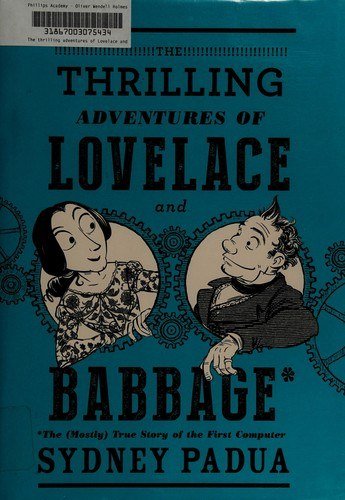
The Thrilling Adventures of Lovelace and Babbage
Sydney Padua's The Thrilling Adventures of Lovelace and Babbage is comic alternate history about computing's great might-have-been.
Historical Alternate / Core-adjacent
The Thrilling Adventures of Lovelace and Babbage
Sydney Padua's The Thrilling Adventures of Lovelace and Babbage is comic alternate history about computing's great might-have-been.