
Why it matters
It extends the Eastern European Verne screen tradition into comic, castle-bound proto-steampunk full of illusion and strange machinery.
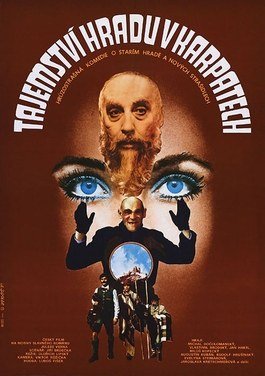
The Mysterious Castle in the Carpathians takes Jules Verne into a Gothic castle and then starts fiddling with the apparatus behind the curtain.
Directed by Oldrich Lipsky, the film adapts and parodies Verne's The Carpathian Castle, a late scientific romance in which Gothic atmosphere and technological deception share the same corridors. That combination is extremely useful to steampunk's borderlands. The castle looks supernatural; the explanation leans towards machinery, illusion and invention. The ghosts have technical support.
This places the film near Karel Zeman's Verne adaptations, though with a different comic energy. Zeman's work often feels like engraved scientific romance brought to life. Lipsky's film is more farcical and playful, nudging Gothic melodrama until the secret mechanisms squeak.
The Carpathian setting matters because it brings old-world folklore and modern apparatus into collision. Steampunk and gaslamp fantasy both enjoy that collision: villagers fear legends, aristocrats hide secrets, and somewhere in the building a machine is making the impossible look respectably uncanny.
The film's comedy does not cancel its field-guide value. If anything, it points to an often neglected branch of proto-steampunk: the comic demystification of the Gothic. Verne was fascinated by technology's ability to impersonate marvels. A supposedly haunted castle becomes a stage for sound, image, trickery and obsession.
Illusion is the central motif. This is not just a matter of gadgets. It is about who controls perception. The villainous or eccentric inventor figure does not need to conquer the world if he can control what people believe they have seen. That idea runs through later steampunk and gaslamp works, from stage magicians to projection devices and mechanical seances.
The film also broadens the map. English-language steampunk discussions often orbit Britain, France and the United States. Czech and Czechoslovak Verne adaptations show that retrofuturist imagination had other workshops, with their own comic timing, visual craft and appetite for the strange.
That international angle is not just a box-ticking virtue. It changes the flavour of the material. The film's humour, design and rhythm come from a different screen tradition than the usual Anglo-American Verne adventures. The machinery is familiar enough to belong in the same family, but the comedy gives it a sideways tilt: sly, theatrical and fond of puncturing grandeur before it gets too comfortable.
Purists may find it too comic, too obscure or too specifically Vernean to count as steampunk. That is all part of its borderland charm. It is not a modern genre statement. It is a machine room hidden inside a Gothic joke.
It is also a reminder that Verne was never only about vehicles. The Vernean imagination also loved communications, optics, hidden rooms, private obsessions and the theatrical reveal. A castle full of strange apparatus is every bit as useful to proto-steampunk as a submarine or airship, especially when the walls appear to be in on the performance.
Is it really steampunk?
It is Vernean proto-steampunk with a gaslamp-Gothic flavour. The film predates much of steampunk's popular vocabulary, but its castle machinery, technological illusions, scientific romance ancestry and old-European oddness make it highly relevant.
It is best approached as a European deep cut. Readers who liked The Fabulous World of Jules Verne should find it a valuable cousin, even if this cousin arrives with a theatrical cape and suspicious wiring.
Find it
If you would like to track down The Mysterious Castle in the Carpathians, these search links may help. We have not specified an edition, so you can pick the format that suits you.
Affiliate links: as an Amazon Associate, Stephen Hunt’s SFcrowsnest earns from qualifying purchases. These may earn us a small commission at no extra cost to you.