
Why it matters
It keeps the Vernean expedition tradition alive on screen, linking lost-world adventure, scientific curiosity and underground spectacle.
Henry Levin's Journey to the Center of the Earth understands that if a professor finds a route beneath the planet, the proper response is apparently to pack, descend and hope geology has a sense of hospitality.
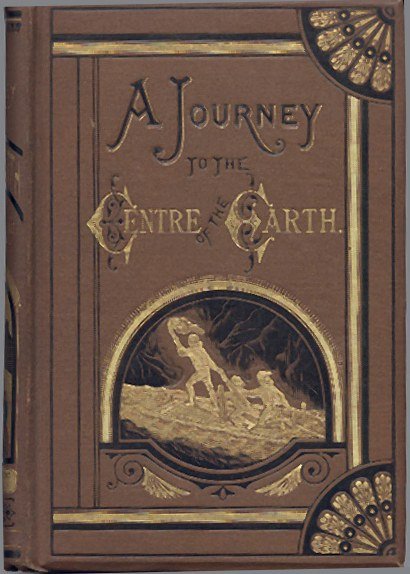
The 1959 Journey to the Center of the Earth, directed by Henry Levin, adapts Jules Verne's classic subterranean adventure. Starring James Mason, the film belongs to the mid-century wave of Verne adaptations that made nineteenth-century scientific romance visible to cinema audiences in colour, spectacle and a certain amount of geological optimism.
Its steampunk relevance is ancestral. The story is not about steam technology or alternate industrial history. It is about expedition science: the idea that learned people can read clues, assemble equipment, descend into the unknown and find a hidden world beneath ordinary reality. That structure is vital to the wider retro-adventure family.
Lost-world fiction is one of steampunk's important neighbours. Whether the journey leads under the sea, into the Earth, across a forbidden jungle or through a cloudbank to an impossible city, the pattern is similar: science opens a door, adventure enters, and the world turns out to have kept several secrets in storage.
The film's underground landscapes, prehistoric creatures and expedition hazards give it a different flavour from the machine-led Verne adaptations. The equipment matters, but the great spectacle is the hidden world itself. That makes it useful beside works like The Kingdom Beyond the Waves, where exploration, danger and old powers matter as much as the vehicles used to reach them.
James Mason's presence also links the film, pleasingly, to the 1954 20,000 Leagues Under the Sea, where he played Nemo. Here he belongs to a different Vernean mode: the scholar-explorer rather than the wounded technological sovereign. Between the two, one can see how flexible Verne's influence became for cinema.
For steampunk readers, the attraction is not machinery but attitude. The film shares the old confidence that knowledge should be pursued physically, with boots, maps, instruments and companions who may regret the entire arrangement. That confidence is one of the roots from which steampunk's expeditionary branch grows.
The subterranean setting also provides a useful contrast to airship steampunk. Instead of looking upward toward freedom, the story descends into pressure, darkness and buried history. That downward movement is just as important to the field's imagination. Steampunk is full of machines that travel, but the destination often reveals what civilisation has forgotten.
The film's pleasures are those of classic adventure: clues, danger, teamwork, spectacle and the old scholarly belief that a good theory deserves a dangerous walk. It may not satisfy viewers looking for modern pacing, but it preserves a type of expedition fantasy that steampunk keeps reusing.
Its lost-world material also links it to later works where exploration becomes morally complicated. Vernean adventure often begins with curiosity. Later steampunk asks who funds the expedition, who names the discoveries and what wakes up when the explorers arrive.
Is it really steampunk?
No. It is a proto-steampunk Verne adaptation and lost-world expedition film. Its relevance comes through scientific romance, period adventure, subterranean wonder and the explorer-scientist tradition.
Readers who enjoy Vernean ancestry, lost-world fiction and expedition structures should find it useful context. It is not an engine-room entry, but it helps explain why steampunk so often sends clever people into places where cleverness may not be enough.
Find it
If you would like to track down Journey to the Center of the Earth, these search links may help. We have not specified an edition, so you can pick the format that suits you.
Affiliate links: as an Amazon Associate, Stephen Hunt’s SFcrowsnest earns from qualifying purchases. These may earn us a small commission at no extra cost to you.