
Why it matters
It is a high-profile gaslamp action game, using alternate Victorian technology, secret orders, monsters and a lavish London setting to deliver steampunk-adjacent spectacle.
The Order: 1886 gives Victorian London a secret knightly order, exotic weapons and monsters, because apparently fog and class tension were not keeping everyone busy enough.
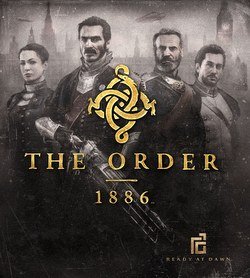
Developed by Ready at Dawn and released in 2015, The Order: 1886 imagines an alternate Victorian London protected by an ancient order of knights. The game mixes Arthurian legacy, monsters, rebellion, industrial imagery and advanced weapons into a polished cinematic action experience. It is the sort of production where every coat looks expensive and every alley has been art-directed within an inch of its damp life.
Its steampunk credentials come chiefly from the alternate technology and period setting. Weapons, airships and gadgets sit within a recognisably Victorian London, but the game is less interested in industrial society than in cinematic mood. This is gaslamp action first: secret history, aristocratic protectors, monsters in the shadows and a city built for dramatic lighting.
The knightly order gives the premise a strong pulp shape. Steampunk and gaslamp fiction often enjoy organisations that operate behind public history: leagues, societies, orders, institutes and clubs. The Order: 1886 leans into that fantasy. Modernity is arriving, but ancient structures still claim authority, now armed with weapons that make history look heavily revised.
The monsters place it near Van Helsing and The League of Extraordinary Gentlemen, though its tone is more straight-faced and cinematic. It does not have the literary collage of Moore and O'Neill's work, nor the carnival excess of Van Helsing. Instead, it presents a sleek, expensive version of gaslamp monster politics: fewer jokes, more leather.
The game's visual design is its strongest contribution. London is dense, detailed and atmospheric, full of smoke, brick, fabric, brass and gloom. Even critics of the game's structure often praised its world-building surface. For steampunk-adjacent media, surface is not everything, but it matters. The genre is partly a visual argument about old futures, and The Order makes that argument very handsomely.
Its limitation is that the machinery rarely becomes as socially interesting as the setting promises. Compared with Dishonored, which makes extraction, plague and class central, The Order is more focused on cinematic propulsion. Still, not every work has to be a full political machine. Some entries matter because they show the genre's blockbuster face.
As a modern game, it also shows how steampunk-adjacent imagery became a prestige visual mode. The alternate Victorian world could carry a major console release, complete with elaborate weapons, secret lore and enough production value to make every moustache feel costed.
The alternate weapons are where the game most plainly enjoys the genre. Arc guns, specialised firearms and advanced devices give the knights a technological edge that feels half military, half exhibition. They are not quite plausible, but they are very committed, which is often enough for gaslamp action if the smoke behaves.
Is it really steampunk?
Adjacent. The Order: 1886 is gaslamp action with steampunk elements: alternate Victorian technology, weapons, airships, monsters and secret-history London.
It suits players who like Victorian spectacle, monster hunting and hardware that looks as if it has been polished by a military tailor.
Find it
If you would like to track down The Order: 1886, these search links may help. We have not specified an edition, so you can pick the format that suits you.
Affiliate links: as an Amazon Associate, Stephen Hunt’s SFcrowsnest earns from qualifying purchases. These may earn us a small commission at no extra cost to you.