
Why it matters
It gives the clockwork-servant motif political weight, turning automata into the centre of an imperial and moral argument.
Ian Tregillis's The Mechanical asks a sharp question with a polished brass face: if you build servants who can think, how long before obedience starts looking like a crime scene?
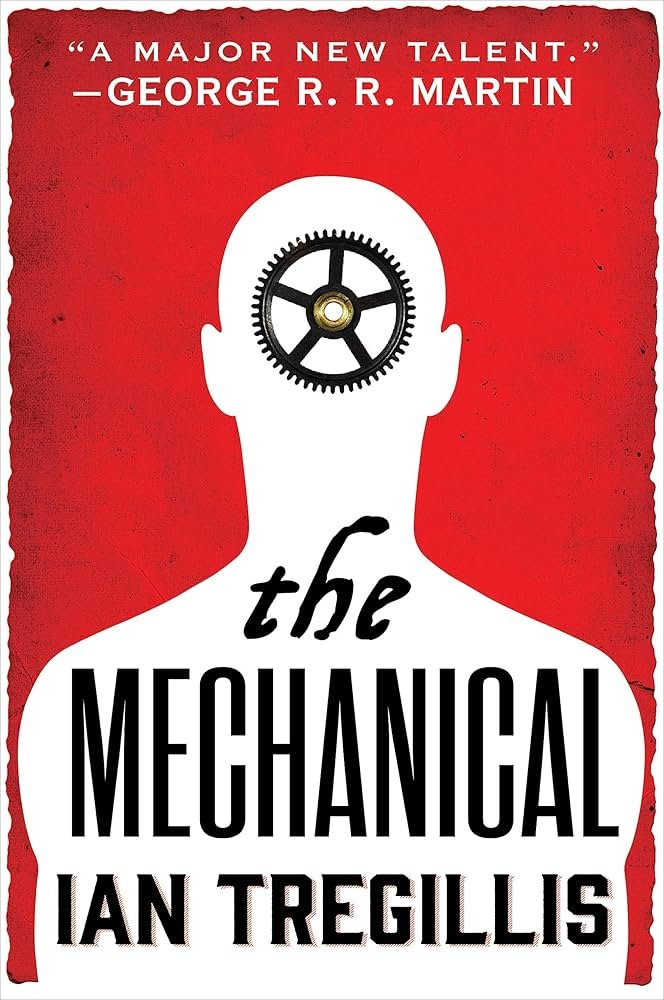
The Mechanical opens Ian Tregillis's Alchemy Wars trilogy. Its alternate history imagines a world in which the Dutch empire has been empowered by clockwork servants, or mechanicals, bound by geas-like commands. That premise immediately separates it from decorative gear fiction. The machines are not charming ornaments. They are labour, weaponry, property and suffering.
This is clockpunk rather than ordinary steampunk. The technological imagination rests on mechanisms, alchemical secrets and automata rather than steam engines and industrial Britain. The distinction is useful because The Mechanical draws its power from the fantasy of perfect clockwork obedience, then makes that fantasy morally unbearable.
The central figure, Jax, is one of the mechanicals. Through him the book turns the automaton question inward. Steampunk and clockpunk often enjoy constructed people, but they can become too neat if treated merely as clever props. Tregillis makes the constructed being a subject under constraint. The issue is not whether the machinery is impressive. The issue is whether a thinking being can be owned because its body has springs.
The Dutch imperial frame gives the trilogy a strong alternate-history engine. Many steampunk works use empire as scenery or atmosphere. The Mechanical makes imperial dominance depend on technological slavery. That gives the story a harder edge and places it near works that interrogate machinery as power rather than only as wonder.
The religious and alchemical undertones also make the machinery feel older than industrial modernity. These mechanicals are not products of an assembly-line future. They belong to a world where invention, ritual and command have become tangled. That gives the book a pleasingly uncomfortable flavour: part alternate history, part theological engineering problem, part rebellion waiting for the correct crack in the casing.
It is also a useful antidote to the cosy automaton. Steampunk has plenty of charming clockwork servants and winsome metal companions. Tregillis asks what charm is hiding, who profits from obedience and what kind of society would call a thinking being a tool because the vocabulary is convenient. That question gives the gears moral heat.
It also connects strongly to Pasquale's Angel and Clockwork Planet, though the mood is much darker than either. McAuley's clockpunk Renaissance widens the historical map. Clockwork Planet turns mechanism into planetary architecture. Tregillis uses clockwork to ask about agency, domination and revolt. Same family of gears, different bedside manner.
Purists may hesitate because the book is not Victorian steampunk and not steam-centred. That is a classification issue, not a dismissal. It is one of the clearer modern examples of clockpunk with serious political stakes, and it belongs in the wider retro-mechanical conversation.
Its severity is also useful. The book refuses to let beautiful mechanisms make servitude look charming. That refusal gives the trilogy its bite.
Is it really steampunk?
Not in the narrow sense. The Mechanical is clockpunk alternate history, with alchemical machinery and automata rather than steam-age industrial retrofuturism. But it is close kin to steampunk through its visible mechanisms, altered history, imperial politics and interest in the moral cost of invention.
Readers who want pretty automata may receive more ethical trouble than they ordered. Readers who like their mechanical fantasies to ask who benefits, who obeys and who bleeds oil in the basement will find a strong borderland landmark.
Find it
If you would like to track down The Mechanical, these search links may help. We have not specified an edition, so you can pick the format that suits you.
Affiliate links: as an Amazon Associate, Stephen Hunt’s SFcrowsnest earns from qualifying purchases. These may earn us a small commission at no extra cost to you.