
Why it matters
It pushed the League concept into mainstream cinema, giving popular audiences a noisy steampunk collage of famous nineteenth-century figures.
Stephen Norrington's The League of Extraordinary Gentlemen looks at Victorian literature and decides what it really needs is a superhero team, a larger Nautilus and fewer quiet moments.
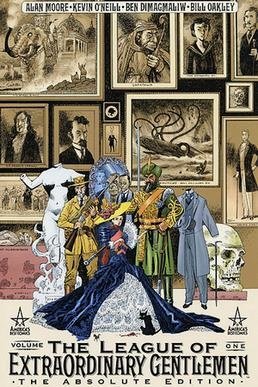
The film adapts the basic idea of Alan Moore and Kevin O'Neill's comics rather than their exact texture: Mina Harker, Allan Quatermain, Captain Nemo, Dr Jekyll and Mr Hyde, the Invisible Man and others are gathered into a team of literary misfits. The result is less sly metafiction than action spectacle, but the steampunk ingredients are hard to miss.
Nemo and the Nautilus are the film's strongest genre credentials. The screen Nautilus is huge, ornate and gleaming, a submarine that appears to have been designed by someone who considered restraint a land-based weakness. It is not Verne's vessel in spirit exactly, but it is a memorable object of steampunk excess.
The literary mash-up is also important. Steampunk has often treated the nineteenth century as a shared universe, where novels, histories, monsters and imperial anxieties can be made to collide. The film does this in blockbuster shorthand. It sacrifices much of the comic's sharper politics, but keeps the immediate pleasure of seeing famous fictional figures recruited into the same dangerous room.
That loss matters. The comic's bite comes partly from its suspicion of empire, genre romance and heroism. The film smooths much of that into team adventure. It is therefore useful as a contrast: a popular steampunk reference point that shows how easily the mode can become spectacle if its critical teeth are filed down.
The character roster still carries power because each figure arrives with baggage from another story. Mina brings vampiric shadow, Nemo brings anti-imperial machinery, Hyde brings the body horror of respectability turned inside out, and Quatermain brings imperial adventure past its sell-by date. The film does not always know what to do with all that baggage, but it is fascinating luggage.
Even so, the film has field value. It helped cement for many viewers the idea that steampunk could mean ornate machines, Victorian icons, submarine grandeur, occult science and literary characters behaving like franchise assets before the phrase had fully settled in mainstream culture.
It also shows the risk of adaptation by volume. More characters, bigger machines and louder set-pieces do not automatically create a richer alternate nineteenth century. That is a useful lesson for the genre. The machinery has to mean something, or it becomes expensive furniture.
The film's best use is therefore as a visible signpost. It points viewers towards the comics, Nemo, Mina, Hyde, Victorian mash-ups and the pleasures of treating literature as a dangerous shared city. Even when it stumbles, it marks territory that later steampunk audiences recognise immediately.
Purists may prefer the comics, and they would have a case sturdy enough to carry luggage. The film is broad, uneven and often clumsy, but it remains part of the canon's public face. Sometimes a genre landmark arrives wearing muddy boots and asking where the explosion budget is kept.
Is it really steampunk?
Yes, broadly. It is a core steampunk literary mash-up in film form, even if its execution is much more action-adventure than intricate alternate history. The Nautilus, Nemo, Victorian icons, strange science and imperial backdrop make the label stick.
It is best treated as a popular reference rather than the definitive version of the idea. For the richer machinery, read the comics. For the louder machinery, here it is.
Find it
If you would like to track down The League of Extraordinary Gentlemen, these search links may help. We have not specified an edition, so you can pick the format that suits you.
Affiliate links: as an Amazon Associate, Stephen Hunt’s SFcrowsnest earns from qualifying purchases. These may earn us a small commission at no extra cost to you.