
Why it matters
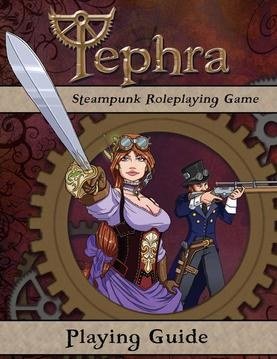
It is a post-boom tabletop steampunk game built around a bespoke setting, craft rules, aether power and the pleasure of tinkering with the machinery rather than merely admiring it from a safe distance.
Tephra: The Steampunk RPG is the sort of game that hears "steampunk" and immediately asks whether the hat can be upgraded, weaponised and fitted with a second, smaller hat.
Designed by Daniel A. Burrow and originally published through Cracked Monocle, Tephra arrived when steampunk had become a visible subculture as well as a literary and gaming label. That timing matters. Earlier RPGs such as Space: 1889, Castle Falkenstein and GURPS Steampunk helped define tabletop approaches to the genre. Tephra belongs to the later moment when brass goggles, maker culture, costume and convention visibility had all become part of the wider scene.
The game is set in its own clockwork world rather than in a direct alternate version of Victorian history. That gives it room to build from genre ingredients without needing to explain why Queen Victoria is suddenly surrounded by elves, aether engines and enough bespoke hardware to worry an insurance clerk. Its interest is less documentary and more constructive. It wants a place where inventions, species, nations, crafts and personal contraptions can all operate as gameable material.
Crafting is central to that identity. Many steampunk works enjoy the look of machinery, but tabletop play asks a more practical question: what can a player do with the machine? Tephra leans into that itch. The game treats equipment, modification and building as part of the fun, not simply a shopping list between adventures. That suits a branch of steampunk fandom where the maker table is almost as important as the bookshelf.
Its "Clockwork System" also helps the title announce itself. The rules are not shy about their genre costume. They place the game in conversation with systems that let players feel the setting through play procedure: cards in Castle Falkenstein, Fate Decks in Malifaux and Through the Breach, and structured toolkit thinking in GURPS Steampunk.
The setting's aether and clockwork machinery give the game a broad fantasy register. This is not an austere history lesson with occasional valves. It is a full imaginary world in which steampunk technology becomes social fact, adventuring equipment and visual identity. The result is close to Iron Kingdoms in its comfort with industrial fantasy, though Tephra wears the steampunk label more directly on the lapel.
It also captures an important phase in the genre's tabletop life. By 2012, steampunk was no longer only an influence. It was a selling category, a convention language and a design promise. A game called Tephra: The Steampunk RPG did not need to smuggle the word in through the servants' entrance. It could put it on the door and start heating the boiler.
That directness is both its charm and its limitation. It does not have the literary oddity of Castle Falkenstein or the genre-defining historical sweep of GURPS Steampunk. Instead, it offers an enthusiastic table-ready world where the player is expected to get involved, make things, break things and then explain that the smoke was part of the plan.
Is it really steampunk?
Yes. Tephra is core tabletop steampunk, especially in the maker-culture and custom-world sense. Its aether power, clockwork devices, crafting emphasis and self-declared genre identity make the case fairly loudly.
It suits players who want steampunk as a playable workshop, not just a backdrop. Bring goggles, dice and a plausible excuse for why the floor is vibrating.
Find it
If you would like to track down Tephra: The Steampunk RPG, these search links may help. We have not specified an edition, so you can pick the format that suits you.
Affiliate links: as an Amazon Associate, Stephen Hunt’s SFcrowsnest earns from qualifying purchases. These may earn us a small commission at no extra cost to you.