
Why it matters
It offers a striking mechanical world built around Basel, a vast tower city whose social hierarchy, clockwork systems and gun-heavy combat place it near steampunk's clockpunk and diesel-adjacent edge.
Resonance of Fate is a JRPG set in a vast mechanical tower, where gunfights become acrobatics and society appears to have been filed vertically.
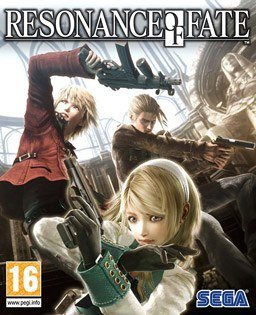
Developed by tri-Ace and published by Sega in 2010, Resonance of Fate is set in Basel, a massive machine-like tower where humanity survives within a stratified artificial environment. The game is famous for its gun-based combat system, stylish acrobatics and unusual world structure. It is not conventional steampunk, but it is deeply interested in mechanical society.
Basel is the essential object. The setting is a city, machine and social order at once. People live within a constructed system whose physical layers echo class and control. Steampunk has always been fascinated by cities as engines, from industrial London to New Crobuzon. Resonance of Fate pushes that idea upward into a tower that feels like civilisation built inside an apparatus.
The clockwork and gear imagery give the game its strongest adjacency. It does not rely on Victorian steam in the usual sense. Instead, it uses mechanical order, ornate systems, industrial surfaces and an atmosphere closer to clockpunk and diesel fantasy. That makes it a cousin to steampunk rather than a textbook case, but a visually and structurally important cousin.
Its combat is also part of the identity. The "gun ballet" style turns firearms into choreography, with leaps, angles, trajectories and timing. That is not steampunk by itself, but it fits a world where mechanics and performance blur. The characters do not simply shoot; they move through the battle system like people who have read the manual and decided to be dramatic about it.
The social stratification matters more than the guns. Basel's layers make inequality spatial. Those above and below are not metaphors only; they are coordinates. This gives the game a strong connection to steampunk's interest in class and infrastructure. The city is not a neutral container. It is a designed hierarchy with gears behind the curtain.
Placed beside Final Fantasy VI and Wachenröder, the game shows how Japanese RPGs continued to revisit mechanical worlds long after the 1990s steampunk surge. Final Fantasy VI gives us magitek empire; Wachenröder gives us polluted industrial revolt; Resonance of Fate gives us a sealed tower system where machinery and social order are inseparable.
It also shows the field drifting toward diesel and post-industrial textures. The palette is less brass-and-boiler, more metal, firearm and decayed elegance. That border is useful. Steampunk's relatives often tell us as much about the genre as its purest specimens do.
Is it really steampunk?
Adjacent. Resonance of Fate is clockpunk and diesel-adjacent JRPG fantasy rather than core steampunk, but its tower machine, social stratification, mechanical world and ornate systems put it close to the field.
It suits players who like their mechanical cities vertical, stylish and deeply unsuitable for a relaxed housing market.
Find it
If you would like to track down Resonance of Fate, these search links may help. We have not specified an edition, so you can pick the format that suits you.
Affiliate links: as an Amazon Associate, Stephen Hunt’s SFcrowsnest earns from qualifying purchases. These may earn us a small commission at no extra cost to you.