Why it matters
It is a contemporary borderland work where body science, retrofuturist design and neo-Victorian grotesquerie meet with startling confidence.
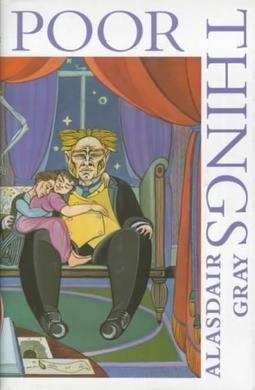
Poor Things is not steampunk in the goggles-and-airships sense, but it does give Frankenstein a surreal neo-Victorian wardrobe and then lets the furniture behave outrageously.
Directed by Yorgos Lanthimos and based on Alasdair Gray's novel, Poor Things follows Bella Baxter, a resurrected woman whose life becomes an exploration of identity, appetite, society and freedom. Its relationship to Frankenstein is obvious without being simple. Creation is the starting point, not the whole argument.
The steampunk adjacency is primarily visual and thematic. The film's world is surreal Victoriana rather than historical recreation: distorted cities, strange interiors, medical apparatus, impossible ships, eccentric costumes and a sense that science has wandered into dream logic with a scalpel.
Godwin Baxter's experiments connect the film to the Frankenstein branch of the field. Science makes a body, but the story's energy comes from what that body wants once it begins living on its own terms. That is a useful correction to many inventor fantasies. The creation is not a prop. She is the person the world must answer to.
The design is openly retrofuturist. It borrows from nineteenth-century forms, early cinema grotesquerie, fantasy architecture and surgical oddity. The result is too strange to be standard gaslamp, but too saturated with neo-Victorian machinery and body science to ignore.
Its politics are also relevant. Bella moves through systems of male control, medical authority, social judgement and economic arrangement. Steampunk and neo-Victorian fiction often revisit the nineteenth century to ask who was constrained by its institutions. Poor Things does that with unusual bluntness and very peculiar wallpaper.
The film's comic grotesquerie matters. It does not treat Victoriana as polite heritage. Bodies, appetites, buildings and machines are all exaggerated until the social rules around them begin to look absurd. That exaggeration is one reason the film belongs near gaslamp surrealism rather than straightforward historical fantasy.
Bella's education gives the story its engine. She moves through the world with a perspective that makes ordinary hypocrisy look newly invented and not very well made. That is a useful neo-Victorian trick: use an outsider to expose the systems everyone else has agreed to call civilisation.
The film's technology is more medical and architectural than industrial, which is why the steampunk label needs care. Its machines do not power society in the usual genre sense. They enable transformation, surveillance, travel and display. That still matters because neo-Victorian fantasy often begins at the operating table rather than the railway station.
Purists should keep it outside core steampunk. There is no alternate industrial society built around steam technology. But as a contemporary borderland film, it matters. It shows how Victoriana, body science and retro-design can still produce fresh shocks.
The audience question is important. Viewers coming for tidy genre adventure may find Poor Things too abrasive, too sexual, too surreal or simply too odd. Viewers interested in neo-Victorian reinvention will find a rich example of the nineteenth century rebuilt as argument, joke and laboratory. It is a borderland work with teeth.
Its design also offers a useful modern pressure point. Steampunk can sometimes polish Victoriana until the grime vanishes. Poor Things goes the other way, keeping the period elements strange, bodily and socially uncomfortable.
Is it really steampunk?
No, not core steampunk. It is neo-Victorian, Frankensteinian and steampunk-adjacent through its body science, surreal design and retrofuturist world.
It is best for readers interested in the stranger, adult, art-house edge of the field. The film is not polite Victoriana. It is Victoriana after raiding the medicine cabinet and the costume department.
Find it
If you would like to track down Poor Things, these search links may help. We have not specified an edition, so you can pick the format that suits you.
Affiliate links: as an Amazon Associate, Stephen Hunt’s SFcrowsnest earns from qualifying purchases. These may earn us a small commission at no extra cost to you.