
Why it matters
It gives the gaslamp borderlands a neatly morbid example of photography, pseudo-science and immortality anxiety.
The Asphyx is what happens when Victorian science stares too hard at death and decides the sensible response is experimental equipment.
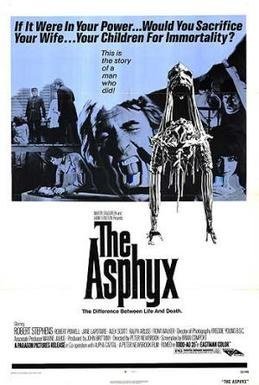
Directed by Peter Newbrook, The Asphyx is a British period horror film built around a grimly elegant premise. A Victorian scientist discovers an entity connected with death, the asphyx, and tries to capture it in order to prevent dying. This is the kind of discovery that suggests the family laboratory needs fewer candles and more ethical supervision.
The film belongs in the gaslamp and proto-steampunk borderlands because its machinery and mood are inseparable from Victorian science. Photography, optical apparatus, experiments, drawing rooms and metaphysical panic all matter. It is not a gear-filled adventure. It is a gloomy cousin, interested in what happens when new technologies seem to trespass into the soul.
Photography is especially important. The nineteenth century treated the camera with awe and unease, and horror fiction has long understood why. A photograph appears to steal a moment from time. In The Asphyx, that idea turns fatal: the image is not only evidence, but a route toward controlling death itself.
The immortality plot links the film to Frankenstein. Both works ask what happens when scientific ambition decides that mortality is a technical problem with insufficient funding. The answer, as usual, is distress for relatives and a strong case for locking the laboratory after supper.
The period detail gives the obsession a particular flavour. This is not modern biohacking with a venture-capital grin. It is Victorian authority, mourning clothes, apparatus, servants, family duty and the terrible confidence of a man who believes the universe will behave if he can only get the equipment aligned. That confidence is half the horror. The rest is what happens to everyone near him.
Unlike the more buoyant Vernean branch of proto-steampunk, The Asphyx has little interest in travel or adventure. Its frontier is metaphysical. The equipment is there to pierce the boundary between life and death, which makes the film useful for mapping the darker gaslamp side of the field. Not every brass instrument points to the Moon. Some point straight at the family curse.
That makes it a good companion to stories of scientific respectability curdling into mania. The horror is not that the scientist lacks intelligence. The horror is that intelligence becomes an excuse to continue long after ordinary decency has started waving both arms.
It also connects to later works such as The Prestige, where Victorian performance, science and obsession become dangerously entwined. The period setting is not decorative. It gives the experiment its authority, because this was an age in which science, spiritualism and showmanship were often standing in the same queue.
Purists may hesitate because The Asphyx is horror first. That is correct, but steampunk has always shared borders with gaslamp Gothic. The important issue is not whether someone is wearing goggles. It is whether the work uses nineteenth-century science and machinery to disturb reality. This one does, and with a commendably unhealthy expression.
Is it really steampunk?
It is gaslamp proto-steampunk, not core steampunk. There are no airships or grand alternate societies here, but the Victorian apparatus, pseudo-scientific premise, immortality experiment and occult-mechanical atmosphere place it close to the genre's darker edges.
It suits viewers who like old British horror, morbid inventions and period science gone badly off the rails. Anyone hoping for jaunty adventure may feel under-served. Death, on the other hand, gets excellent billing.
Find it
If you would like to track down The Asphyx, these search links may help. We have not specified an edition, so you can pick the format that suits you.
Affiliate links: as an Amazon Associate, Stephen Hunt’s SFcrowsnest earns from qualifying purchases. These may earn us a small commission at no extra cost to you.