
Why it matters
It brings stage illusion, Nikola Tesla, secret machinery and destructive obsession into a polished gaslamp thriller.
The Prestige is what happens when Victorian stage magicians treat professional rivalry as a laboratory condition and forget to install a moral shut-off valve.
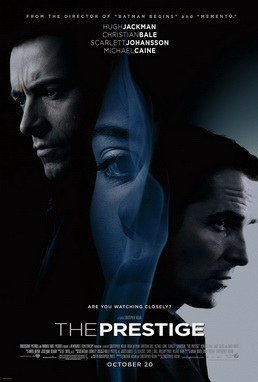
Christopher Nolan's film, adapted from Christopher Priest's novel, follows rival magicians Robert Angier and Alfred Borden as their competition turns increasingly ruinous. The setting is late Victorian stage magic, where showmanship, engineering, secrecy and ego share the same cramped backstage.
Its gaslamp credentials are strong. The film lives among theatres, workshops, mechanisms, trapdoors, notebooks and men who mistake obsession for discipline. Stage magic is a natural cousin to steampunk because both depend on apparatus, spectacle and the careful management of what the audience thinks it has seen.
The Tesla material pushes the film towards teslapunk adjacency. Electricity, strange machines and the mythic aura of Tesla as outsider inventor give the story its speculative turn. The film is not a catalogue of gadgets, but one machine changes the moral weather completely.
What makes The Prestige valuable is its refusal to romanticise cleverness. These men are brilliant, but brilliance becomes a solvent. It dissolves friendship, love, ethics and eventually identity. Steampunk often admires inventors. This film asks whether admiration should continue once the inventor starts treating people as components.
The rivalry also makes performance feel industrial. Tricks are designed, refined, copied, sabotaged and monetised. Applause becomes a market signal. The theatre is not only a place of wonder, but a workplace built around labour, secrecy and risk. That makes the film unusually useful for thinking about spectacle as machinery.
The period setting is more than wallpaper. Victorian entertainment culture gives the story its rules: public wonder, private method, professional secrecy and the hunger to produce the impossible on command. The stage becomes a machine for manufacturing awe, and the backstage becomes the place where awe is paid for.
Tesla's Colorado Springs interlude works because it feels both magical and practical. Coils, fields and experiments offer a different kind of showmanship from the theatre, but the appetite is the same: make the impossible visible, then pretend the cost belongs to someone else.
It connects naturally to The Asphyx, The Illusionist and gaslamp stories where science and spectacle blur. The difference is Nolan's cold precision. The film is less foggy Gothic than clockwork tragedy, each secret clicking into place with unpleasant efficiency.
The film is also useful because it keeps asking who performs the labour of wonder. Assistants, engineers, doubles and families all pay for the illusion while the named magician takes the bow. That question sits neatly beside steampunk's wider interest in machinery, class and hidden work.
As a recommendation, it suits readers who like their gaslamp material controlled rather than sprawling. There are no airship armadas here, just obsession, apparatus and the terrible discipline of men who refuse to stop.
Purists may argue that it is not steampunk because the machine is not embedded in a wider alternate society. That is reasonable. It is best understood as gaslamp and teslapunk-adjacent, a close border work whose machinery is concentrated rather than world-defining.
Is it really steampunk?
It is steampunk-adjacent rather than core steampunk. The Victorian setting, stage apparatus, Tesla machine, secret engineering and obsession with spectacle make it highly relevant, but its main genre identity is psychological thriller.
It is essential adjacent viewing for anyone interested in the darker moral cost of invention. The film's magic trick is making clever men look smaller the more elaborate their machines become.
Find it
If you would like to track down The Prestige, these search links may help. We have not specified an edition, so you can pick the format that suits you.
Affiliate links: as an Amazon Associate, Stephen Hunt’s SFcrowsnest earns from qualifying purchases. These may earn us a small commission at no extra cost to you.