
Why it matters
It made aircraft, ecological catastrophe and ruined kingdoms into a major international landmark of animated speculative fantasy.
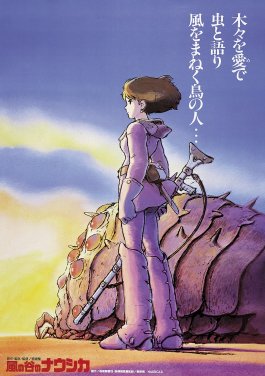
Hayao Miyazaki's 1984 Nausicaa of the Valley of the Wind gives us gliders, gunships, poisoned ecology and the worrying suspicion that humanity has already failed the entrance exam.
The film adapts Miyazaki's own manga, condensing its wider story into a feature about Nausicaa, princess of the Valley of the Wind, and her attempt to understand the toxic jungle, the Ohmu and the violent kingdoms around her. It is not steampunk in the strict sense, but it is central to the wider field of retrofantasy, airship-adjacent design and ecological machine-age anxiety.
The aircraft are the obvious connection. Miyazaki loves flight with rare seriousness. Gliders, gunships and transports do not appear as generic vehicles. They have weight, grace, danger and personality. In steampunk and diesel-adjacent work, flying machines often carry the romance of freedom and the threat of militarised power at the same time. Nausicaa understands both.
The setting is post-apocalyptic rather than Victorian. That matters. This is a future after industrial catastrophe, filtered through medieval kingdoms, biological mystery and machine remnants. Its technology feels scavenged, maintained and feared. The world has moved beyond progress into consequence.
That ecological focus makes the film different from most brass-era adventure. Steampunk often looks back at the industrial age and asks what might have happened if certain technologies had developed differently. Nausicaa looks at poisoned inheritance and asks whether human beings can stop treating the world as a battlefield long enough to understand it.
Nausicaa herself is the moral centre, but not in a bland saintly way. She is brave, angry, curious and scientifically attentive. Her strength lies not just in compassion, but in observation. She studies the toxic jungle instead of simply fearing it. That gives the film its particular force: knowledge is not separate from empathy.
The film also shows how animated design can make speculative machinery feel lived in. The aircraft are not clean symbols of progress. They are tools used by frightened kingdoms, pilots and soldiers who often understand the controls better than the consequences. That makes the hardware morally unstable in the best way. It can lift a heroine into the sky or carry another army towards disaster.
The film's diesel-adjacent quality comes from its war machines and post-industrial atmosphere. The hardware is not polished Victorian brass. It is heavier, rougher and more militarised. Yet it belongs near steampunk because the design language is tactile, analogue and hand-maintained. Machines feel piloted rather than abstractly operated.
That tactile quality is why the film keeps turning up in conversations about the wider steampunk neighbourhood. It shares the genre's affection for visible mechanisms, brave pilots and old technology with a temper. It simply relocates those pleasures into a damaged ecological future rather than a rearranged nineteenth century.
It also sits naturally beside Castle in the Sky, where Miyazaki would move closer to airship adventure and lost technology. Nausicaa is more ecological and mournful, but both films show why Japanese animation became so important to the global retrofantasy imagination.
Is it really steampunk?
No, not core steampunk. It is eco-fantasy with diesel-adjacent and retrofantasy features: aircraft, ruined technologies, kingdoms, war machines and analogue design. Its value to the field lies in atmosphere, machinery and ecological critique rather than Victorian setting.
It is essential for anyone tracing the international side of steampunk-adjacent fantasy. Come for the flying machines; stay because the giant insects may be the only adults in the room.
Find it
If you would like to track down Nausicaa of the Valley of the Wind, these search links may help. We have not specified an edition, so you can pick the format that suits you.
Affiliate links: as an Amazon Associate, Stephen Hunt’s SFcrowsnest earns from qualifying purchases. These may earn us a small commission at no extra cost to you.