
Why it matters
It is one of the major comics expressions of steampunk as high-style visual fantasy, centred on a mechanical heroine searching for her past.
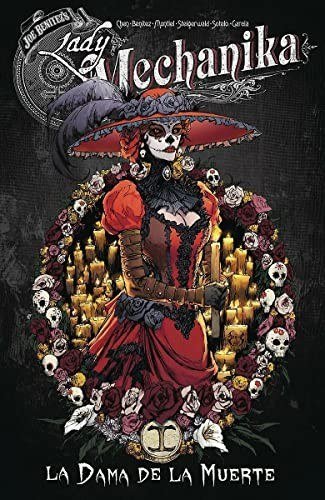
Joe Benitez's Lady Mechanika looks at steampunk's love of brass limbs, corsets, guns and mysteries, then gives the whole arrangement a heroine who appears to have been built by someone with excellent draftsmanship and very little interest in subtle entrances.
Lady Mechanika is a comic series created by Joe Benitez, starring a woman with mechanical limbs and no memory of how she became what she is. That premise gives the series a clean steampunk hook: body modification, mystery, Victorian atmosphere and an ornate visual world where machinery is identity as well as equipment.
Its place in the field is visual first. This is steampunk as lavish design: corsetry, weaponry, goggles, metal limbs, elaborate costumes, industrial interiors and the sense that every object has been given an extra flourish before being allowed on panel. The style is not incidental. It is the main invitation.
The cyborg heroine motif connects the series to older steampunk concerns about artificial bodies and selfhood. Mechanical limbs can be mere decoration in weaker work, but Lady Mechanika's missing past gives the hardware narrative weight. The question is not only what she can do, but who did this, why, and what kind of person remains when the body has become evidence.
Compared with Girl Genius, the tone is sleeker and more gothic. Compared with The League of Extraordinary Gentlemen, it is less literary and more character-brand driven. Compared with romance-steampunk like The Iron Duke, it leans harder into visual iconography. That makes it a landmark for readers who met steampunk through images before arguments.
This matters because the Maker & Masquerade Age was intensely visual. Steampunk was not only a literary mode; it was also fashion, convention culture, illustration, props and comics art. Lady Mechanika belongs to that moment of visible identity, where a single character design could tell readers which genre room they had entered.
Purists may complain that the series foregrounds style too strongly. That complaint is partly fair and partly the point. Steampunk has always had a visual life, and ignoring that would be like discussing vampires while refusing to mention teeth. Lady Mechanika understands the value of silhouette.
The mystery of her origin gives the style a useful narrative spine. A cyborg heroine can easily become only a poster image, but the missing past turns the machinery into a question. Every ornate limb is also a clue, and every clue points back toward violence, exploitation or experiment.
The series also shows how steampunk moved through comics culture in the 2010s. This was an era when the genre's imagery was already widely recognisable: brass, goggles, corsets, mechanical arms, elaborate firearms and Victorian shadow. Lady Mechanika does not hide that iconography. It leans into it with theatrical confidence.
Readers who enjoy character-led mystery, gothic adventure and high-polish art will likely find the series more rewarding than readers looking for social realism. That is fine. Steampunk has room for the visual landmark as well as the political machine.
Is it really steampunk?
Yes. Lady Mechanika is core visual steampunk: Victorian-flavoured mystery, mechanical body, ornate machinery, industrial atmosphere and a heroine built around the genre's most recognisable imagery.
Readers who want deep alternate-history systems may prefer other entries. Readers who want lavish steampunk comics art, cyborg mystery and gothic adventure should start here. It is not shy, and frankly shyness would not suit the hat.
Find it
If you would like to track down Lady Mechanika, these search links may help. We have not specified an edition, so you can pick the format that suits you.
Affiliate links: as an Amazon Associate, Stephen Hunt’s SFcrowsnest earns from qualifying purchases. These may earn us a small commission at no extra cost to you.