
Why it matters
It adapts the Wellsian invasion through the visual and musical world of Jeff Wayne's version, bringing Martian war machines and Victorian Britain into real-time strategy form.
Jeff Wayne's The War of the Worlds turns H. G. Wells, Martian tripods and a famous musical adaptation into a strategy game, because apparently Victorian panic needed resource management.
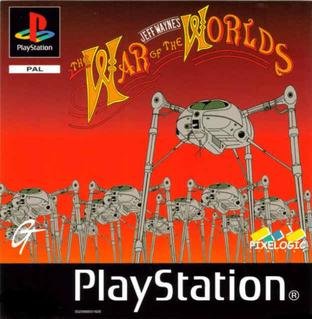
Developed by Rage Software and released in 1998, Jeff Wayne's The War of the Worlds is a real-time strategy game based on Jeff Wayne's musical adaptation of H. G. Wells' novel. That lineage gives it two inheritances: Wells' terrifying vision of imperial Britain facing a technologically superior invader, and Wayne's theatrical audio-visual version, complete with iconic Martian machinery.
The game's place in steampunk is adjacent but sturdy. The War of the Worlds is one of the great ancestors of British scientific romance, and steampunk has repeatedly returned to its tripods, heat-rays and imperial reversal. This game takes that material into a strategic frame. The player does not merely witness invasion. They manage it, resist it or prosecute it, depending on side and scenario.
That shift matters. Strategy games are about systems: territory, production, movement, escalation and attrition. Wells' novel is a narrative of helplessness, with humanity confronted by machines beyond its military imagination. A strategy game has to make the war playable, which changes the experience while preserving the central fascination: Victorian Britain under mechanical assault.
The Martian war machines are the star attractions. Steampunk often uses machines as signs of ambition, ingenuity or social transformation. Here they are terror from outside, a demonstration that someone else has arrived with better engineering and worse manners. The tripod remains one of science fiction's great mechanical silhouettes, and the game gives it another life on screen.
Its relationship to Scarlet Traces is also useful. That comic sequel imagines the British Empire exploiting Martian technology after the invasion, pushing Wellsian machinery into an explicit alternate-history critique. The 1998 game does not make the same argument, but it shares the fascination with what happens when Victorian society meets alien industry and discovers that civilisation is not the same thing as preparedness.
The Jeff Wayne connection gives the game a particular flavour. This is not a dry historical simulation. It is tied to a musical version famous for mood, narration and dramatic design. That theatrical inheritance sits comfortably beside steampunk's fondness for spectacle. Martian invasion, after all, is not subtle. It arrives on three legs and ruins the afternoon.
The game is worth including because it shows Wellsian material crossing into late-1990s game culture. Steampunk is full of adaptations, echoes and retoolings of the nineteenth-century speculative imagination. This is one of the more curious routes: novel to album to strategy game, with the Martians somehow still finding time to be rude.
Is it really steampunk?
Adjacent. The game is Wellsian scientific romance in strategy form, with Victorian Britain, Martian machinery and retro-SF invasion rather than core steampunk world-building.
It suits players who want the nineteenth century to face the future and discover that the future has heat-rays.
Find it
If you would like to track down Jeff Wayne's The War of the Worlds, these search links may help. We have not specified an edition, so you can pick the format that suits you.
Affiliate links: as an Amazon Associate, Stephen Hunt’s SFcrowsnest earns from qualifying purchases. These may earn us a small commission at no extra cost to you.