
Why it matters
It is a distinctive tabletop route into steampunk's literary ancestry, adapting Victorian and Edwardian speculative futures into playable scenarios and settings.
Forgotten Futures treats old scientific romances as playable worlds, which is a splendid way of discovering that yesterday's future still has excellent pockets.
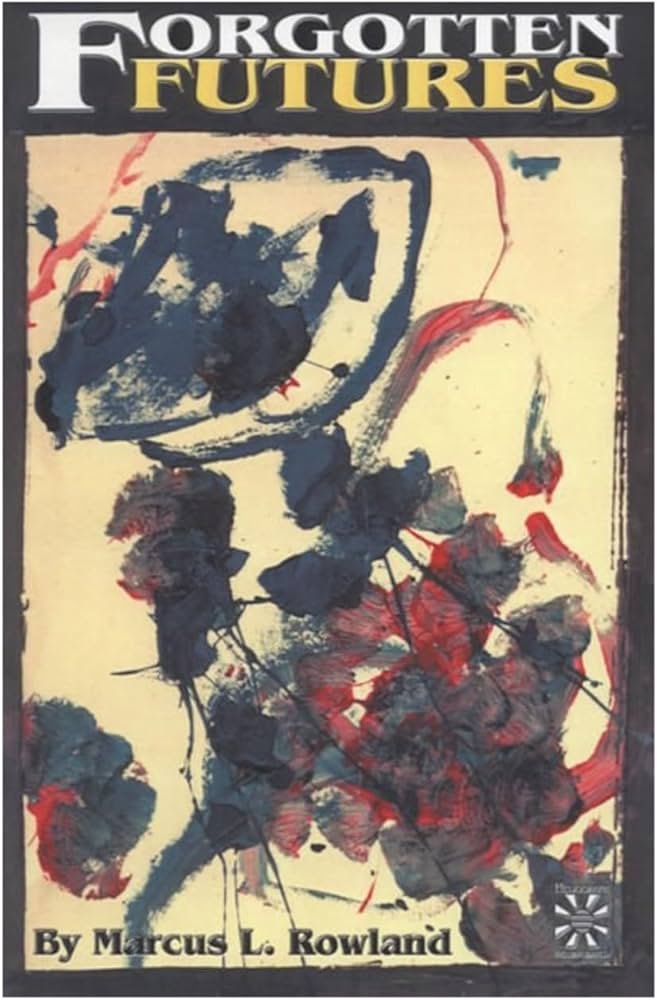
Created by Marcus L. Rowland, Forgotten Futures is a roleplaying game built around public-domain scientific romance and early speculative fiction. Instead of inventing a single giant setting, it draws on older stories and imagined futures, turning them into game material with rules, scenarios and historical-literary context.
That makes it different from Space: 1889. Where Space: 1889 offers a unified Victorian solar-system adventure frame, Forgotten Futures behaves more like a cabinet of playable literary futures. It is less about one grand canon setting and more about the act of recovering obsolete futures and letting players walk around in them.
The steampunk connection is therefore archival as much as aesthetic. Steampunk often feeds on the nineteenth century's imagined futures: air travel, strange machines, utopias, invasions, scientific marvels and spectacularly confident predictions. Forgotten Futures goes straight to those sources and asks what happens when they become adventures.
Its public-domain focus is important. The game does not merely imitate Victoriana. It preserves, reframes and plays with the actual speculative texts that helped form the background of steampunk. That gives it a scholarly charm without requiring the table to sit an exam before anyone may roll dice.
The flexibility of the system also fits the material. Victorian and Edwardian scientific romance did not agree on one future. It produced many: imperial, utopian, catastrophic, comic, technological, occult and bizarre. Forgotten Futures benefits from that variety, making the past's discarded predictions feel like a whole shelf of strange engines.
For players, the appeal lies in literary curiosity as much as mechanical crunch. This is a game for people who like old texts, odd premises and speculative history with dust on the cover. It is not the most glamorous steampunk RPG, but it is one of the more revealing because it points back to the raw material.
The game also helps correct a common misunderstanding about steampunk ancestry. The genre did not appear fully dressed in brass from nowhere. It grew from older fantasies of invention, invasion, travel, catastrophe and progress. Forgotten Futures makes that lineage playable, letting a table explore futures that once looked plausible, alarming or splendidly foolish.
Its modular nature is part of the charm. One campaign might lean comic, another imperial, another catastrophic or scientific. That range mirrors the source literature, which was never a single mood. The past imagined many futures, and most of them require supervision before tea.
The result is less flashy than a setting full of signature machines, but it rewards curiosity. It lets players treat old speculative fiction as a working archive, not a glass case. That makes it especially valuable for anyone interested in the roots beneath steampunk's more polished surfaces.
It also suits referees and players who enjoy research as part of play. The pleasure is not only in the contraption, but in recognising which forgotten dream of progress has gone loose this time.
Is it really steampunk?
Adjacent to core steampunk, but deeply relevant. Forgotten Futures is scientific-romance roleplaying built from Victorian and Edwardian futures. Its value lies in literary recovery, adaptable rules and playable versions of the speculative past.
It belongs beside Space: 1889 as a gaming route into the genre's ancestry: less brass spectacle, more archive, but with plenty of odd machinery waiting in the stacks.
Find it
If you would like to track down Forgotten Futures, these search links may help. We have not specified an edition, so you can pick the format that suits you.
Affiliate links: as an Amazon Associate, Stephen Hunt’s SFcrowsnest earns from qualifying purchases. These may earn us a small commission at no extra cost to you.