
Why it matters
It captures steampunk during its modern expansion, gathering multiple writers and approaches under one brass-leaning roof.
An anthology is where a genre checks whether it is a single machine or a workshop full of quarrelling prototypes. Extraordinary Engines makes a strong case for the workshop.
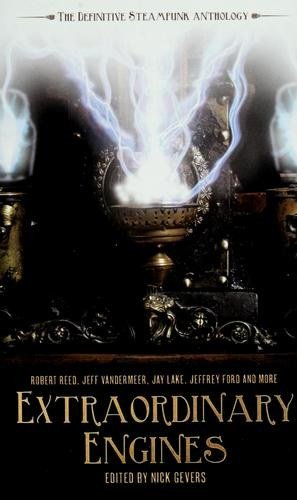
Edited by Nick Gevers, Extraordinary Engines is important because anthologies help make genres visible. A novel can be one author's machine. An anthology says, "Look, there are enough machines here to require labelling, shelving and possibly ventilation." In 2008, steampunk was expanding rapidly in fiction and culture, and this collection belongs to that moment of self-recognition.
The title is almost a mission statement. Engines can be literal, metaphorical, historical, social or narrative. Steampunk has always used machinery as both object and organising principle. By gathering stories across the field, an anthology like this shows how many shapes that machinery can take: adventure, weirdness, alternate history, comedy, melancholy, horror and social speculation.
The spreadsheet tags it as wide-angle steampunk stories and a new wave of writers. That is the right emphasis. The value of Extraordinary Engines is not that every story defines the genre in the same way. The value is the spread. A healthy anthology reveals range, including disagreements over what counts as steampunk and which parts of the past are worth re-engineering.
Anthologies also play a practical role for readers. They are sampling devices. Someone unsure whether they want Babbage engines, airships, gaslamp mystery or stranger industrial fantasy can read a collection and discover which gears catch. That makes Extraordinary Engines useful as an orientation point.
The collection sits near other anthology landmarks such as The Mammoth Book of Steampunk. Together, these books mark the moment when steampunk had become large enough to curate. That matters. Curation turns scattered works into a recognised conversation. It gives readers routes, editors arguments, and writers a sense of shared furniture to rearrange.
The editor's role is therefore part of the story. Nick Gevers is not merely assembling pages between covers; he is helping define the perimeter of a conversation. Anthologies can say, quietly but firmly, "these things belong near each other." For a field as porous as steampunk, that act of arrangement is powerful. It can make borderlands visible rather than leaving them as accidental neighbours.
The international angle also matters. Steampunk has often been associated with British Victoriana, but anthologies expose the field's broader reach and range of accents. A curated collection can make the genre feel less like a single national nostalgia machine and more like a shared speculative language that different writers use for different mischiefs.
It is also worth noting that anthologies can preserve borderlands better than single-definition essays. A field like steampunk thrives on adjacency: clockpunk, gaslamp fantasy, weird west, industrial fantasy, dieselpunk-adjacent work, Vernean homage and secondary-world machinery. An anthology can place these neighbours side by side and let the reader hear the clanking.
Extraordinary Engines works best as a hub rather than a single-story landmark. Anthology culture mattered in the Maker & Masquerade Age because it made steampunk legible, portable and debatable. It also helped connect literary steampunk with the wider visual and cultural enthusiasm of the period.
It is also a useful answer to anyone who asks where to sample the genre without committing to a long series. Anthologies let readers test the valves. Some stories will hiss, some will whistle and some may make a noise that suggests professional help is required. That variety is the point.
Anthology pages are especially handy because they act as junctions. They lead outward to authors, subgenres, motifs and debates rather than only to sequels. Extraordinary Engines therefore functions as a little switching yard for readers who want the breadth of the field.
That junction role should not be underrated. In a genre built from hybrids, anthologies are often where the hybrids first become easy to see. They show that the field is not a single railway line, but a network of sidings, branch routes and alarming experimental engines.
Is it really steampunk?
Yes. Extraordinary Engines is a core steampunk anthology. Its importance lies not in one central plot but in its role as a curated snapshot of the field during a period of rapid growth.
The anthology format also reminds us that steampunk is not one tone. It can be comic, grim, romantic, political, weird, scholarly or cheerfully reckless. That variety is a strength. If every steampunk work sounded like the same gentleman explaining the same pressure gauge, the field would deserve to be locked in a shed.
Readers should use Extraordinary Engines as a sampler and a map. It may lead toward first-wave fiction, modern YA, literary industrial fantasy or full-blooded adventure. That is exactly what a good anthology should do: leave the reader with more doors than they had on the way in.
Find it
If you would like to track down Extraordinary Engines, these search links may help. We have not specified an edition, so you can pick the format that suits you.
Affiliate links: as an Amazon Associate, Stephen Hunt’s SFcrowsnest earns from qualifying purchases. These may earn us a small commission at no extra cost to you.