
Why it matters
It made Nemo's submarine visually definitive for generations of retrofuturist design, adventure cinema and steampunk imagination.
Disney's 1954 20,000 Leagues Under the Sea gave the world a Nautilus so memorable that later steampunk has been trying to move in ever since, preferably before Captain Nemo changes the locks.
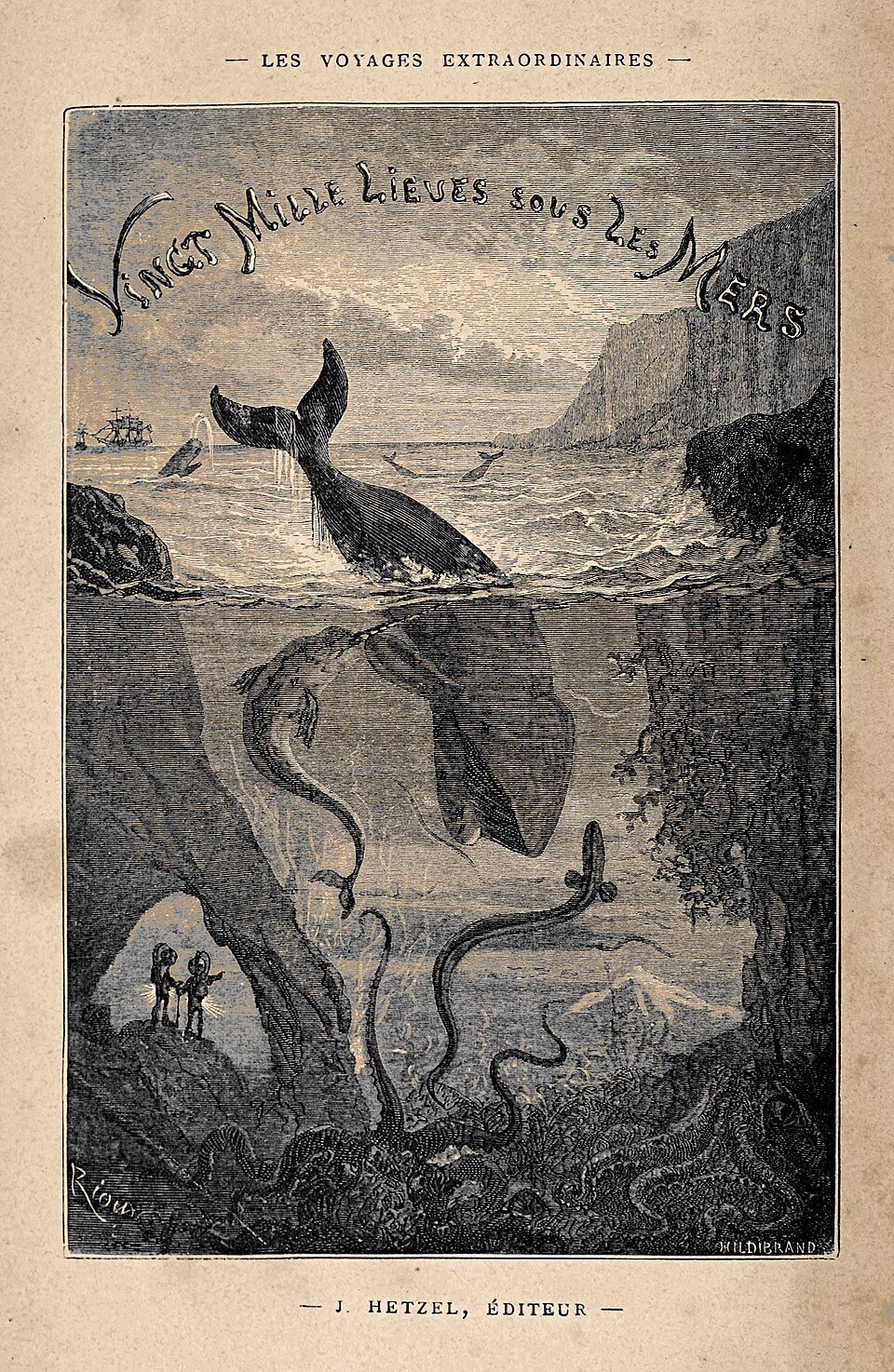
Directed by Richard Fleischer for Walt Disney Productions, 20,000 Leagues Under the Sea adapts Jules Verne's undersea scientific romance with James Mason as Captain Nemo and Kirk Douglas as Ned Land. The film is a key visual ancestor for steampunk, especially because of its Nautilus design.
The submarine is the star. Verne's novel already gave the genre the private technological genius and the undersea machine as sanctuary, weapon and prison. The 1954 film translates that into a screen object of extraordinary power: riveted, elegant, menacing and alive with Victorian-industrial imagination. Many later steampunk submarines are, consciously or not, swimming in its wake.
Captain Nemo also matters. Mason's Nemo is wounded, brilliant, aristocratic, dangerous and morally complicated. Steampunk is full of inventors who withdraw from society and build their own mechanical kingdoms. Nemo is one of the great models: a man whose machine gives him freedom from empire and also the power to become terrifying.
The film's place in the Brass Shadows era is important. This is not modern steampunk, but a mid-century adaptation of nineteenth-century scientific romance that preserved and amplified the retro-machine fantasy. It helped keep Verne's imagery alive for audiences who would later recognise the Nautilus as part of steampunk's ancestral kit.
The underwater setting gives the film a different texture from airship or railway steampunk. The sea is pressure, secrecy and exile. The Nautilus is not just transport. It is an alternative state, a home, a laboratory and a threat moving beneath the maps of empire. That makes it one of the strongest examples of machinery as ideology.
Modern viewers may find some period adventure elements old-fashioned, but the design remains potent. The diving suits, control rooms, viewing windows and metal surfaces all speak the language steampunk would later formalise. The film knows that a machine can be beautiful and alarming at the same time.
The giant squid sequence also helped fix the film in popular memory. It is not only a monster scene; it is a test of men, machinery and pressure. The Nautilus may be a marvel, but the ocean is not impressed by human cleverness. That balance between invention and hostile environment is pure Vernean pleasure.
Disney's involvement matters too. This was not an obscure art object tucked away for specialists. It was a major popular adventure film, which means its version of Nemo and the Nautilus reached viewers who might never have read Verne. Steampunk's visual ancestry is partly built from such mass encounters.
The film also gives Nemo a powerful screen template: the wounded genius whose machine is both refuge and revenge. Later steampunk inventors often echo that pattern, though few get a submarine this handsome.
Is it really steampunk?
Not by date or intention, but absolutely as proto-steampunk adaptation. The film's Vernean machinery, retrofuturist submarine design, Nemo figure and industrial romanticism make it central to the visual ancestry of the field.
Readers and viewers who care about steampunk design should watch it for the Nautilus alone. The film is proof that a single well-designed machine can shape decades of imaginary engineering.
Find it
If you would like to track down 20,000 Leagues Under the Sea, these search links may help. We have not specified an edition, so you can pick the format that suits you.
Affiliate links: as an Amazon Associate, Stephen Hunt’s SFcrowsnest earns from qualifying purchases. These may earn us a small commission at no extra cost to you.