
Why it matters
It turns the author of The Time Machine into a character chasing Victorian violence into the modern world.
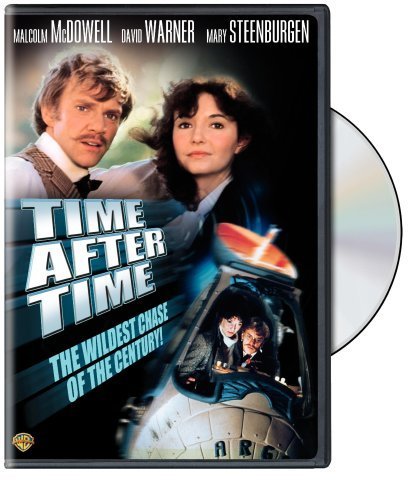
Time After Time looks at H. G. Wells, looks at Jack the Ripper, and decides that Victorian London has not made enough trouble for San Francisco yet.
Written and directed by Nicholas Meyer, Time After Time imagines H. G. Wells as the inventor of an actual time machine. When Jack the Ripper escapes into the twentieth century using it, Wells follows, bringing Victorian idealism into collision with modern urban life. It is a deliciously tidy premise, and the film knows it.
The steampunk connection begins with the machine, but it does not end there. This is a film about nineteenth-century ideas arriving in the modern world and finding the welcome committee badly organised. Wells believes in progress. The Ripper believes the future is more comfortable for murder. Both are, in their own alarming ways, students of modernity.
That contrast gives the film its bite. Wells's optimism is charming, but not naive beyond repair. He is shocked by the future's violence, speed and moral confusion, yet he also adapts. The film plays him as a humane intellectual forced into adventure, which is a much better use of a literary figure than leaving him on a commemorative mug.
Jack the Ripper works here as more than a famous monster. He is Victorian brutality exported forward. The film suggests that the future has not outgrown him. It has merely given him better streets to haunt. That is a neat gaslamp trick: the past is not dead, it has found transport.
The modern setting means this is not core steampunk. Most of the action is contemporary to 1979, and the period machinery is a trigger rather than a full world. Even so, the premise sits close to the genre's concerns: the Victorian inventor, the time machine, historical violence, technological wonder and the dangerous arrogance of assuming progress will tidy everything up.
The romance angle helps humanise the cleverness. A film built only on "Wells chases Ripper" could have become a parlour-game joke with police sirens. Meyer gives Wells emotional stakes in the present, which lets the story test his ideals rather than simply admire them. The future is not only a crime scene. It is a place where he has to decide what his optimism is worth.
It also connects to Anno Dracula, though by a different route. Both works treat famous Victorian figures as active agents in a reshaped genre landscape. Time After Time is lighter, more romantic and more thriller-driven, but it shares the pleasure of watching history's literary furniture start moving about.
As a popular entry point, it has the advantage of being nimble. The film is not clogged with lore. It uses its conceit cleanly, gives Wells a proper emotional arc and makes the time machine feel like a stolen responsibility rather than a toy.
Is it really steampunk?
It is steampunk-adjacent proto-gaslamp time travel. The modern setting keeps it outside core steampunk, but the Wells connection, Victorian machine, Ripper plot and progress-versus-violence argument make it central to the field's time-travel wing.
It is especially good for readers and viewers who enjoy genre games played with intelligence rather than over-explanation. Also, any film that makes H. G. Wells chase Jack the Ripper deserves at least one polite nod from the brass section.
Find it
If you would like to track down Time After Time, these search links may help. We have not specified an edition, so you can pick the format that suits you.
Affiliate links: as an Amazon Associate, Stephen Hunt’s SFcrowsnest earns from qualifying purchases. These may earn us a small commission at no extra cost to you.