
Why it matters
It turns the Malifaux miniatures setting into a roleplaying game, carrying across fate cards, gothic Weird West atmosphere, magic and machinery into a more character-led form.
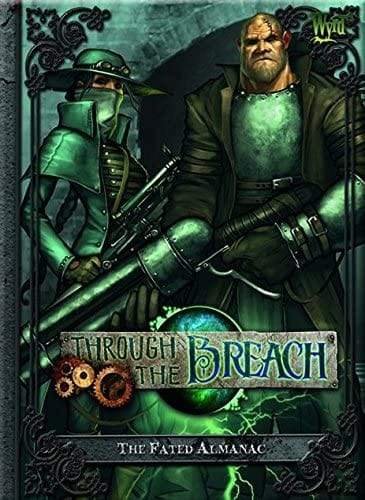
Through the Breach is what happens when a Weird West horror setting opens a door, looks through it and finds that the other side has monsters, machinery and a card deck with opinions.
Through the Breach grows out of Wyrd's Malifaux, the skirmish game set in a parallel, dangerous city where Victorian horror, western grit, magic and industrial strangeness share the same ill-lit streets. The roleplaying game lets players become the Fated, people dragged into the setting's schemes, dangers and peculiar employment opportunities. In Malifaux, destiny is less a calling than a workplace hazard.
The game's place in a steampunk canon is interesting because it is not polite brass-and-tea material. Its bloodline runs through the Weird West, horror gaming and miniatures-table spectacle. There are machines, guns, sinister institutions and nineteenth-century textures, but the tone is more haunted frontier than exhibition hall. If Deadlands showed how steam, guns and undeath could ride together, Through the Breach gives that lineage a different city, a different deck and a sharper taste for the uncanny.
Cards are one of the setting's defining pleasures. Malifaux famously uses Fate Decks instead of dice, and Through the Breach inherits that sense that chance should feel like a bargain struck under poor lighting. Mechanically, cards give play a texture that suits a world obsessed with fate, bargains and reversals. The tabletop object helps reinforce the fiction. A card drawn at the wrong moment always looks as if it knew.
As a roleplaying game, it also shifts the focus from tactical confrontation to lived experience inside the setting. Miniatures games often show a world through conflict. RPGs have to answer different questions. Where do characters sleep? Who hires them? What do they fear? What is a normal Tuesday in a city where normality has long since packed a bag and left no forwarding address?
That makes Through the Breach useful for understanding how steampunk-adjacent worlds move between formats. The machinery and atmosphere may begin as visual and tactical ingredients, but roleplaying asks them to become culture, law, rumour, labour and doom. A steam-powered horror city needs more than impressive silhouettes. It needs reasons for people to keep walking its streets, even when every sensible instinct says otherwise.
The game's adjacency also keeps it from being mistaken for straightforward Victorian steampunk. Its roots in horror-western gaming mean it is more interested in danger, factions and supernatural consequence than in technological optimism. The machines are not here to improve society. They are part of the general trouble, and sometimes they are merely the most expensive part.
That quality gives it a strong place beside Deadlands and Unhallowed Metropolis. All three understand that nineteenth-century genre dressing can become nastier when the dead do not stay put, industry does not stay useful and civilisation looks suspiciously like a thin coat of paint over panic.
Is it really steampunk?
Adjacent, but strongly so. Through the Breach is Weird West and gothic horror first, with steampunk machinery, Victorian texture and fate-card theatricality giving it a firm place near the boiler room.
It suits players who want gaslamp danger with dirt under its fingernails and a destiny mechanic that can smirk from across the table.
Find it
If you would like to track down Through the Breach, these search links may help. We have not specified an edition, so you can pick the format that suits you.
Affiliate links: as an Amazon Associate, Stephen Hunt’s SFcrowsnest earns from qualifying purchases. These may earn us a small commission at no extra cost to you.