
Why it matters
It is a flamboyant borderland work, grafting mechanical spectacle and flying war machines onto a swashbuckling seventeenth-century adventure.
Paul W. S. Anderson's The Three Musketeers looks at Dumas, considers the swords, hats and intrigue, and then decides the missing ingredient is airship combat.
This version of The Three Musketeers does not pretend to be a sober adaptation. It takes the familiar D'Artagnan, Athos, Porthos and Aramis material and adds impossible devices, aerial combat and an openly fantastical sense of mechanical escalation.
Because the period is earlier than the Victorian steam age, clockpunk is the better neighbour than steampunk proper. The film's machines belong to a fantasy of gears, early modern invention and baroque spectacle rather than boilers and industrial revolution. The airships, naturally, are the main reason it turns up in the conversation.
The appeal is straightforward. Swordfights are already theatrical. Add flying machines and secret devices, and the swashbuckler becomes a retro-mechanical action piece. It may not be subtle, but nobody hires musketeers for subtlety when there are chandeliers available.
The film sits near Castle Falkenstein in spirit, though with far less elegance and more blockbuster noise. Both show how pre-Victorian adventure can brush against the steampunk family through gadgetry, court intrigue, duels and speculative machinery.
Its limitations are just as clear. The mechanical additions are spectacle first and world-building second. One does not come away with a deeply reimagined seventeenth century. One comes away with the sense that someone found the airship cupboard and refused to close it.
That does not make the film useless. Borderland works often reveal what happens when a genre ingredient is moved into the wrong century and asked to perform. Here, the airships make the musketeer world less historically persuasive but more mechanically extravagant. It is clockpunk by provocation rather than depth.
The swashbuckling form is already close to steampunk's adventure instincts. It has codes, costumes, duels, secret plans, extravagant villains and heroes who treat architecture as something to swing from. Add impossible engineering and the result may be silly, but it is not unrelated. It is a cousin arriving through the skylight.
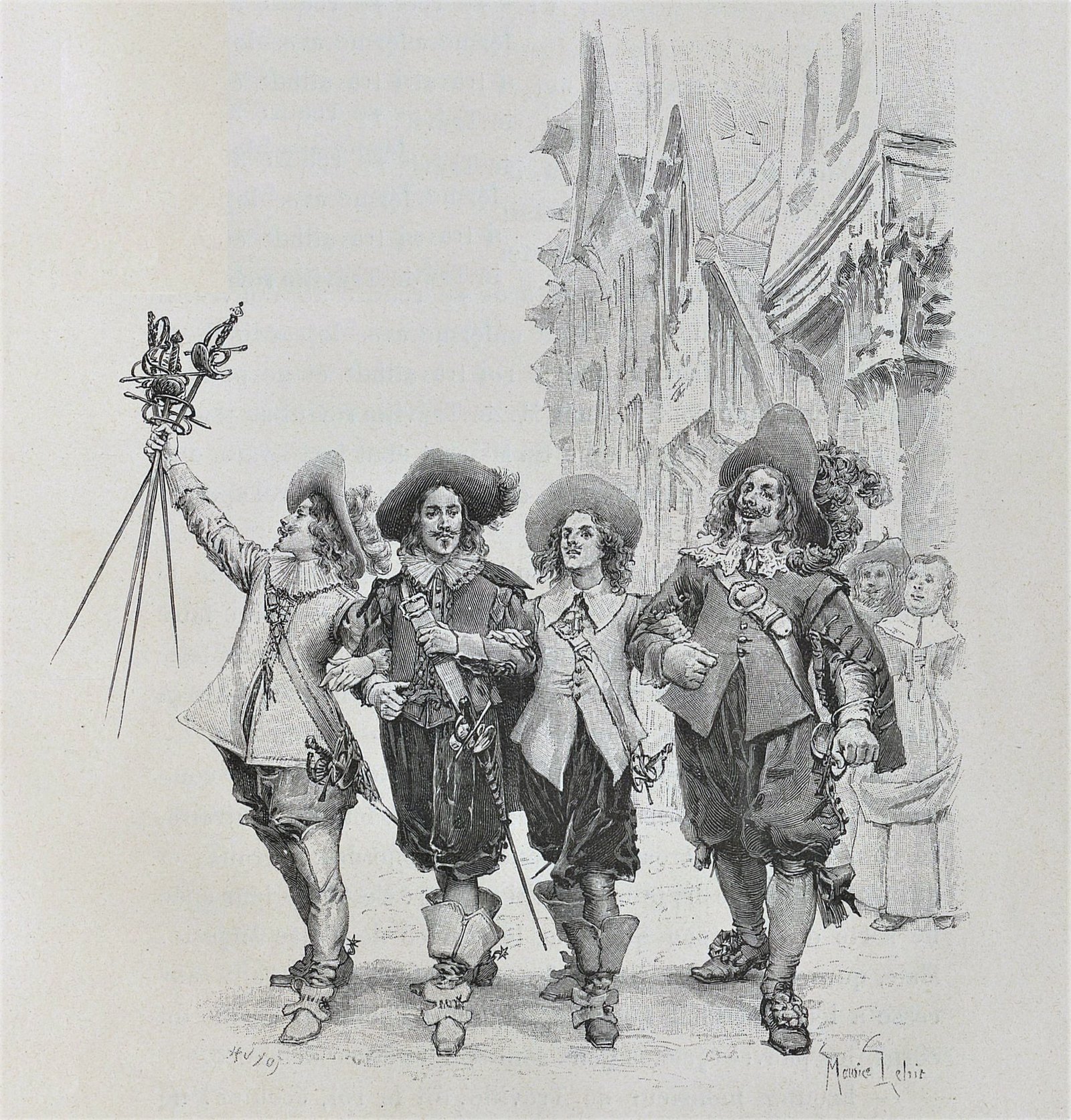
The airships are especially telling because they move the story from court intrigue into speculative spectacle. Once battles can happen above the palace rather than inside it, the old swashbuckler acquires a different kind of stage. The film does not pause to think through the consequences, but the image itself explains why clockpunk keeps borrowing from adventure fiction.
Even so, it is useful as a border marker. It shows how steampunk aesthetics can drift backwards into clockpunk, where the old adventure forms are refitted with impossible mechanisms. For viewers mapping the wider field, that drift matters.
It also shows the danger of treating machinery as garnish. The airships are memorable, but they do not transform the society beneath them in the way deeper alternate history would. That gap is educational. It separates clockpunk flavour from clockpunk world-building, and this film sits firmly on the flavour side of the banquet.
It suits viewers who enjoy the broadest kind of retro-action spectacle. Anyone hoping for Dumas with delicate historical embroidery should look elsewhere. Anyone prepared for swordplay with airborne nonsense will at least know what bargain has been struck.
Is it really steampunk?
Not quite. It is clockpunk and swashbuckling-adjacent, with airships and mechanical spectacle rather than true steampunk world-building.
It is best approached as a romp. If one demands historical seriousness, the film will leap out of a window before answering.
Find it
If you would like to track down The Three Musketeers, these search links may help. We have not specified an edition, so you can pick the format that suits you.
Affiliate links: as an Amazon Associate, Stephen Hunt’s SFcrowsnest earns from qualifying purchases. These may earn us a small commission at no extra cost to you.