
Why it matters
It shows how steampunk imagery can be used for literary meditation rather than straightforward adventure.
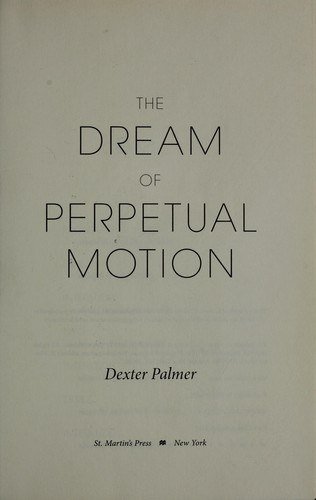
Dexter Palmer's The Dream of Perpetual Motion is the sort of steampunk-adjacent novel that looks at the airship and asks not how fast it goes, but what it does to memory, language and regret.
The Dream of Perpetual Motion sits on the literary border of the field. It uses airship imagery, mechanical invention and retrofuturist atmosphere, but its centre of gravity is not pulp adventure or alternate-history systems. It is a more self-conscious novel, interested in voice, storytelling, Shakespearean echoes and the emotional machinery of memory.
The protagonist, Harold Winslow, is imprisoned aboard an airship, telling his story into a machine. That set-up alone earns the book a place near the guide. The airship is not merely a vehicle or spectacle. It is a chamber of narration, a floating prison and a symbol of suspended life. Steampunk often loves airships for freedom; Palmer uses one for captivity, which is a useful reversal.
The Shakespeare connection, especially the echo of The Tempest, gives the book a literary architecture. Figures and relationships resonate with Prospero, Miranda and the magical island, but translated into a world of machines, industrial wealth and engineered wonder. This is not simple retelling. It is a conversation between theatrical enchantment and mechanical modernity.
The mechanical voice motif is especially important. Steampunk frequently imagines devices that extend the body: prosthetics, engines, automata, calculating machines. Palmer's interest in recorded or mediated voice shifts the emphasis toward language. What happens when experience is spoken into machinery? What is preserved, distorted or trapped? That question makes the book a cousin to works about data, memory and artificial life.
This entry helps prevent the steampunk shelf from becoming too action-led. The genre's images can support introspective and formally playful fiction as well. Not every airship needs a chase. Sometimes it needs a narrator with too much time and not enough escape.
Its adjacency should be stated clearly. Readers expecting gadgets, battles and secret societies may find it too literary or enclosed. Readers interested in how steampunk motifs can be bent toward metafiction and emotional reflection will find it worth noting. It is a borderland page, not a central boiler.
The airship imprisonment is especially valuable because it reverses one of the genre's favourite symbols. In much steampunk, airships mean freedom, travel, glamour and escape from the ground. Here, elevation becomes isolation. The machine that should open the world instead suspends the narrator away from it. That is a clever use of a familiar motif, and it deserves attention.
The perpetual-motion idea also belongs to the old dream of impossible machines. Steampunk is full of inventors chasing forbidden solutions: engines that should not run, devices that should not think, machines that promise to solve scarcity, distance or death. Palmer's treatment is less about engineering triumph and more about the emotional cost of such dreams, which gives the title a melancholy aftertaste.
Because of its Shakespearean echoes, the novel also sits near literary remix works like The Bookman, though it is quieter and more inward. It uses The Tempest not as a costume source but as a structural ghost. Power, imprisonment, voice, daughterhood, illusion and control all move through the machinery of the novel.
The book also connects to The Difference Engine in a subtler way. Both are interested in machines and language, though Gibson and Sterling build a social information order while Palmer builds a haunted narrative device. Both recognise that technology changes not only transport or war, but the way stories are stored and told.
Is it really steampunk?
Not strictly. The Dream of Perpetual Motion is literary steampunk-adjacent fiction. It uses airships, mechanical voice, alternate-world atmosphere and retro-industrial imagery, but its main project is literary and psychological rather than genre-adventure or industrial speculation.
That does not make it irrelevant. Steampunk's imagery has become a language, and Palmer uses that language for different ends. Border works like this show how far the vocabulary can travel once it leaves the workshop and enters literary fiction.
For readers, the best label is "literary borderland". Approach it if you want airships as metaphor, Shakespeare as ghost machinery and invention as a way of thinking about speech, power and memory. Avoid it if what you really want is someone leaping from a dirigible with a pistol and an unreasonable hat.
That distinction is healthy. Not every adjacent book will satisfy the same craving. The Dream of Perpetual Motion is for readers who want steampunk imagery slowed down and made reflective, as if the airship has drifted into a cloud bank and started confessing.
It is a quieter entry, but quiet does not mean slight. The machinery here works on voice, isolation and memory, which are less visible than pistons but no less capable of making a person uncomfortable.
Find it
If you would like to track down The Dream of Perpetual Motion, these search links may help. We have not specified an edition, so you can pick the format that suits you.
Affiliate links: as an Amazon Associate, Stephen Hunt’s SFcrowsnest earns from qualifying purchases. These may earn us a small commission at no extra cost to you.